ARTICLES
The 10 Most Popular Tattoo Styles in 2026 (And How to Find the Right Artist)
Tattoo styles explained in plain English: what American traditional, Japanese, blackwork, fine line, realism and five more actually look like, how each tends to age, and what to ask an artist before you book.
TL;DR: Tattoo styles explained: ten styles, what each one looks like, who it suits, how it tends to age, and what to ask an artist before you book. The styles that sources describe as aging well lean on bold outlines and solid black. The delicate and outline-free ones need more care. Want to know what's being booked right now? That's our tattoo trends 2026 post.
You walk into a shop and point at something on the wall. The artist asks what style you're going for. You shrug. Not a great start.
A style is a set of technique choices: how the line is built, how colour or shading goes in, how the design sits on the body. It decides which artist you book and how the piece reads once it's healed. Knowing the names gets you to the right portfolio.
This is a definitions guide. Ten styles, and for each one: the look, how it tends to age, who it suits, and what to ask. We linked the sources we used right in the text, and where we couldn't find one, we say so. For what's being booked right now, see tattoo trends 2026; for the business side, the tattoo industry in 2026.
American Traditional
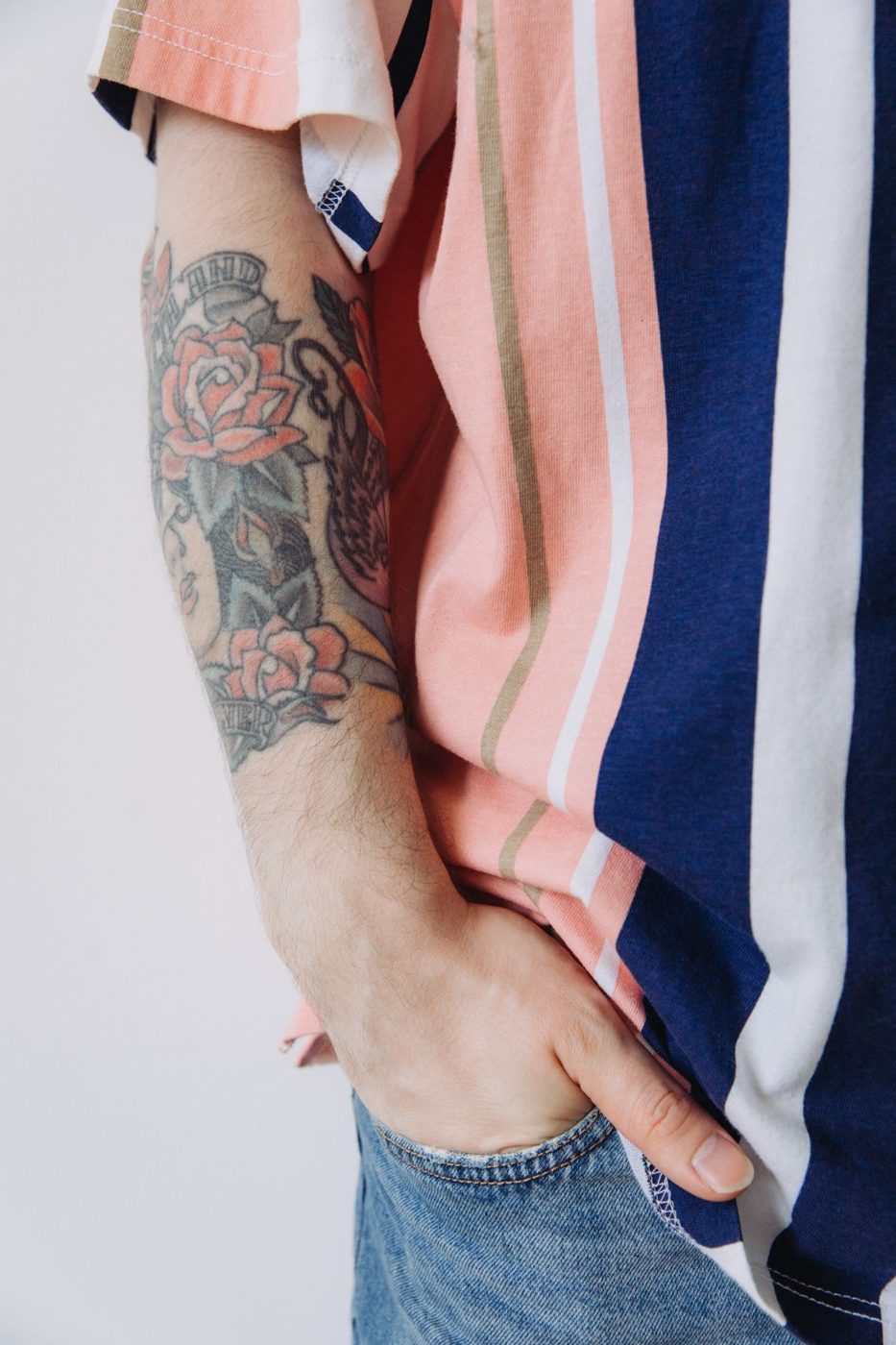
Bold black outlines, a limited palette, flat fills. Wikipedia's entry on the style lists bright yellow, red and green plus black shading, with motifs like eagles, anchors, hearts, roses, swallows and snakes, all drawn from sailor tattoos. Club Tattoo's comparison guide boils the signature down to thick lines with no variation, minimal shading and mostly flat colour.
The design logic is built for skin. Wikipedia says the simple shapes are meant to stay readable over a lifetime, and Club Tattoo credits the style's staying power to those thick lines and simple shapes. Ask your artist what their older pieces look like now.
Suits you if: you want a design that reads from across the room. Think twice if: you want photographic detail or hairline linework. That's a different toolset. Ask the artist: to see healed linework, and whether the piece is custom or from their flash.
Japanese / Irezumi
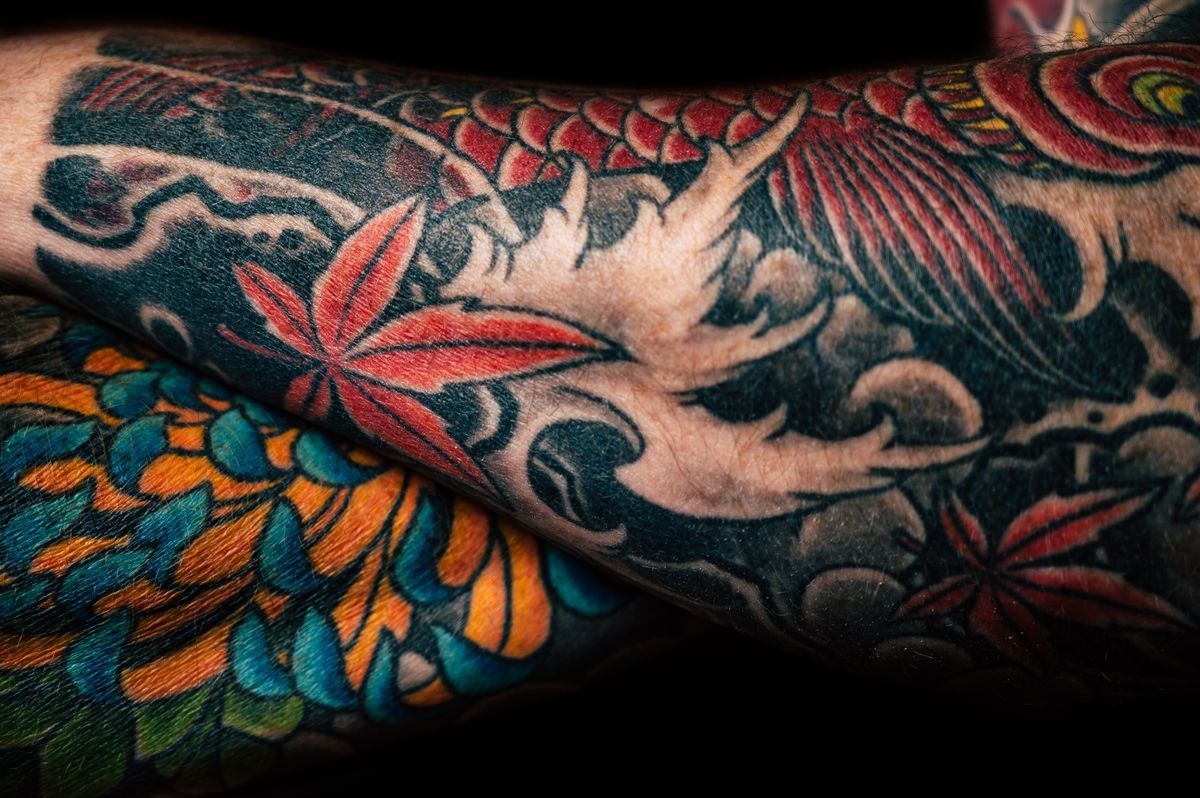
Irezumi is Japanese traditional tattooing. Wikipedia's irezumi page lists dragons, koi, tigers, snakes, peonies, cherry blossoms and chrysanthemums, with clouds, waves and wind bars as backgrounds. It says decorative tattooing developed into an advanced art form in the Edo period, helped along by woodblock printing and the 1757 release of the novel Suikoden in Japan. Our post on Japanese tattoo history and iconography goes deeper on what the imagery means.
What separates it from a pile of Japanese-themed flash is composition. Starbrite Colors' irezumi guide says the background is a composed part of the design, not empty skin, that figures can follow the lines of the arm or torso, and that authentic work needs large formats: a full sleeve, a back piece or a bodysuit.
We couldn't find a solid source on how irezumi as a style ages, so we won't promise anything. Healed sleeves and back pieces tell you more than any article can.
Suits you if: you're ready for a big, planned piece. Think twice if: you want something small. By that guide's logic, a small fragment can't carry the composition. Ask the artist: for healed large-scale Japanese work, and how they plan the background.
Blackwork
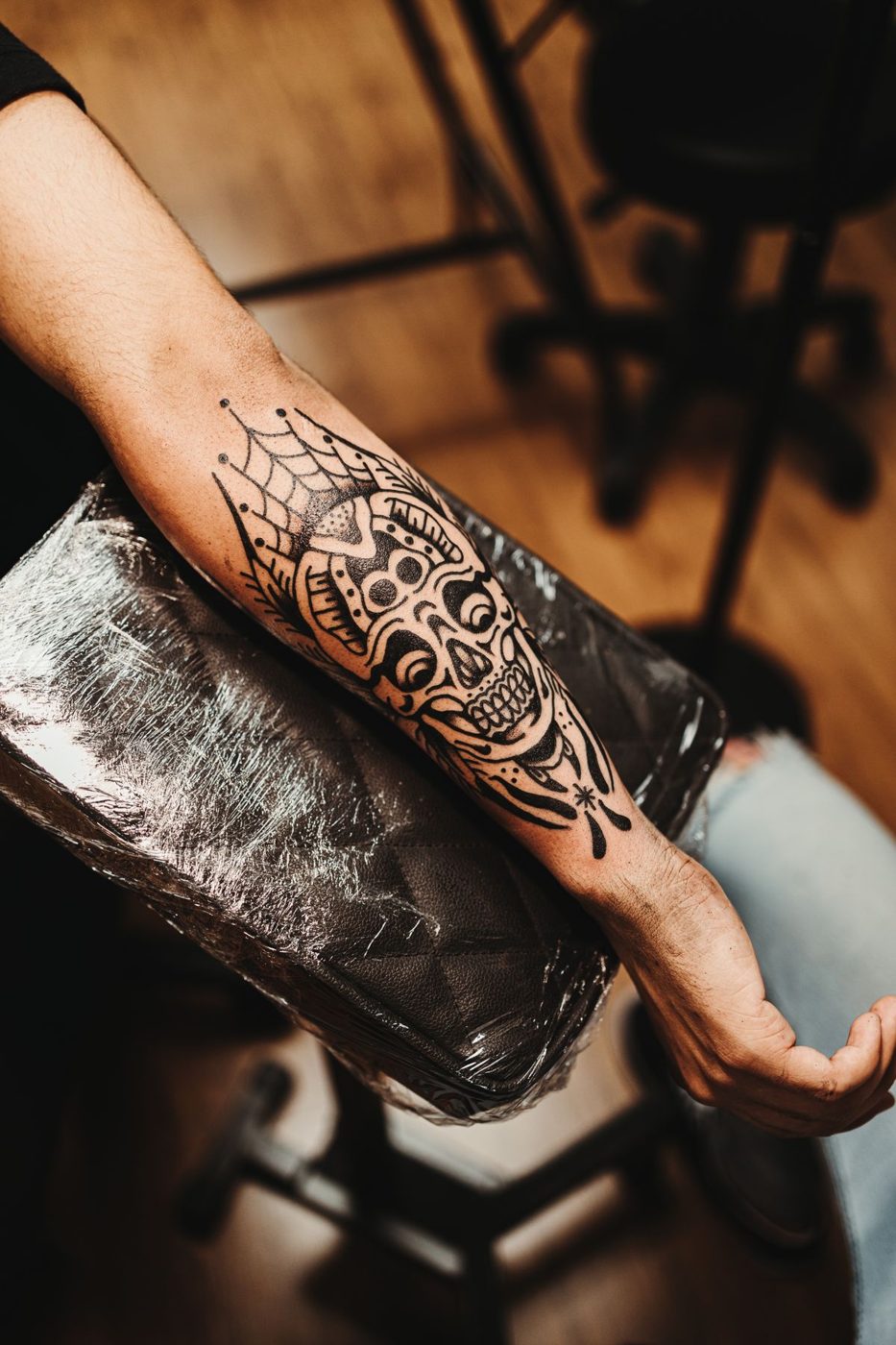
Inkppl's blackwork guide defines blackwork as any tattoo style that uses exclusively black ink, then splits it into geometric, ornamental, dotwork, blackout and illustrative work. No Regrets Tattoo describes heavy black lines and solid areas balanced against bare skin, patterns built to follow the body's curves.
On aging, Inkppl calls black pigment the most stable tattoo ink and says it holds density longer than virtually any colour. It also warns that lines sitting too close together eventually blur into each other, and that dotwork packed too densely in small areas can read as a muddy grey patch after a decade. Spacing is the whole game.
Removal is where the old advice gets sloppy. Ray Studios says black is the easiest colour to treat because it absorbs every laser wavelength. But the same studio notes that a heavily saturated tattoo holds more pigment, and more pigment often means more sessions. We found no source that ranks blackwork against other styles for removal, so we won't. Treat it as permanent.
Suits you if: you want bold, graphic and permanent. Think twice if: you want colour, softness or fine detail. Ask the artist: to show solid black that healed without patchiness, and how they space lines and dots so they don't close up.
Fine Line / Single Needle
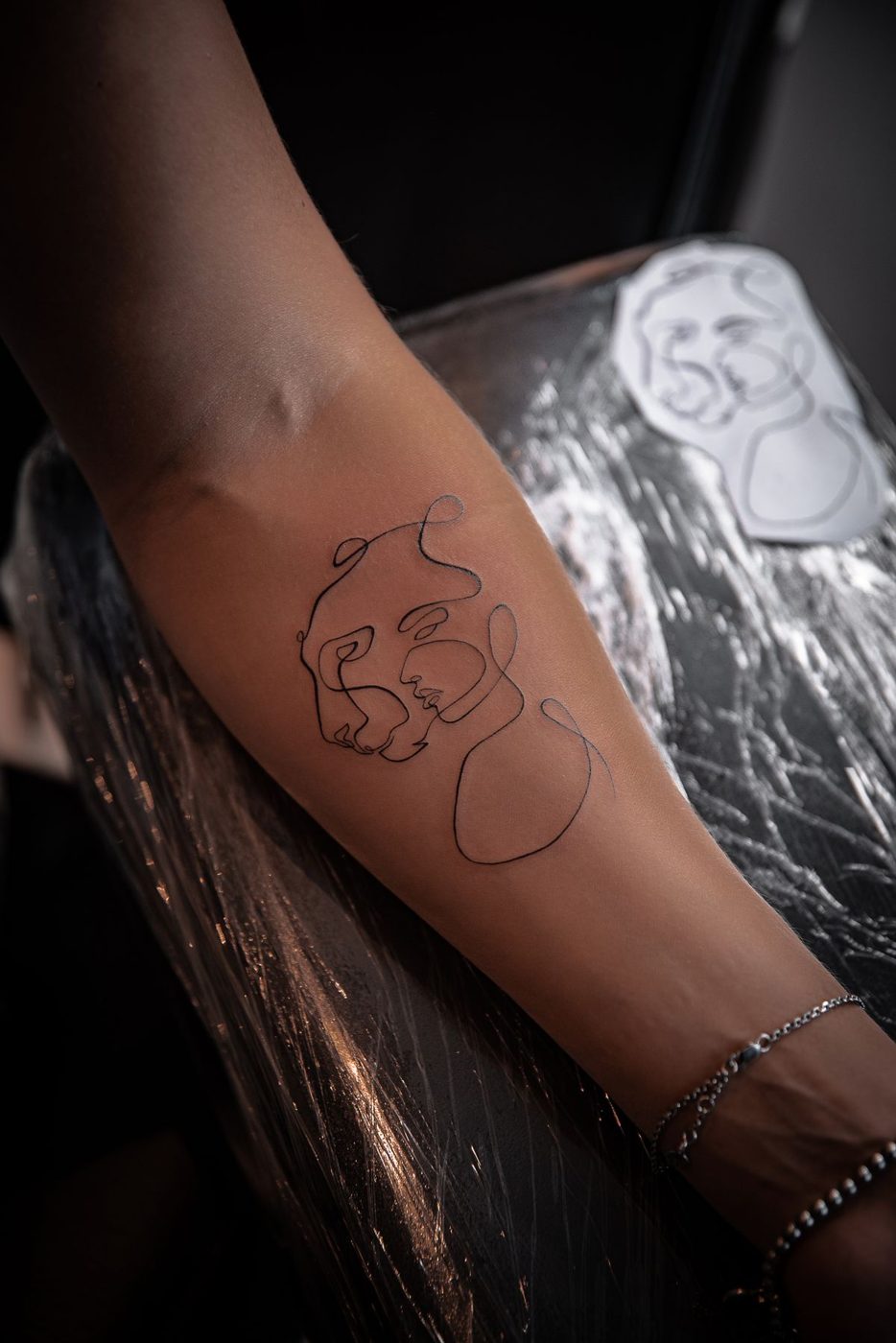
Delicate linework, minimal fill. Certified Tattoo Studios says fine line is done with a very small needle, so the ink doesn't go in as deeply. The trade-off, per the same piece: it tends to fade more quickly than other styles, is more susceptible to blurring over time, and can be harder to touch up.
Placement and size do a lot of the work. In their longevity guide, fingers and hands blur fast from washing and sun, ribs and elbows distort delicate work, and the upper arm, upper back and thigh hold best. Small, intricate designs risk blurring into an ink cloud, and larger designs with room between elements keep their shape better. Our fine line guide covers the rest.
Suits you if: you're fine with sun care and the odd touch-up. Think twice if: you want it on fingers or hands. Ask the artist: for healed fine line work, not fresh shots. That guide lists shaky linework and blowouts as red flags.
Black and Grey Realism
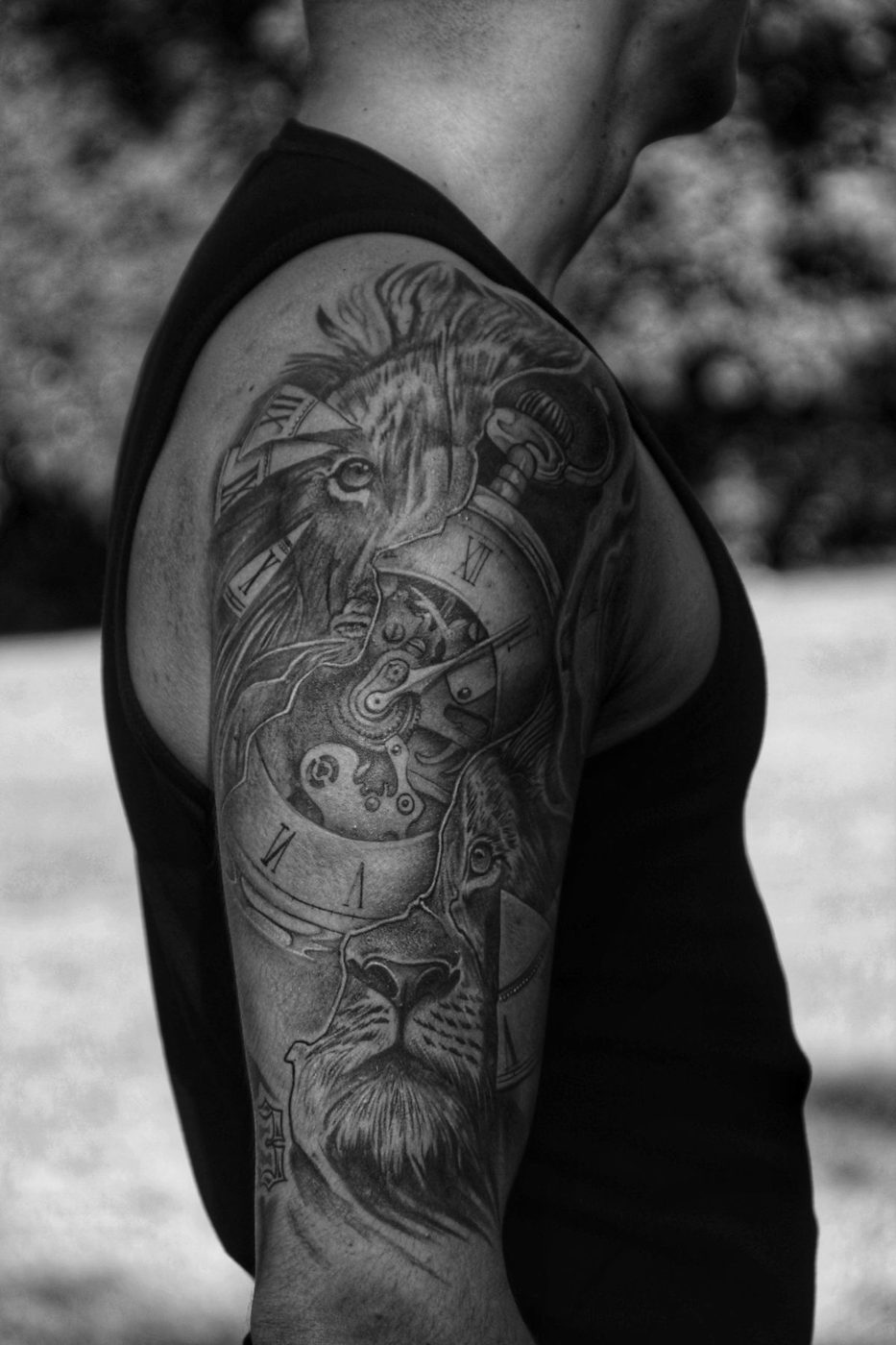
Realistic subjects, rendered in tones of black. Wikipedia's black-and-gray entry says the tones come from black ink diluted with distilled water, and that photo-realistic portraits are commonly done in the style. It traces black and grey to prison tattooing and Chicano culture in Los Angeles, with artists like Ed Hardy bringing it into mainstream shops.
The same entry says black-and-gray portraits resist deterioration better than colour portraits, and that strong blacks matter because tattoos fade over the years without that contrast. The catch is time in the chair. Tattooer and author Memphis Cadeau writes on Painful Pleasures that skin gets traumatized in long sessions, symptoms typically show after 6 to 8 hours, and tiny details added to traumatized skin are likely to disappear in the heal.
Suits you if: you want soft, shaded portraits or animals. Think twice if: you want it done in one marathon sitting. Ask the artist: for healed portraits, and how they split a big piece across sessions.
Neo Traditional
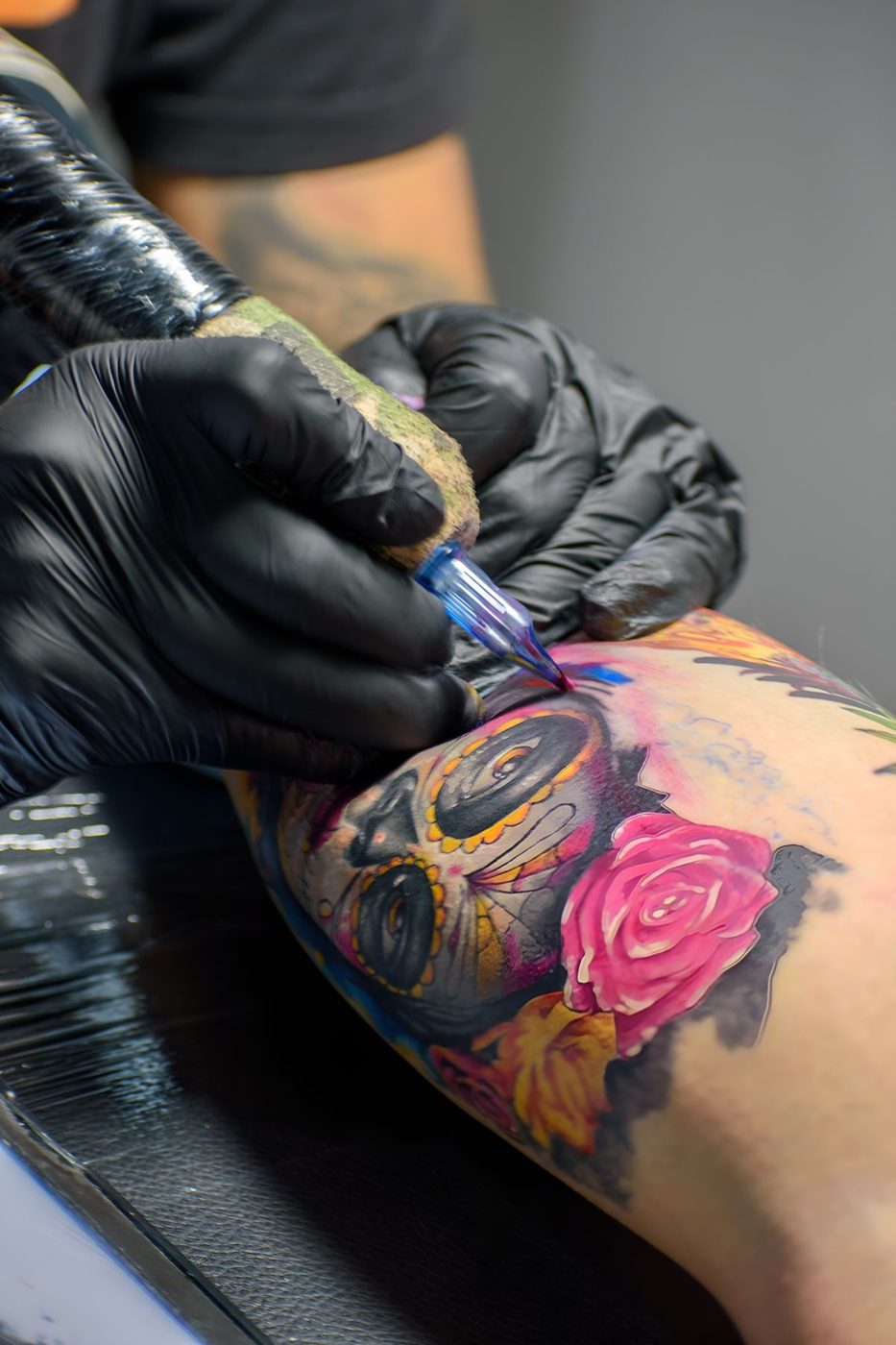
Same bold-outline backbone as traditional, with more going on inside it. Club Tattoo's guide describes thick primary lines plus thinner secondary lines, a full-spectrum palette with blending and gradients, layered shading, and subjects like stylized animals, ornate objects, portraits and mythological designs.
On aging, Certified Tattoo Studios says neo-traditional tends to age well because of its bold lines, though artist skill is a major factor. Club Tattoo adds that neo-traditional benefits when the artist is experienced at managing density and composition.
Suits you if: you want traditional's structure with more subject range. Think twice if: you assume it's the same as American traditional. The line variation, palette and shading are different. Ask the artist: for neo-traditional work specifically, and bring references.
Geometric
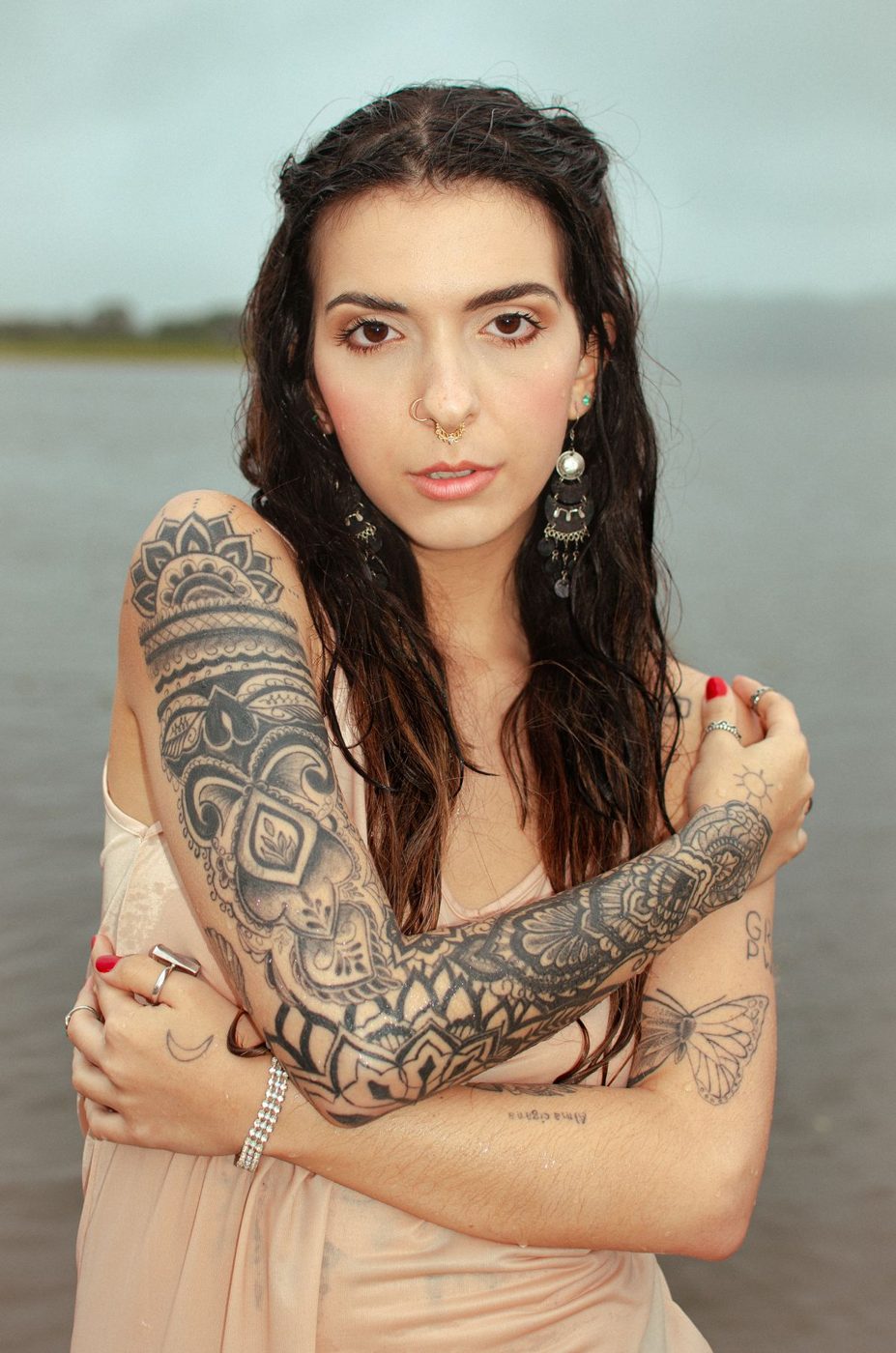
Tattoo Life describes geometric tattooing as defined by clean lines, perfect symmetry and abstract forms, drawing on sacred geometry, mandalas, natural patterns and architecture. It names line clarity, symmetry and compositional precision as the pillars, and says the style increasingly blends with blackwork, dotwork and minimalism. Inkppl's blackwork guide puts it bluntly: precision is everything here.
We found no source on how geometric ages as its own style. The spacing warning from the blackwork section still applies to anything built from tight lines and dots, so ask how the piece is spaced.
Suits you if: you like order and symmetry. Think twice if: you want loose, organic or forgiving. Ask the artist: for healed straight lines and symmetry, and how they stencil it so it reads right on a curved limb.
Watercolour
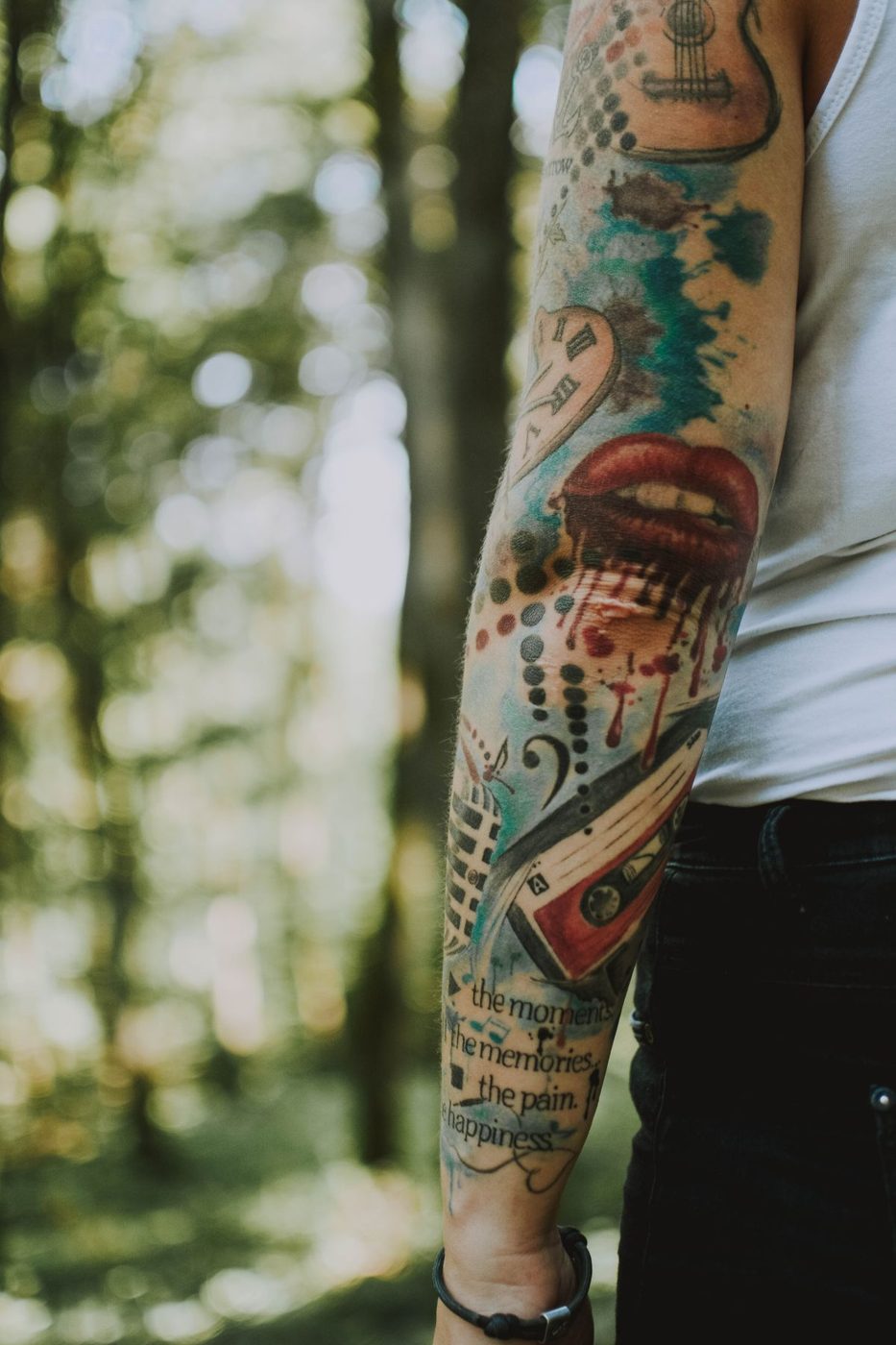
Chronic Ink Tattoo describes a soft, subtle palette often accented with drips and brushstrokes, reproducing a watercolour painting. Artists use colour bleeding, blurring, fading, running and splattering, and the style avoids the defined black outlines of conventional work.
That's also the aging problem. The same shop says watercolour pieces fade more noticeably than traditional tattoos because they use less ink and lack protective dark outlines. It also quotes artist Joel Wright arguing that fading isn't guaranteed, and that artist skill, aftercare, sun exposure and skin health all play in. A hybrid with dark, bold outlines under the colour can extend durability, and touch-ups remain an option. Our post on how watercolour tattoos age goes further.
Suits you if: you accept a softer look over time. Think twice if: you want it to look the same in ten years. Ask the artist: for healed watercolour work, and whether they build a darker base under the colour.
Tribal / Polynesian
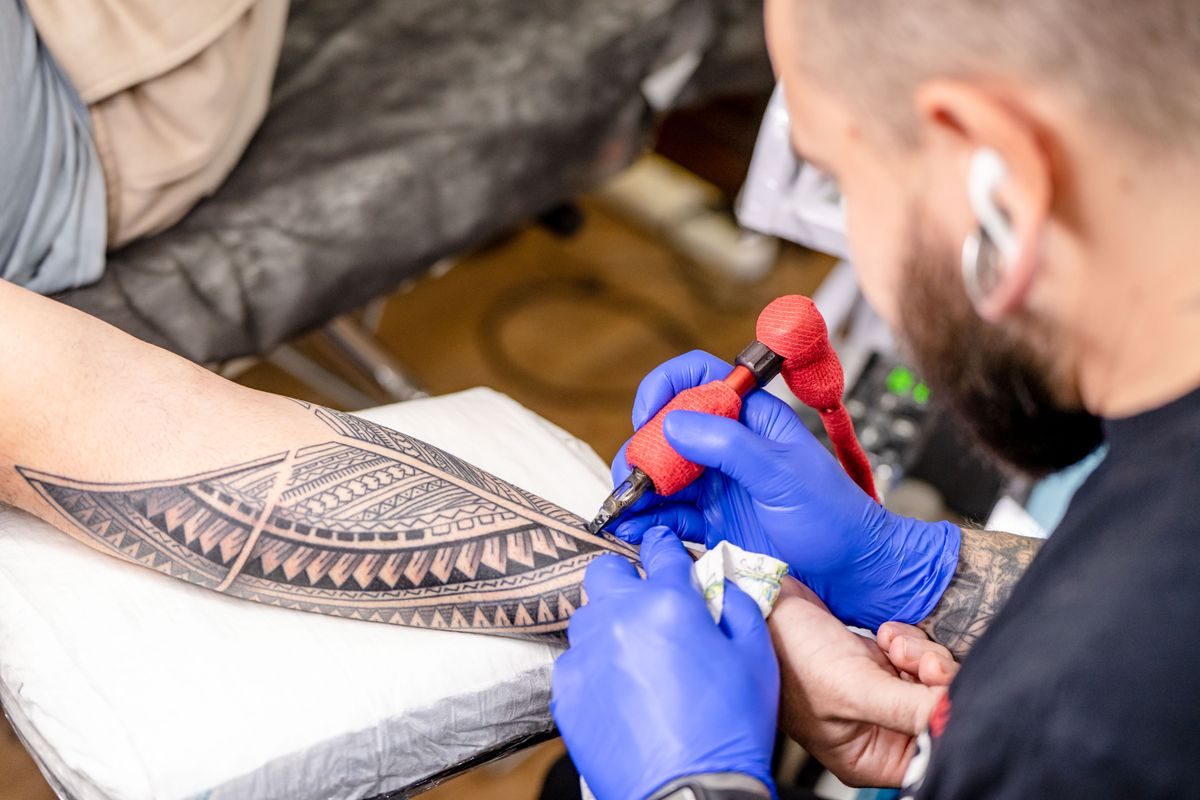
Two different things sit under this heading, and mixing them up is where people go wrong.
First, the traditions. Wikipedia's page on the Samoan pe'a describes the male tattoo as covering the body from waist to knees in symmetrical heavy black lines, arrows and dots, and as a sacred covenant between the recipient, the tattooist and ancestral spirits. The women's malu is lighter, more like filigree. Wikipedia's page on tā moko describes marking as customarily practised by Māori, tied to status and cultural identity. Filipino tattooing is its own thing: Wikipedia places it in Austronesian traditions rooted in the Philippines, not Polynesian ones.
Second, "tribal" as a Western style. Nylon describes the 90s version as solid black ink and thick precise lines, loosely inspired by Polynesian cultures including Māori, Hawaiian and Tahitian, and now viewed critically as appropriation. An Illustration History essay notes designs that were distinct to places like New Zealand and Samoa suddenly appeared on American arms, chests and backs.
Solid black work should behave the way we described under blackwork, though we found no Polynesian-specific aging source. The bigger question here is respect.
Suits you if: you're connected to the tradition and have gone to an artist from it. Think twice if: you want a vague "tribal look" with the culture stripped out. If it's graphic black pattern you're after, ask a blackwork artist for custom work and skip the label. Ask the artist: where the designs come from, and who has the right to wear them.
New School
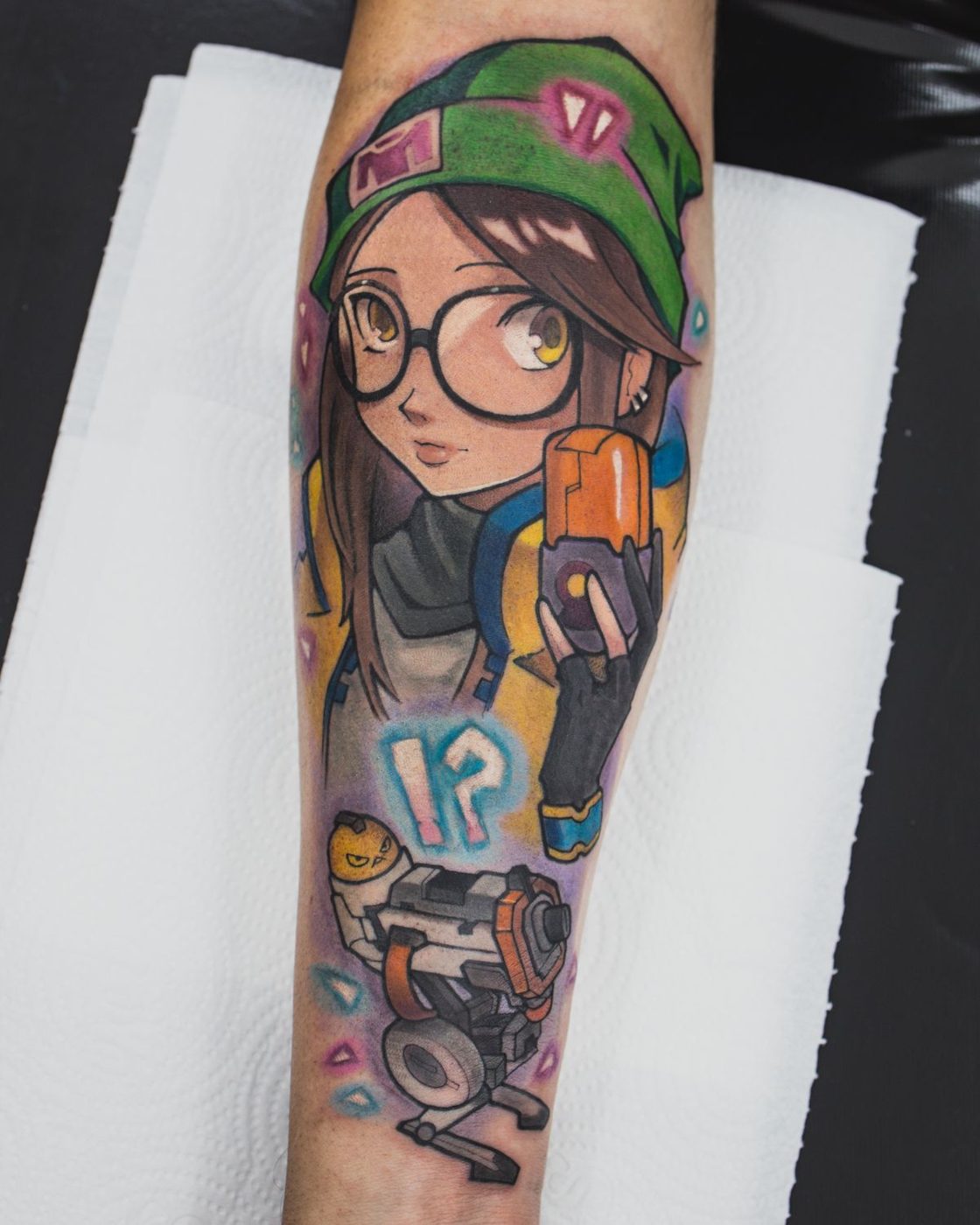
Wikipedia's new school entry describes it as heavy outlines, vivid colours and exaggerated depictions of the subject, compared to cartooning and graffiti art, with hip hop themes like jagged edges and bubble letters. It contrasts the bright colour range with old school's restricted palette. Sources disagree on when it started, anywhere from the 1970s to the 1990s.
We couldn't find a source on how new school specifically ages. Heavy outlines are the same structural idea that helps traditional pieces hold together, but that's our reasoning, not a finding, so ask to see healed saturated colour.
Suits you if: you want loud and character-driven. Think twice if: you want subtle. Ask the artist: for healed work with heavy colour fills, and for custom drawings rather than copied cartoons.
Finding the Right Artist
Knowing the style is step one. Finding someone who works in it, not someone who'll attempt it, is step two.
Ask for style-specific work, healed. Certified Tattoo Studios' longevity guide says a top artist will happily show healed tattoos, because that's what reveals how a piece lasts. Fresh photos only show day one. Our guide on how to vet a tattoo artist covers red flags in more detail.
Browse artists by style and location on Tatulogue, and look for the healed portfolio work, not just the fresh shots.
FAQ
Which tattoo style ages best? No source we found ranks tattoo styles head to head, so be wary of anyone naming one winner. The styles sources describe as aging well lean on bold lines: Club Tattoo credits American traditional's strength to thick lines and simple shapes, and says neo-traditional ages well too. Certified Tattoo Studios says fine line tends to fade more quickly. Sun, placement and artist skill matter for every style.
What is the difference between American traditional and neo-traditional tattoos? Per Club Tattoo's comparison, American traditional uses only thick lines, a simple saturated palette and mostly flat colour. Neo-traditional mixes thick and thin lines, uses full-spectrum colour with gradients, and layers in more shading. It also stretches to stylized animals, ornate objects, portraits and mythological designs.
What is the difference between blackwork and black and grey tattoos? Blackwork is any style that uses exclusively black ink, leaning on heavy lines and solid black areas balanced by bare skin. Black and grey builds tones from black ink diluted with distilled water and is commonly used for photo-realistic portraits. Blackwork can still make gradients through dot density, so the real split is graphic black shapes versus tonal shading.
What is the difference between Japanese and American traditional tattoos? Starbrite Colors describes American traditional as graphic and direct with a limited saturated palette, and Japanese work as more compositionally complex with a broader, more naturalistic colour range. In irezumi the background is a composed part of the design, such as waves, clouds and wind bars, and authentic work needs big formats like a sleeve, back piece or bodysuit.
Can I get a Māori or Polynesian tattoo if I'm not Māori or Polynesian? Wikipedia says authentic tā moko calls for consent, genealogy and historical information, and describes non-Māori wearing it as cultural appropriation. It says the group Te Uhi a Mataora promotes kirituhi, a design with Māori flavour that anyone can wear. It also says non-Samoans receiving a pe'a is extremely rare. If you just want graphic black pattern, ask a blackwork artist for custom work and skip the Polynesian label.
What is the difference between fine line and micro realism tattoos? Fine line describes the line quality: Certified Tattoo Studios says it's done with a very small needle, so ink doesn't go in as deeply. Micro realism describes subject and scale: Inked quotes London artist Esmee Godfrey calling it an adaptation of traditional realism that is more accessible, meaning smaller photorealistic pieces. Both lean on fine needles and detail, and artist Jooa Choi told Inked that in micro realism any fading or loss of detail can become more noticeable.