ARTICLES
Overworked Skin: What It Is, How to Spot It, and Why It Ruins Tattoos
Too many passes. Too much detail. Skin that looks like it's been chewed up. Overworked skin is permanent: here's how to spot it before it's in your skin.
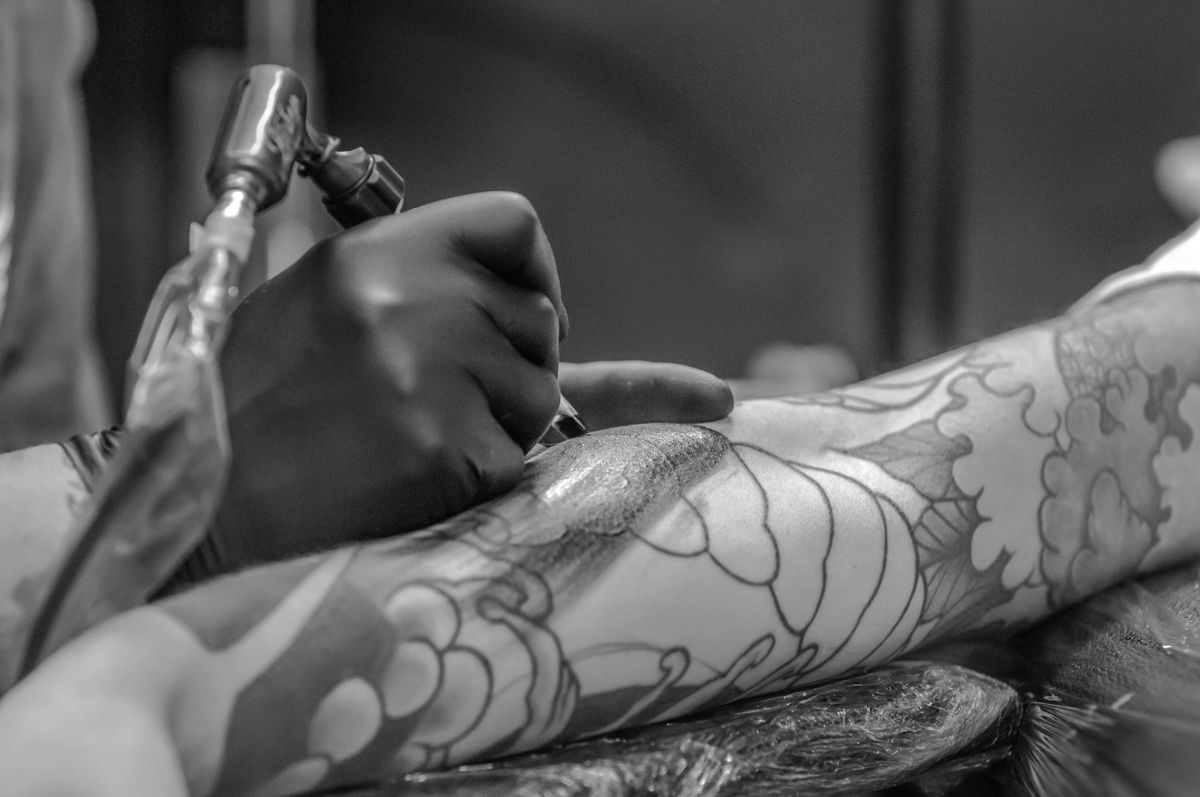
TL;DR: Overworked skin happens when a tattooer makes too many passes over the same area, packing in pigment until the dermis can't hold it anymore. The tattoo looks wild fresh. Healed, it turns into a scar map. Raised texture, blown-out edges, ink that migrates into mush. It's most common in realism and hyper-detailed work. Know the signs before you commit to a booking.
You've seen the reel. Hyper-realism portrait, fresh off the machine: every pore rendered, every shadow dialed in, looks like a photograph trapped under skin. The artist gets 40,000 likes and a wait list six months deep.
Two years later, someone posts the healed photo. The face has melted. The shadows have bled into each other. Where the highlights were packed tight, there's now a patch of raised scar tissue that catches the light at the wrong angle. The overworked skin tattoo that looked like a flex is now a cautionary screenshot passed around artist group chats.
This isn't rare. It's one of the most predictable failure modes in tattooing, and it's almost entirely preventable if you know what to look for before you book.
What Overworked Skin Actually Is
Overworked skin means the dermis has been traumatized past the point of healing cleanly. A tattooer goes over the same section too many times, packing more pigment, chasing contrast, trying to pull out detail the skin can't realistically hold. The dermis tears. Scar tissue forms. The skin can no longer carry the ink correctly.
Here's the mechanics: ink lives in the dermis, not the epidermis. Every needle pass is a controlled injury. The body heals around the pigment and locks it in place. That process has limits. Push past them: too many passes, too much pressure, or too tight a grouping of needle hits, and the skin stops accepting ink and starts just scarring.
The result shows up in a few ways:
- Raised texture: sections that feel rough or ridged, not smooth like normal healed tattoo skin
- Ink fallout: areas where pigment refused to stay because the dermis was too damaged to hold it
- Blown-out edges: ink spreading laterally into the surrounding skin because the trauma pushed it outside the intended lines
- Milky or muddy saturation: packed areas that look cloudy instead of crisp, because the layers of ink and scar tissue are competing
None of this shows up immediately. Fresh off the machine, an overworked piece can look incredible. It's in the heal, six weeks, six months, two years out, that the damage surfaces.
How to Identify Overworked Skin in Healed Work vs. Fresh
Fresh tattoos hide overwork. Healed tattoos tell the truth. Swelling, plasma, and the initial boldness of freshly deposited ink mask almost everything in the first few days.
When vetting an artist, you need healed photos, not fresh work galleries. Specifically:
Red flags in healed photos:
- Highlights that look raised or shiny in an unnatural way (scar tissue reflects light differently than skin)
- Shadows that have spread and merged, losing any separation between tones
- White ink that has gone grey, yellow, or just vanished; white is especially vulnerable to overwork
- Skin texture visible through a section that should be solid; that's fallout from pigment that didn't take
- A general "dirty" look in areas that were meant to be clean mid-tones
What good healed realism looks like: Clean transitions. Separation between light and dark. Skin that sits flat. Highlights that are bright without being raised. Details that are still readable at distance, not blown into each other.
The difference is obvious once you've trained your eye. Pull up healed photos of artists you're considering and compare them side by side. If an artist's fresh gallery is fire but they don't post healed work: that's a reason to ask why.
Which Styles Carry the Highest Overwork Risk
Not every style asks this much of the skin. Some are inherently safer. Explore the full breakdown across styles in our tattoo styles guide.
Highest risk:
Color realism and photorealism are the worst offenders. The style demands extreme contrast, fine detail, and often multiple passes to build up the tonal range. Artists who learned the style chasing Instagram likes, without the foundational hand control, will pound a section trying to get the perfect shadow, not knowing when to stop.
Hyper-detail black and grey runs into the same problem. The difference between a well-executed piece and an overworked one is the artist's restraint. The skin can only hold so much information in a given area. Trying to force more detail than the space allows means more passes, more trauma, more scarring.
Blast-overs and cover-ups are high-risk by nature: the artist is tattooing over already-compromised or already-saturated skin. A bad blast-over that tries to pack new ink over old ink without the technical skill to manage it creates a mess of overworked, layered scarring.
Realistic portraits, specifically faces, are notoriously difficult. The skin on the arm, chest, or thigh has different elasticity, different texture. An artist who can nail a portrait in theory but doesn't understand how that specific placement heals will overwork it trying to compensate.
Lower risk styles: Traditional, neo-traditional, blackwork with clean packing, Japanese. These styles were built with aging in mind. Bold outlines, high contrast, limited mid-tone complexity. They hold differently than detail-heavy work: here's the full aging breakdown.
What Happens Long-Term to Overworked Skin
Left alone, it doesn't get better. Scar tissue is permanent. Once the dermis forms it, the skin doesn't reabsorb it and return to normal.
The long-term picture, depending on severity:
Ink migration. Pigment that was pushed too aggressively spreads outward through the dermis over time. Lines that were meant to be crisp become blurry halos. Fine line details bleed into surrounding skin. The piece softens into something unrecognizable from what was planned.
Total detail loss. Sections that were overworked lose ink faster than properly laid work. The trauma and subsequent fallout means less pigment anchored in the dermis. What was packed as a rich black shadow might be a washed-out grey patch in five years.
Raised scarring. Hypertrophic scars, raised, sometimes itchy, often discolored, can develop in sections where the trauma was significant. These change the visual texture of the piece permanently and can make future work in that area complicated.
Touch-up failure. If you try to correct overworked skin with more tattooing, you're tattooing over scar tissue. That's harder to saturate, heals inconsistently, and often leads to further overwork as the artist tries to compensate.
The brutal reality: some overworked pieces are unfixable. A laser consult is possible, but even removal is harder over scar tissue. You're dealing with a permanent record of a technique problem.
Red Flags in an Artist's Portfolio or Consultation
Vetting a realism artist means reading their portfolio like a problem set, not a mood board.
Portfolio red flags:
- No healed photos. Every artist should be able to show healed work. If the portfolio is 100% fresh-off-the-machine, ask specifically for healed shots. "I don't really have any" is a significant red flag.
- Healed photos are all immediately post-heal (a few weeks). You want two-year healed photos, not six-week healed. The real settling happens over the first year or two.
- Extreme detail in small formats. Tiny realistic portraits, micro realism with intricate line work in an inch-square space; these are almost impossible to execute without overwork. If an artist is doing them regularly, ask how they heal.
- Blown highlights. In fresh work, look at the brightest areas. If the skin looks raised, puffy, or the highlight area looks blown out and undefined, that's a warning sign.
- Heavy-handed backgrounds. Dense filler backgrounds that look packed hard are often where overwork hides. The foreground subject might look clean; the sky or background might be wrecked.
Consultation red flags:
- The artist doesn't ask about placement considerations or express any concern about the size-to-detail ratio of the design you're bringing in.
- They don't mention anything about how the piece will age, or they dismiss the question.
- They agree to pack in significantly more detail than seems reasonable for the canvas without pushing back.
How to Ask the Right Questions Before Booking Realism
Most collectors who end up with overworked skin never asked the questions that would have caught it. Here's what to ask, and what you're actually listening for.
"Can I see healed photos of similar work?" Specifically ask for pieces in the same style and of similar complexity to what you're getting. Healed portraits if you want a portrait. Healed sleeves if that's the project. Don't accept fresh photos as a substitute.
"How many sessions do you typically schedule for a piece like this?" A realism piece that gets done in one aggressive session is more likely to be overworked than one that's approached in stages. Some of the best realism artists will deliberately split complex pieces across two or more sessions specifically to avoid overworking any section.
"What happens if you can't get the detail to sit the way you want it?" This question exposes how an artist handles technical limits. The right answer involves restraint: pulling back, working with what the skin will hold, adjusting the design. A bad answer involves just hitting it more until it works.
"Is there anything about this design or placement that concerns you technically?" Artists who understand their craft will have opinions here. They'll tell you the size needs to go up, or that a certain detail level won't survive a high-friction placement, or that they'd recommend simplifying the background. An artist who agrees to everything without pushback isn't necessarily the confident pro; they might be the one who doesn't know their limits yet.
For finding artists who post actual healed work and build portfolios collectors can actually vet, Tatulogue's artist directory is a good starting point. Filter for the style you want and look at what they're posting: healed work signals a tattooer who stands behind their longevity, not just their freshies.
Fine line carries its own set of overwork adjacencies: here's the full breakdown on fine line risks and how to vet for longevity.
The Collector's Responsibility
One thing worth saying directly: artists don't always overwork skin because they don't know better. Sometimes clients push for it.
"Can you add more detail?" "Can we pack the shadow darker?" "I want it to look exactly like the reference photo." These requests, especially from clients who are paying well and pushing for perfection, put artists in a position where saying no feels like losing the booking.
The best realism artists will hold the line. They'll tell you what the skin can hold and draw a boundary there. But not every artist will.
If you're commissioning detailed work, your job is to pick an artist you trust, give them the space to execute with restraint, and not push for more than the piece can hold. The flex is in the healed photo, not the fresh one.
FAQ
What does overworked skin look like when it heals? Raised, rough texture in specific sections is the clearest tell. That's scar tissue from repeated needle trauma. You'll also see ink fallout in dense areas (patches that didn't hold pigment), blown-out edges where ink migrated laterally, and highlights that look dirty or muddy instead of crisp. The piece often looks softer, grainier, and less defined than it did fresh.
Can overworked skin be fixed? Sometimes, depending on severity. Light overwork with minimal scarring can occasionally be addressed with touch-up work, but only by a skilled artist who understands they're working on compromised skin. Significant scar tissue usually means laser removal is the only real option, and laser is harder on scar tissue than normal skin, so results vary. In some cases, the damage is simply permanent.
Is overworked skin the same as a blown-out tattoo? Related but not identical. A blown-out tattoo typically means ink has spread beyond the intended boundary: halos around lines, blurry edges. Overworked skin is the broader condition: dermis trauma from too many passes, which can cause blowouts but also causes fallout, raised scarring, and long-term detail loss. A blown-out tattoo is one symptom; overworked skin is the diagnosis.
Why do some realism artists overwork skin while others don't? Restraint and technical control. The best realism artists understand the limits of what skin can hold in a given area and design the piece around those limits: choosing detail levels, sizing, and tonal ranges that the dermis can actually support. Less experienced artists, or artists chasing social media-level photorealism, keep pushing past those limits trying to match a reference photo. Client pressure to add "just a bit more" also plays a role.
How long does it take for overworked skin to show up? Most overwork becomes visible between six weeks and six months as the piece settles and swelling subsides. More significant scarring and ink migration can continue developing for one to two years. This is exactly why healed photos, especially ones that are a year or more old, are the real test of an artist's work. Fresh photos are almost useless for assessing overwork risk.
Understanding the difference between a tattooed piece that ages well and one that doesn't starts with knowing what causes the damage in the first place. Overworked skin is predictable. It has known causes, identifiable warning signs, and vettable risk in an artist's portfolio, if you know what to look for.
The short version: ask for healed photos, specifically. Study them hard. Ask the questions that make a mediocre artist uncomfortable. If an artist's work looks incredible fresh but their healed gallery is thin or nonexistent, that tells you something.
The best collectors aren't just people who find great artists; they're people who ask the right questions before they sit in the chair. If you want to keep building that eye, subscribe to the Tatulogue newsletter. We send healed portfolio breakdowns, artist vetting frameworks, and culture writing for collectors who take the long view.