ARTICLES
How Tattoos Age: What Actually Happens to Your Ink Over Time
Packed black holds. Tiny fine line doesn't. Here's the honest breakdown of how different styles and placements age, and what to look for before you book.
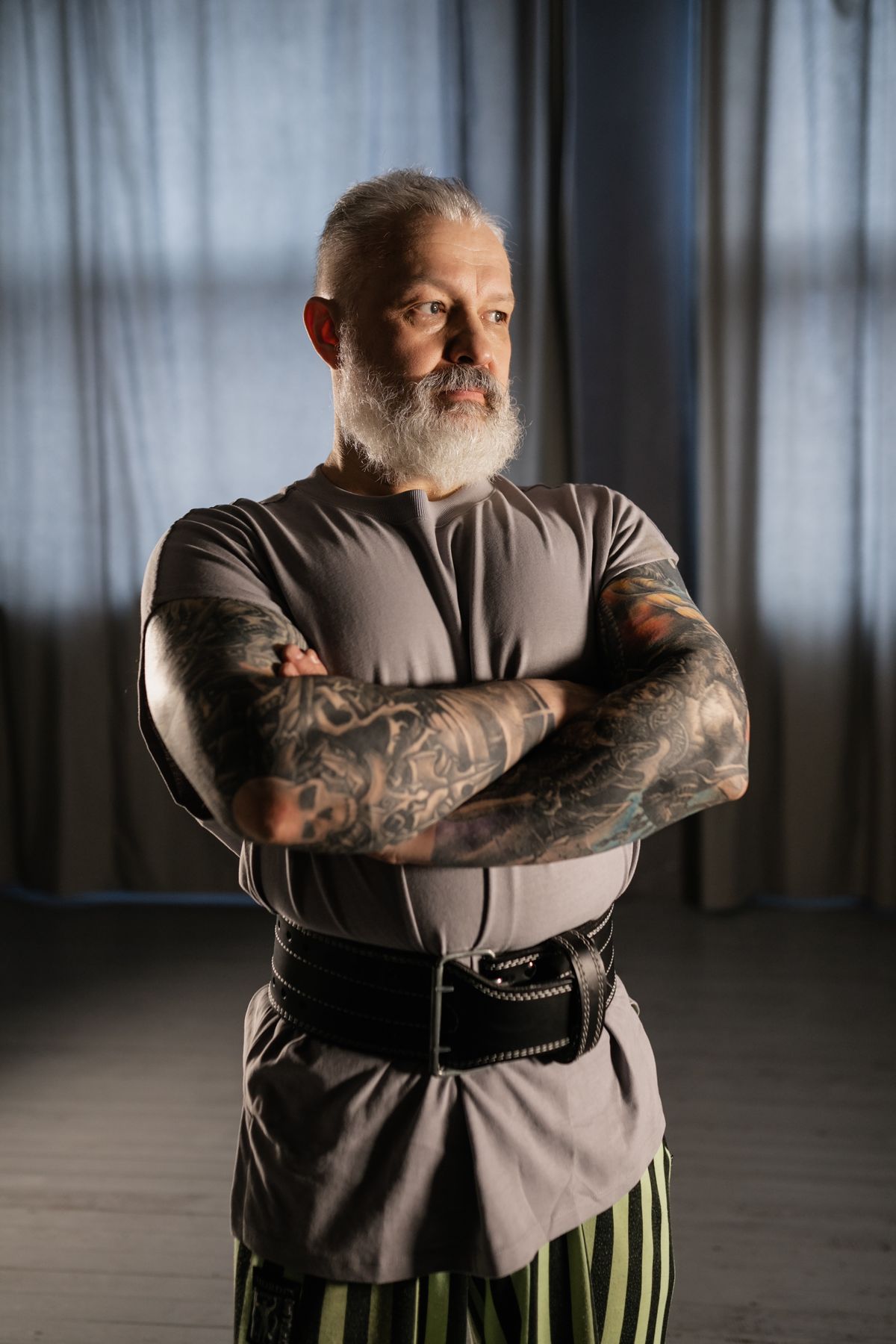
TL;DR: How tattoos age comes down to three things: style, placement, and sun exposure. Packed black and bold traditional work hold for decades. Fine line, watercolour, and tiny detail work fade and blur faster than most people expect. Your skin is not a flat, stable canvas. The more you understand what actually happens under the surface, the better your decisions get before you book.
You've seen the before-and-afters. Fresh piece looks razor sharp, every hair strand accounted for, every dot crisp. Five years later it's a grey smudge. That's not the artist blaming the client for bad aftercare. That's just how tattoos age when the wrong style goes in the wrong placement at the wrong scale.
Understanding how tattoos age isn't paranoia. It's how collectors think before committing to a piece. The skin is alive, constantly turning over, stretching, wrinkling, and absorbing UV. Your tattoo lives inside that. The ink isn't sitting on top of your skin: it's suspended in the dermis, surrounded by tissue that moves, shifts, and changes for the rest of your life.
Knowing what holds and what doesn't will save you from a beautiful piece that looks blown out and muddy by the time you're forty.
What Actually Happens to Ink Inside Your Skin
Your immune system never fully accepts tattoo ink. It doesn't disappear, but it does keep fighting. Macrophage cells, part of your body's cleanup crew, engulf ink particles over time. Research published in the Journal of Experimental Medicine confirmed that these cells hold ink and then pass it to new macrophages when they die, which is part of why tattoos persist but also gradually fade and spread.
The other factor is the dermis itself. It's not a solid wall. Over years, collagen breaks down, skin loses elasticity, and the precise boundaries between ink-saturated dermis and clear skin blur. That's not a flaw in the application: it's physics.
What this means practically: fine lines spread. Packed black holds its mass. Solid fills retain saturation longer than delicate shading. The more ink you put in, the more survives the slow erosion of time.
What Ages Best: Packed Black, Bold Trad, and Thick Linework
Packed black and bold traditional work age better than virtually any other style. Dense saturation gives the ink nowhere to go that looks bad. When it fades slightly, it fades into a slightly softer version of itself: still readable, still solid.
Traditional and neo-traditional pieces are engineered for longevity. Bold outlines, limited colour palette, solid fills. That's not aesthetic conservatism: that's a style built around how tattoos age in real skin over real time. A clean trad piece will outlive trends every time.
Japanese work ages similarly well when done right. Large black fills, deliberate negative space, strong outlines containing colour. The colour might shift, reds go orange, yellows fade faster, but the structure of the piece carries it. You're reading the same image fifteen years later.
Blackwork and geometric work with real saturation hold hard. The key word is real saturation: not a single pass that looks packed fresh but shows gaps at six weeks healed. A well-packed black panel ages into something that looks intentional even as it mellows. That's the goal.
Check out The 10 Most Popular Tattoo Styles in 2026 for a fuller breakdown of which styles are built for longevity and which are trending precisely because they're new enough that nobody's seen how they'll hold.
What Ages Worst: Fine Line, Watercolour, and Tiny Detail
Fine line is a real style with real artists doing serious work in it. It also ages the hardest of anything on this list.
Thin single-needle lines spread in the dermis. Not dramatically in year one, but by year five to eight, those crispy hairlines start to blur at the edges. Whether that's acceptable depends entirely on how bold the line was to begin with and how good the artist's hand is. A lot of fine line work is being done too light, too small, and in placements that move constantly. That's a problem you won't see in the healed photos the artist posts, because most artists post fresh work.
The hard truth about watercolour tattoos: they have no outline holding the colour in place. The washes that make watercolour tattoos look painterly are the same thing that guarantees they'll bleed and fade into unclear shapes within a decade. Some collectors love the way they age: soft, dreamy, almost like an old painting. If that's you, fine. But go in knowing the crisp version you see in the booking photo won't be what you're looking at in ten years.
Tiny detail work, portrait details, micro realism, fine dotwork at small scale, relies on precision that the skin doesn't maintain. Too much detail for the size. That's it. The dermis doesn't hold a 1mm gap between two dots the way paper holds a printed grid. It fills in. Always.
Read the full deep-dive on Fine Line Tattoos: Everything You Need to Know before you commit: it covers artist vetting, sizing, and what healed fine line actually looks like from artists who specialize in it.
Placement Is Half the Equation
Where a tattoo lives determines how it ages as much as the style does.
High-friction and high-flex areas are brutal on tattoos. Inner arms, inner bicep, behind the knee, elbow ditch, wrist, hands, fingers, feet. These spots stretch, compress, and rub against other skin constantly. Colour fades faster. Lines blur faster. Touch-ups come sooner. That doesn't mean don't tattoo there: it means go in knowing what you're dealing with.
Areas with more stable skin age the cleaner. Outer forearm. Upper arm. Thigh. Calf. Shoulder blade. Ribs (they're not easy to sit through, but they hold ink well). These are your long-term bets for anything with real detail or saturation expectations.
Hands and fingers deserve their own warning. The skin on your palms and finger sides turns over fast, takes ink inconsistently, and rubs against everything all day. Even artists who specialize in hand work will tell you upfront: touch-ups are part of the deal. Not failure. Reality.
Neck and face age well on skin that's kept protected from the sun. They age badly on skin that isn't. The thin skin around the eyes is especially prone to spreading. Anyone offering you precise geometric work near the eye socket without discussing aging is not thinking about your long-term interests.
Sun Damage Is the Fastest Way to Wreck a Tattoo
UV is the single biggest accelerator of tattoo aging outside of placement.
The American Academy of Dermatology is consistent on this: UV radiation breaks down the pigment particles in tattoo ink. Colour tattoos fade visibly. Black and grey loses contrast. Fine line work blurs faster. Every session in the sun without protection is adding years of aging to your piece.
SPF 30 minimum, broad-spectrum, on every healed tattoo that gets sun exposure. That's the one piece of aftercare advice that actually changes how your tattoo looks in twenty years. The complete breakdown of what your skin needs long-term is in Tattoo Aftercare: The Complete Guide, including what products are worth using and what's marketing.
Fresh tattoos shouldn't be in direct sun at all during the healing phase. That's not up for debate. Once healed, consistent sun protection is just maintenance. Collectors who've been doing this for decades have visibly better-looking tattoos than people who haven't protected them: the difference is real and it compounds.
How to Read Healed Portfolio Work When Vetting an Artist
This is where most collectors make their mistake. They book off fresh work.
Fresh tattoos lie. The ink is swollen into the skin, lines look tighter than they'll heal, colours look more saturated than they'll hold. Fresh work is useful for judging an artist's technical ceiling: cleanliness, proportion, execution. It tells you almost nothing about how their work ages.
What you actually need to see is healed work: work that's been in skin for at least a year, ideally two or three. Look for whether the lines are still crispy or if they've blown out. Check colour retention in the fills. Look at whether fine details are still legible or if they've merged into each other.
Ask directly. Any artist worth booking will have healed photos of their work. If they don't, that's information. New artists may genuinely not have five-year-old healed shots, that's fair, but they should have six-month and one-year healed work available.
Tatulogue is built specifically around this problem. Artists can catalogue their work with context, style, placement, how long it's been healed, so you're not just looking at fresh flash photos when you're vetting someone for a long piece. It's the information gap that costs collectors the most.
When you're looking at healed portfolios, ask yourself: does this hold up the same way it looks fresh, or did the style require conditions the skin couldn't maintain? That question alone will save you from a lot of regret.
FAQ
How long does a tattoo take to fully age? Most of the visible change happens in the first two to five years. Initial healing is six to eight weeks, but the dermis is still settling for months after that. By year two you have a realistic picture of how a piece will hold. Significant changes after that are mostly sun damage and natural skin aging rather than the tattoo settling.
Do all tattoo colours fade at the same rate? No. Black is the most stable pigment: it fades to grey-green but holds its mass. Whites and yellows fade fastest and are often invisible in healed work within a few years. Reds tend to go orange over time. Blues and greens hold reasonably well. If your piece depends on white highlights for the effect to work, ask your artist how those highlights look at two years healed.
Can you prevent a tattoo from aging badly? You can slow it down significantly. Sun protection is the most impactful habit: consistent SPF on any tattoo that sees daylight. Keeping skin moisturized helps maintain skin quality around the tattoo. Avoiding excessive tanning, sun beds, and prolonged UV exposure all matter. What you can't do is stop aging entirely. The goal is maintenance, not preservation.
Does skin tone affect how tattoos age? Yes, in specific ways. On darker skin tones, high-contrast black work often ages the most visibly well: the saturation reads clearly against the skin for decades. Pastel colours and fine line work can disappear faster on deeper skin tones because contrast is lower to begin with. If an artist hasn't shown you healed work on skin similar to yours, ask for it specifically.
Is it worth getting a tattoo touched up as it ages? Depends on the style and what's happened to it. Solid traditional and blackwork pieces rarely need touch-ups if they were done well: they just mellow. Fine line work often benefits from a refresh pass at five to seven years if lines have blown out. Colour realism frequently needs a colour refresh. Talk to your artist about what a realistic maintenance schedule looks like for the style you're getting before you book the initial session.
The honest version: tattoos age. That's not a problem to solve: it's a reality to plan for. Pick styles that hold. Protect the investment from UV. Vet artists on healed work, not fresh shots. The collectors with the best-looking tattoos at fifty aren't the ones who got lucky: they made informed decisions at the booking stage.
If you're building a collection and want to stay sharp on what holds and what doesn't, the Tatulogue newsletter at tatulogue.com is where we track this stuff: real healed work, honest takes on styles, and no content-farm filler.