ARTICLES
Tattoo Aftercare: The Complete Day-by-Day Healing Guide
Tattoo aftercare guide with a healing timeline, washing, moisturizer, sun and water rules, and when to see a doctor. Checked against AAD, FDA, Cleveland Clinic.
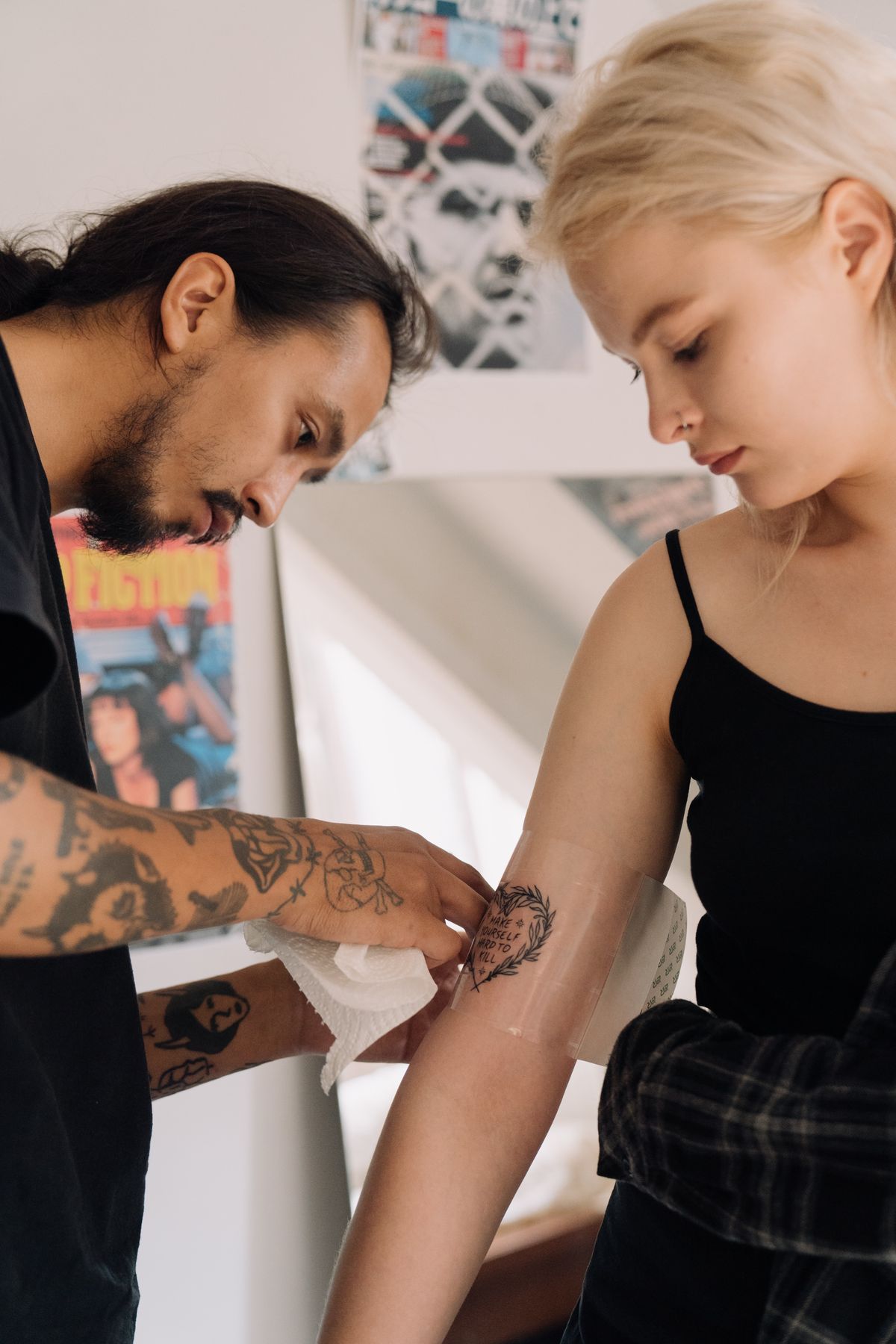
TL;DR: This is the main Tatulogue aftercare guide. Keep the wrap on as long as your artist says, wash gently with mild fragrance-free soap, moisturize lightly, leave scabs alone, stay out of the sun and standing water, and call a doctor if you get fever, spreading redness, pus, or pain that keeps climbing. Where the health sources disagree, we say so.
You walked out of the shop with a fresh wrap on your arm and your phone's already blowing up. Your aunt's texting you to use petroleum jelly. Your roommate swears by coconut oil. Somebody on Reddit says to leave it completely dry. Your coworker is sending a 12-step routine they found on TikTok.
Some of that holds up and some of it contradicts the dermatologists. Here's what the sources agree on, where they split, and what we couldn't confirm.
How We Checked This
Every medical claim in this guide comes from a page we opened for this update: the American Academy of Dermatology, the Cleveland Clinic, the FDA, a Western Australia Department of Health page, Nemours KidsHealth, a Sacramento County environmental health handout and a Norfolk health site hosted on nhs.uk.
They agree on the basics. They disagree on details like how often to moisturize and when sunscreen goes on, and we flag each one. We're a tattoo site, not doctors. Your artist's written instructions come first, and a health care professional comes before any blog, this one included.
Tattoo Healing Timeline at a Glance
Healing time depends on who you ask and how big the piece is, so read the middle column as a map, not a stopwatch. For more on each stage, see our breakdown of tattoo healing stages.
| Day / phase | What you will see | What to do |
|---|---|---|
| First hours | The tattoo is covered by a bandage or clear adhesive film. Fluid builds up under it: a mix of blood, plasma and excess ink. | Leave it covered as long as your artist says. Sources range from at least 3 hours to 24 hours for a standard bandage, and several days for an adhesive film. Wash your hands before you touch it. |
| Days 1 to 3 | Sore, red, maybe swollen or warm. A little oozing of blood and ink is normal. | Take the wrap off as instructed. Wash twice a day with mild fragrance-free soap and warm water, pat dry with a clean paper towel, then moisturize or use the ointment your artist recommended. |
| Days 4 to 7 | Itching, flaking, light scabs forming. One county source says a light scab falls off in 7 to 10 days. | Keep washing and moisturizing. Do not pick. Wear loose clothing. No soaking. |
| Week 2 | Flaking and scabs can still be around. KidsHealth says tattoos usually take about 2 weeks to heal, other sources say longer. | Keep washing and moisturizing twice a day. Stay out of the sun and out of baths, pools and hot tubs. |
| Weeks 3 to 4 | Cleveland Clinic says that after about three weeks the scabs are healing and there's less flakiness. Western Australia's health department lists 2 to 3 weeks for tattoos. | Keep up the sun and water rules until it's fully healed. Sunscreen goes on only after healing, per two of the sources. |
| Two months and beyond | Cleveland Clinic says the top layer should typically be healed by two months, leaving the tattoo looking bright and vibrant. Deeper layers can take several more months. | Wear sunscreen (SPF 30 or higher). If something looks off, show your artist, and show a doctor if it looks like a reaction. |
The First Hours: Leave the Wrap On
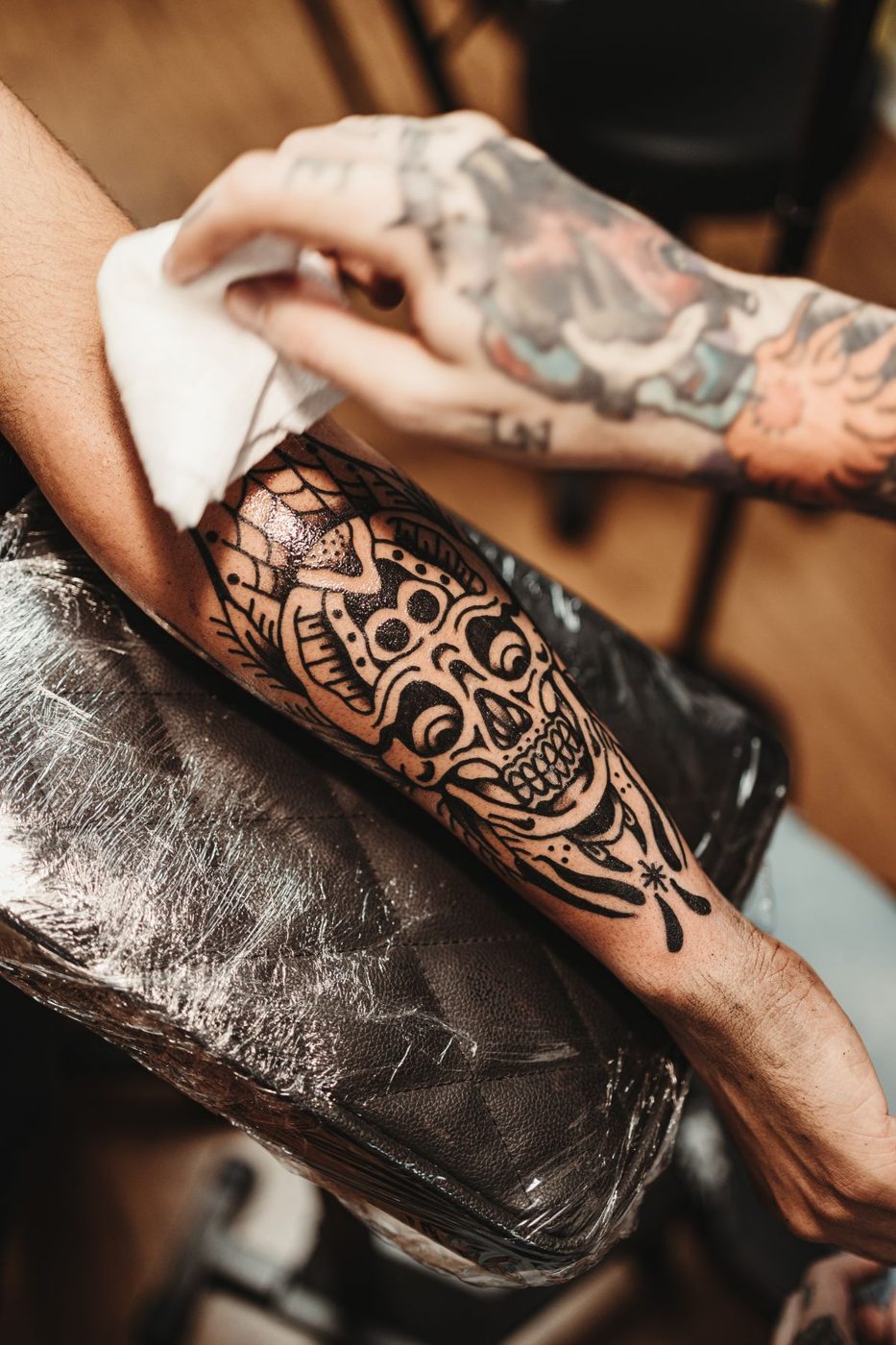
Your artist covers the piece before you walk out. The Cleveland Clinic says the artist should put on a thin layer of ointment and a clear bandage, and that you may need to leave the bandage on at least three hours or more, depending on tattoo size. That's a floor, not a rule.
Other sources run longer. The Sacramento County handout recommends removing the bandage within 3 to 24 hours and not putting a new one on. Nemours KidsHealth says to keep a bandage on for 24 hours, or as directed. The Norfolk page says a medical adhesive that looks like clingfilm is designed to stay on for several days.
Different wraps run on different clocks. Go with what your artist told you, because they know what they put on you. The adhesive-bandage question, including when to skip it, has its own page: when not to use a second-skin bandage.
Expect fluid. The Norfolk page describes it as a mix of blood, plasma and excess ink, and the Cleveland Clinic lists a little oozing, soreness and redness as normal. The FDA also says you may notice some redness, swelling, or warmth of the skin after a tattoo.
Wash your hands before you touch a new tattoo, and the Western Australia health department adds that you should not let others touch it until it is healed.
Washing a New Tattoo
Washing is the part every source agrees on, and it's boring on purpose. The Cleveland Clinic's dermatologist-reviewed steps start with washing your hands, then soaking the bandage in warm water to soften it before gently peeling it off. After that, it says to wash with mild, fragrance-free, antibacterial soap without perfumes or dyes and warm (not hot) water, twice a day.
How you do it matters. Don't scrub or rub. KidsHealth says to use your fingers. The Cleveland Clinic says to pat the area dry with a clean paper towel, and to skip exfoliating until it's fully healed.
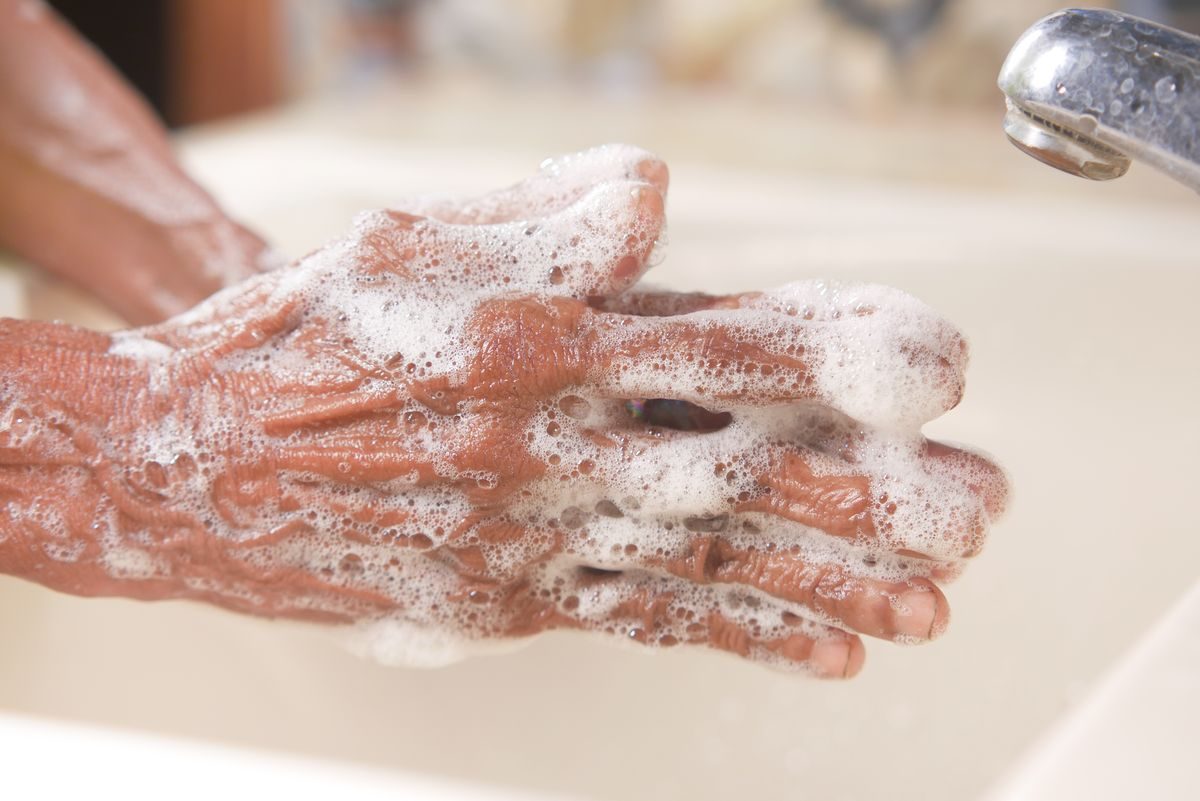
Showers are fine. Both the Sacramento County handout and KidsHealth say you can shower, but not soak. Washing twice a day carries through weeks two to four per the Cleveland Clinic, not just the first few days.
Moisturizer, Ointment, and the Petroleum Jelly Argument
This is where the sources split, so here's each one.
- The Cleveland Clinic says to use a simple moisturizer or recommended ointment twice a day so skin doesn't dry out, crack or bleed.
- KidsHealth says to apply moisturizing ointment or tattoo salve 2 to 3 times a day for a week.
- The Western Australia health department says don't over-use healing creams and apply only when the skin feels like it's drying out.
- Sacramento County recommends a thin film of medicated ointment for the first 3 days, then a light coating of moisturizing ointment until the skin returns to normal.
- The Norfolk page says to apply whichever ointment your tattooist recommends once the skin has dried.
Nobody says slather it on. Frequency runs from "only when it feels dry" to a few times a day, so ask your artist which they want and stick to it.
Petroleum jelly is the one place the sources line up against it. The AAD says petroleum-based products, such as petroleum jelly, can cause the ink to fade, and recommends a water-based lotion or cream if your skin feels dry. The Cleveland Clinic lists petroleum jelly among things to avoid until healed, saying it can block pores and potentially lead to an overgrowth of bacteria. KidsHealth says not to use it. Sorry, aunt.
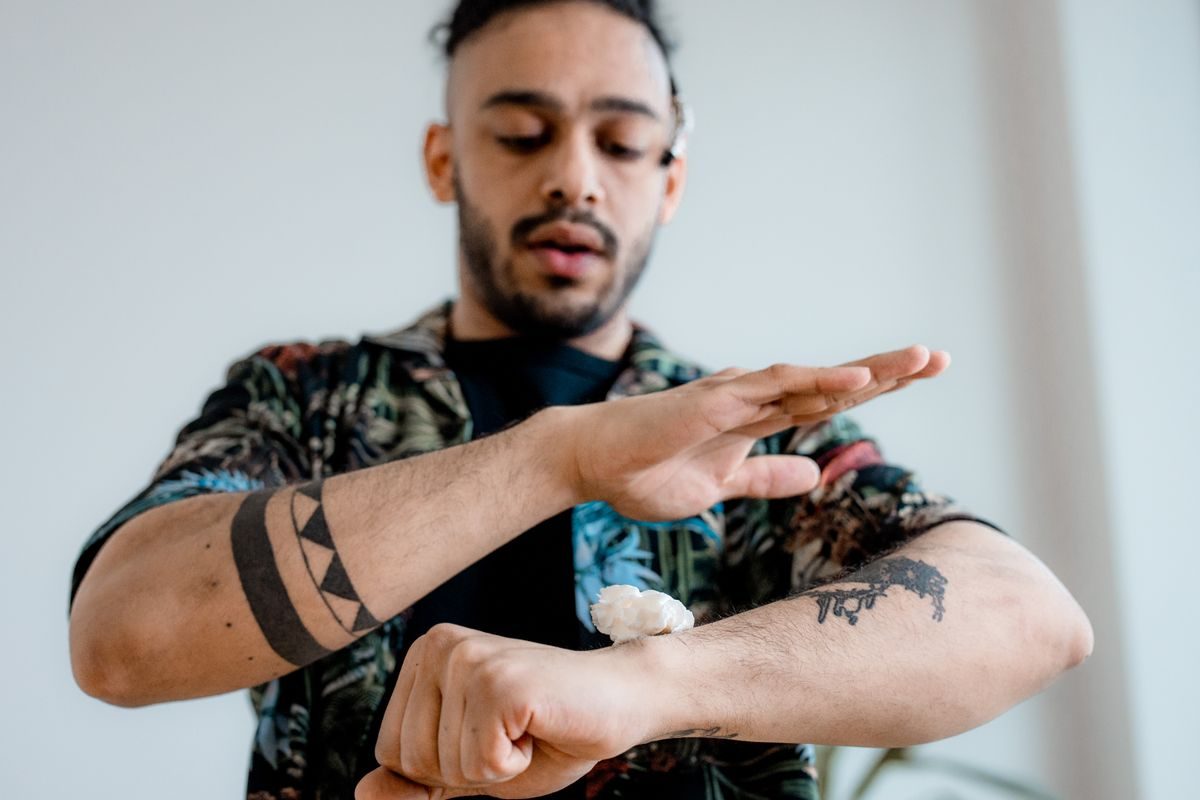
One more note. The sources specify fragrance-free for the soap. For the moisturizer they say "simple" or "water-based." None of them rank brands, and neither will we. Check with your artist and read the label.
Peeling, Scabs, and Itching
This is where people panic and wreck a piece. The AAD says that as your skin heals it can itch and flake, and scabs may form. That's the process, not a problem.
The rule is the same everywhere: hands off. The Cleveland Clinic says scabs fall off on their own, and that picking at them or pulling off flaky skin can irritate the area or cause infection. The Western Australia health department says picking or scratching slows the healing time and may lead to secondary infections. The Cleveland Clinic also says to keep washing and moisturizing twice a day to prevent scabbing and ease itching.
You'll hear artists say that picking pulls ink out. We get why. None of the pages we opened said it, though, so file it under shop talk. What the sources do say is enough reason to leave it alone: irritation, slower healing, infection, and the Cleveland Clinic also notes that some people develop unusually thick, raised scars.
Timelines for scabs don't match. The Sacramento County handout expects a light dry scab to fall off in 7 to 10 days. The Cleveland Clinic describes scabs healing at about three weeks. Bigger pieces, rougher placements and different skin run on different clocks, so use the table above as a map.
Sun, Water, and Clothing
Sun. The Cleveland Clinic says to avoid sunlight while healing because the area may be sensitive and UV rays can cause ink to fade more quickly. The AAD agrees UV can fade some inks and recommends a broad-spectrum, water-resistant sunscreen of SPF 30 or more. For the long game, see how tattoos age.
The timing is where they differ. The Cleveland Clinic and the Western Australia health department both say not to put sunscreen on the tattoo before it's healed. KidsHealth says to keep it out of the sun until it's fully healed, then use SPF 30 or higher. The Sacramento County handout says to stay out of direct sun and tanning booths for 7 to 10 days and use SPF 30 or higher. The AAD page doesn't give a healing window. The one thing that fits all of that: keep it out of the sun while it heals, loose clothing over it if you have to be outside, sunscreen once it's healed.
Water. Showers are fine, soaking is not. The Cleveland Clinic lists immersing the area in water (hot tubs, bathtubs, pools) among the things to avoid until fully healed. Sacramento County says no swimming or hot tubs until the tattoo is completely healed. The Western Australia health department adds that a waterlogged tattoo will take longer to heal.
Notice the wording: until healed, not for a set number of days. Since healed can mean two weeks or two months depending on the piece, ask your artist for your date. Pools, the ocean and baths each have their own details in our guide to swimming with a new tattoo.
Clothing. The Cleveland Clinic lists tight clothing among things to avoid and recommends loose, breathable clothing so the area can air out. The Western Australia health department suggests loose clothing or clothing washed in soft detergents.
How Size and Placement Change Healing
The Cleveland Clinic keeps this short: healing depends on size and location. Larger tattoos can take a few months to fully heal, and smaller tattoos on the hands, wrists or arms might flake or itch but will likely heal faster than ones covering the chest or back.
That's all we could confirm. We couldn't find a source for claims about how specific spots like ribs, feet or fingers heal, so we're not going to make them up. Placement is worth thinking about before you book, and our tattoo placement guide covers that side of it.
What Normal Healing Looks Like
Normal is messy for a while. Between the FDA, the Cleveland Clinic and the AAD, here's what counts as expected after a tattoo:
- Redness, swelling and warmth of the skin (FDA).
- A little oozing, a mix of blood and ink, plus soreness (Cleveland Clinic).
- Itching, flaking and scabs (AAD).
- Top skin layer healed around the two-month mark, tattoo looking bright and vibrant, with deeper layers taking several more months (Cleveland Clinic).
One honest wrinkle: the FDA lists warmth as expected after a tattoo, while the Cleveland Clinic lists skin that feels hot to the touch as a reason to call a doctor. The sources frame those differently. Early mild warmth is one thing. Hot skin that gets worse, or comes with other symptoms, is another. If you can't tell which one you've got, call.
See a Doctor If
We're not going to diagnose anything over the internet, and neither will any website. These are the signs the sources say to act on.
- Fever, chills, shaking or sweats. The FDA lists high fever, shaking, chills and sweats for more aggressive infections, which it says might require antibiotics, possibly for months, or hospitalization and/or surgery.
- Redness that darkens or spreads instead of fading. The AAD lists it as an infection sign, and the Cleveland Clinic lists redness that expands farther from the tattoo site.
- Red streaks running from the tattoo toward the center of your body (Cleveland Clinic) or toward the heart (Sacramento County).
- Pus or open sores in the tattoo (AAD), or odor or significant drainage (Cleveland Clinic).
- Pain that increases instead of getting better (Cleveland Clinic, KidsHealth), or tenderness at the site (Sacramento County).
- Skin that feels hot to the touch (Cleveland Clinic).
- Bleeding (KidsHealth).
- A tattoo that seems not to be healing, or a rash, redness or bumps near it. The FDA says to contact your tattooist and your health care professional, especially if you develop a fever.
Ink reactions are a separate thing. The AAD says an allergic reaction can happen immediately, weeks later, or years later, that most people who react are reacting to one specific color, and that red is often the culprit. Signs include redness, swelling, itch and small pimple-like bumps. The Cleveland Clinic describes it as a red, bumpy rash. If a reaction lasts longer than 1 or 2 weeks, the AAD says to see a board-certified dermatologist.
Who to call: the AAD says see your doctor or a board-certified dermatologist right away for any sign of infection. The Norfolk site, which is UK-based, suggests going back to your tattooist, booking with a GP or walk-in centre, or asking 111 if the tattoo doesn't look or feel right. When in doubt, call a health care professional.
Things You'll Hear That We Couldn't Confirm
We checked the usual aftercare lore against the pages we opened. Here's what didn't make it in because we couldn't back it up:
- Specific product picks. No source we opened ranked brands, so we don't either.
- When you can work out again. None of the pages gave a day count. Ask your artist.
- A set number of weeks of "cloudy" skin. We found no source for that, so we won't give you a number to wait for.
- "Full healing takes exactly four to six weeks." The sources give a spread: about two weeks to two-plus months, and longer for large pieces.
- How long the itch lasts. No source gave a number.
If you can't find it on a dermatology or health agency page, treat it as an opinion, even from us.
FAQ
Can I shower with a new tattoo? Yes. Sacramento County and KidsHealth both say showers are fine, but not soaking. Use warm water and gentle washing, and pat dry with a clean paper towel as the Cleveland Clinic recommends.
How long does a tattoo take to heal? It depends on who you ask and how big the piece is. KidsHealth says about 2 weeks, the Western Australia health department says 2 to 3 weeks, and the Cleveland Clinic says the top layer is typically healed around two months, with deeper layers taking several more months. Larger tattoos can take a few months.
Can I put Vaseline or petroleum jelly on a new tattoo? Three of the sources we opened say no. The AAD says petroleum-based products can cause the ink to fade, the Cleveland Clinic says to avoid petroleum jelly and KidsHealth says not to use it. The AAD recommends a water-based lotion or cream if your skin feels dry.
Can I swim with a new tattoo? Not until it's healed, according to the sources we opened. Sacramento County says no swimming or hot tubs until it's completely healed, and the Cleveland Clinic lists pools, bathtubs and hot tubs as things to avoid. Details on pools, oceans and baths are in our swimming with a new tattoo guide.
When can I put sunscreen on a new tattoo? Sources differ. The Cleveland Clinic and the Western Australia health department say not before it's healed, and KidsHealth says SPF 30 or higher once it's fully healed. Sacramento County says to stay out of direct sun for 7 to 10 days and use SPF 30 or higher. Ask your artist which they prefer.
How do I know if my tattoo is infected? Signs the sources list include fever or chills, redness that gets darker or spreads, red streaks, pus or open sores, odor or significant drainage, and pain that gets worse instead of better. See a doctor or a board-certified dermatologist right away if you have signs of infection, and don't try to diagnose it yourself.