ARTICLES
Tattoo Healing Stages: What's Actually Happening Week by Week
Day 3 looks rough. Week 2 looks milky. Week 6 is when it's actually healed. Here's what's happening at each stage and what to watch for.
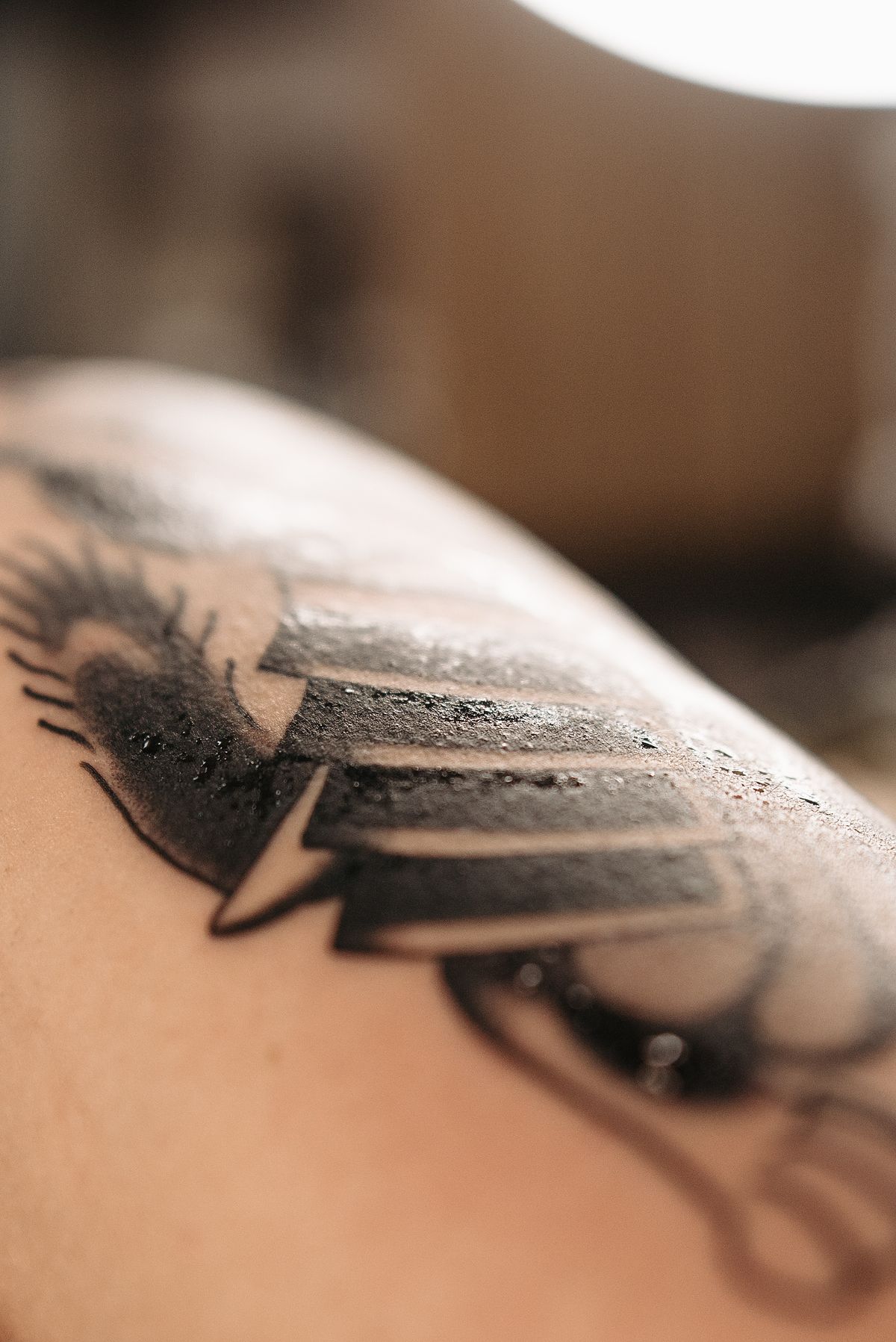
TL;DR: A fresh tattoo goes through three distinct phases: surface healing in week 1 (oozing, swelling, peeling, all normal), the milky cloudy phase in weeks 2–3 (looks dull, still healing underneath), and full dermal healing from week 4 to 6. Your piece isn't actually done until the dermis locks the ink in. Jump the gun on judging the work, or booking a touch-up, and you'll get it wrong every time.
It's day three. Your piece is red around the edges, ink looks patchy, and there's this weird film forming across the surface. You're spiraling a little. Is it infected? Did your artist mess up? Is it supposed to look like this?
Yes. It's supposed to look like this. This post covers what's happening at each stage; for the full care routine, start with our tattoo aftercare guide.
Tattoo healing stages confuse people because nobody tells you the whole arc before you sit down. You get the basics: wrap it, moisturize it, stay out of the sun, but the week-by-week reality of how skin actually repairs itself after a tattoo session is almost never explained. So the milky phase hits at week two and people panic. They start picking. They book a touch-up too early. They wreck the work.
This is the breakdown you should've gotten at the counter. What's happening under the skin, what it looks like at each stage, what's genuinely fine, and what actually means something's wrong.
Week 1: Surface Healing, Peeling, and What's Normal
The surface of your skin is a wound. Treat it like one for the first seven days.
Your artist broke through the epidermis and deposited ink into the dermis, roughly 1–2mm below the surface, according to research on tattoo pigment placement published in the journal Experimental Dermatology. The body immediately launches its wound-healing response. That means inflammation. That means plasma, blood, and excess ink weeping to the surface. That means the first 24–72 hours looking worse than when you walked out of the shop.
By day two or three, you'll likely see:
- Swelling and redness around the tattooed area: normal, especially on fleshy spots
- Weeping: a clear or lightly tinted fluid called plasma seeping out alongside ink
- A warm feeling to the touch: your immune system doing its job
- Tightness as the top layer of skin starts to crust
Around day four to seven, the peeling starts. This is where people get weird. The peeling skin often has color in it: it looks like the tattoo is flaking off. It's not. That's just the damaged epidermis shedding. The ink that matters is already locked several layers deeper. Let it peel naturally. Do not pick it. If you pull a flake that isn't ready to come off, you're pulling real ink with it and creating a soft spot in the healed piece.
For your full day-by-day aftercare protocol, the Tattoo Aftercare: The Complete Guide covers washing, moisturizing, and what to put (and not put) on a fresh piece.
Weeks 2–3: The Milky, Cloudy Phase
This is the stage that breaks people's brains. Your tattoo looks dull, faded, almost foggy. It's fine.
What you're seeing is a new layer of epidermis forming over the tattooed dermis. That fresh skin is thicker and less translucent than the skin it replaced. The epidermis regenerates completely in about 2–4 weeks. That's basic dermatology. Until that new layer fully matures and thins out, it acts like a frosted window over your piece.
Collectors call this the "milky phase" or just "cloudy." Your linework looks softer. Colors look muted. If you just got black and grey, the whole thing might look like someone turned down the contrast. Don't compare it to the photo you took right after the session: fresh is saturated and raw. Cloudy week-two isn't the finished product.
What you should be doing during this window:
- Keep moisturizing but scale back the frequency: skin shouldn't look greasy
- Stay out of direct sun entirely: UV exposure at this stage can permanently fade new ink
- No soaking (pools, baths, ocean): the new epidermis is fragile
- Stop wearing tight clothing or anything that rubs the area
If you're getting fine line work, this phase matters even more. Fine lines heal with less margin for error: picking or rubbing during weeks two and three can cause dropout that looks like the artist missed lines. They didn't. You wrecked the heal.
Weeks 4–6: Full Dermal Healing
The surface looks healed. It's not fully healed. This distinction matters more than most people know.
By week four, your piece will look close to done. The peeling is over, the cloudiness is clearing, and the colors or blacks are starting to come back. But underneath the epidermis, the dermis is still settling. The wound-healing cascade involves three overlapping phases: inflammatory, proliferative, and remodeling, and that remodeling phase runs for weeks past when the surface looks normal.
This is why most reputable artists won't do a touch-up before the six-week mark. Touch-ups done at week three or four on skin that looks healed but isn't can cause trauma to a dermis that's still organizing collagen and locking pigment. You end up with blowouts, irregular saturation, or healing problems you didn't have the first time around.
Wait the full six weeks. Minimum. For larger pieces, heavily saturated work, or pieces on high-movement areas like elbows, wrists, or feet: wait longer. Eight to twelve weeks isn't overkill.
What Healed Work Actually Looks Like vs. Fresh
Fresh tattoos are misleading. They look sharp, saturated, and almost too perfect because the skin is still swollen and the ink hasn't settled. It's like seeing a print before it's dried: the colors read differently once everything stabilizes.
Healed work sits differently in the skin. Lines look slightly softer. Colors shift slightly warmer or cooler depending on the pigments used. Black and grey settles into the skin and takes on depth. This is normal and expected: an artist who's been doing this for years already accounts for how their work will look healed. That's part of the craft.
The best way to vet an artist before booking is to look at their healed work, not just fresh photos from the day of. Tatulogue lets you browse artist portfolios specifically for healed results, not just the glamour shot from the wrap table. There's a significant difference between an artist who photographs well fresh and one whose work actually holds up.
Red Flags at Each Stage
Most of what happens during healing is normal. Some things aren't. Here's where to pay attention.
Week 1 red flags:
- Spreading redness beyond the tattoo border (not just around it)
- Hot, swollen, and getting worse after day three instead of better
- Green or yellow discharge: that's infected, not just plasma
- Fever or red streaks tracking away from the area: get to a doctor immediately
Weeks 2–3 red flags:
- Raised bumps filled with fluid that aren't just normal peeling texture
- Itching so intense it's keeping you up: could indicate an allergic reaction to specific pigments, particularly red, yellow, and some blue pigments (per the American Academy of Dermatology)
- Large sections of ink visibly missing before the peel phase is over: this usually means something disrupted the heal
Weeks 4–6 red flags:
- Raised, thickened areas that feel like scar tissue forming: keloid response
- Persistent ink fallout in specific spots without explanation
When in doubt, call your artist. Not a Facebook group. Your artist.
Second Skin and Wrap Aftercare
Second skin (Saniderm, Tegaderm, Derm Shield, all the same concept) has changed how a lot of studios handle the first few days of a heal. If your artist sent you home wrapped, here's what's actually happening.
The wrap creates a sealed, moist environment over the fresh piece. That fluid pooling under the bandage, plasma, ink, a little blood, is normal and actually beneficial. Moist wound healing accelerates epidermal regeneration and reduces scabbing. Less scabbing means less risk of ink disruption during the peel phase.
Standard protocol for most second skin applications:
- First wrap: left on for 24–48 hours (some artists go up to 72 for larger pieces)
- Remove carefully: in the shower, pulling back slowly against the skin, not straight up
- Second application (if your artist uses two rounds): worn for three to five days
- After removal: the tattoo is still fresh, still healing: start your regular aftercare routine
A few things that trip people up with second skin: if the seal breaks, remove the wrap. A compromised seal lets bacteria in and traps it. Also, some people react to the adhesive: redness at the border of the wrap is usually just irritation from the adhesive, not infection. It clears fast once the wrap is off.
FAQ
How long does a tattoo take to fully heal?
Surface healing, the peeling and visible repair, wraps up in two to three weeks for most people. Full dermal healing, where the ink is completely settled in the dermis and the skin above it is fully mature, takes four to six weeks minimum. High-movement areas like hands, feet, elbows, and knees can run eight to twelve weeks for a complete heal.
Is it normal for a tattoo to peel a lot?
Yes. Heavy peeling in days four through ten is completely normal and doesn't mean your tattoo is falling apart. The peeling skin often contains color, which looks alarming but is just the damaged epidermis shedding. The ink that counts is already in the dermis. Don't pick or force the peel: let it come off on its own.
Why does my tattoo look faded or cloudy after two weeks?
That's the milky phase, a completely normal part of the tattoo healing stages. A new layer of epidermis has grown over the dermis, and that fresh skin is temporarily less translucent than mature skin. It creates a frosted-glass effect over the piece. It clears up as the skin matures, usually by weeks three to four.
When can I get a touch-up?
Most artists require a minimum of six weeks before doing a touch-up on healed work. Some prefer eight to twelve weeks, especially for larger pieces or spots on high-friction areas. Going back too early means tattooing skin that's still in the remodeling phase, which can cause new problems. Let the piece fully settle before you judge what actually needs touching.
Can I go in the sun during tattoo healing?
Not directly, and not for the first four to six weeks. UV exposure on healing skin causes ink to break down faster and can cause permanent fading or uneven color. After it's fully healed, always use sunscreen (SPF 50+) on tattooed skin when it's exposed: UV radiation degrades tattoo pigments and contributes to the blurring and fading that happens over years.
The short version: trust the process, don't pick, and wait the full six weeks before deciding the piece needs work. Most "bad heals" are bad because someone couldn't leave it alone.
If you're still building out your aftercare routine or want to understand the full picture from day one through long-term maintenance, the Tattoo Aftercare: The Complete Guide has everything organized in one place.
And if you're at the point of booking your next session and want to specifically find artists whose work holds up long-term, healed examples, not just fresh photos, browse artist portfolios on Tatulogue before you commit.