ARTICLES
Tattoo Placement Guide: Reading Body Flow Before You Commit
A tattoo placement guide for collectors: how placement drives flow, aging, and stretch, which spots hold detail, and how artists map a design to the body.
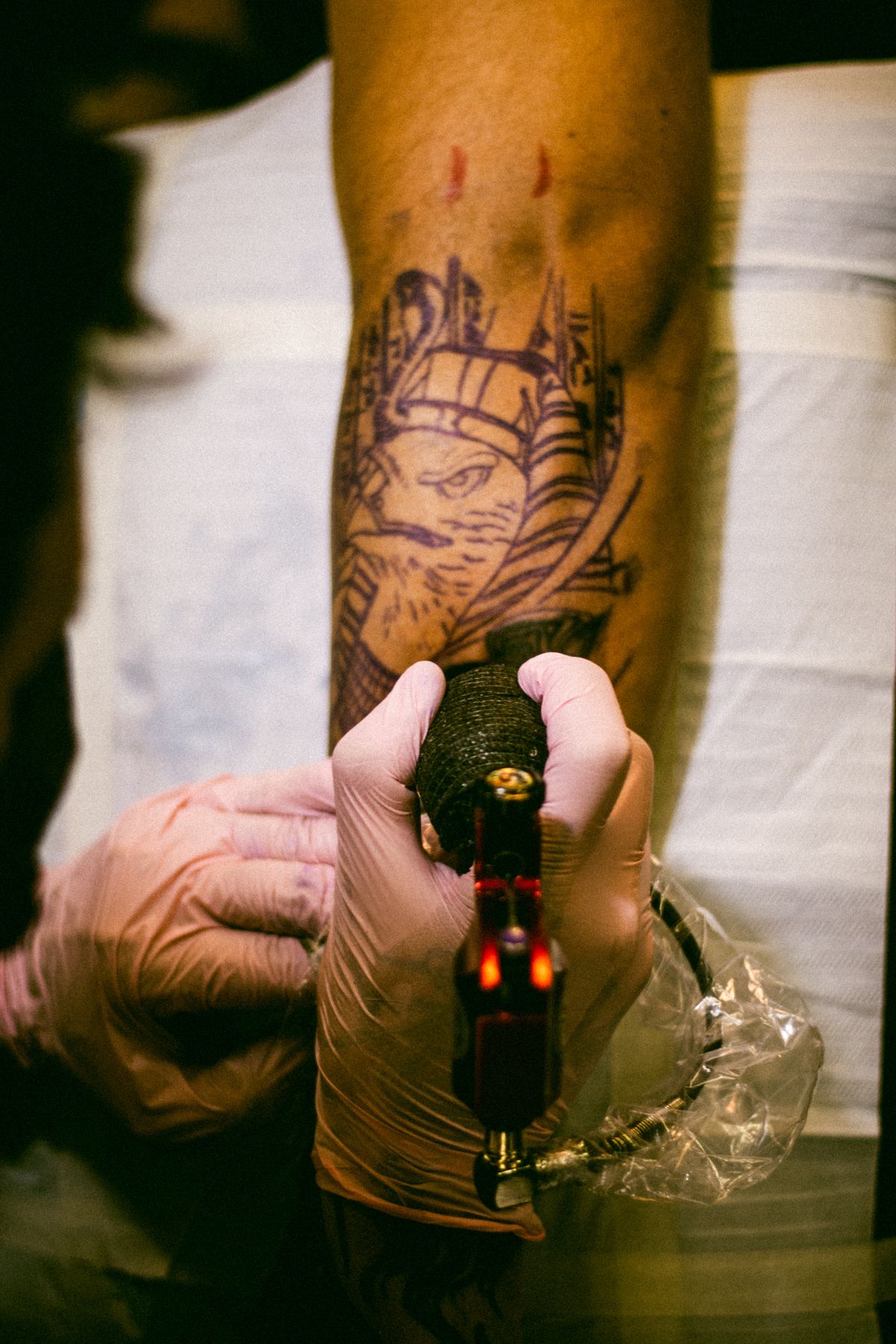
TL;DR: Placement decides more than where a tattoo sits. It decides how it flows, how it ages, and whether it stays readable. Stable spots like outer forearm, thigh, and upper arm hold detail. High-flex zones like hands, elbows, and ribs stretch and blur. Wrap designs around the muscle, not flat against it. Plan placement before the piece, especially if you're building toward a sleeve or patchwork.
Two collectors get the same design. One puts it on the outer forearm. The other crams it onto the inner wrist because it photographs well. Five years later one piece still reads clean and the other's a soft grey smudge with lines bleeding into each other. Same artist. Same ink. Different skin underneath.
That's what this tattoo placement guide is about: reading body flow before you commit, not after you're sitting in the chair wishing you'd thought it through. Placement isn't an afterthought you settle once you've picked the design. It's half the decision. It controls how the piece moves with your body, how it ages, how much it stretches, and whether the detail you paid for survives.
Most placement regret isn't about the art. It's about putting good work in a spot that was never going to hold it, or fighting the body's natural lines instead of riding them. Collectors who build real collections think about the canvas first. The skin moves, flexes, and wraps around muscle and bone, and your tattoo has to live inside all of that for the rest of your life.
Here's how to read it before the needle ever touches you.
How Does Placement Affect Tattoo Flow and Aging?
Placement controls flow because the body isn't flat: it's curves, muscle groups, and joints. A design that wraps with the limb reads clean from every angle. A design slapped on without regard for the muscle fights the body and looks stiff. Placement also drives aging: high-flex, high-friction spots blur and fade faster than stable skin.
Flow is the difference between a piece that looks like it grew on you and one that looks stuck on. Artists talk about following the body's natural lines instead of fighting them: ribs curve out, shoulder blades widen, the forearm tapers. Lay the design along those lines and it complements how you move. Lay it against them and every glance catches the conflict.
Aging tracks placement just as hard. We covered the full breakdown in how tattoos age over time, but the short version: where a tattoo lives matters as much as the style going into it.
Which Body Areas Hold Detail and Which Ones Blur?
Stable skin holds detail: outer forearm, upper arm, thigh, calf, upper back, chest. These spots have thicker skin, more collagen, and less constant movement, so lines stay crisp for years. High-flex, thin-skin zones blur: hands, fingers, feet, elbows, knees, wrists. Constant stretch and friction spread the ink under the surface.
The mechanism is simple. Areas with thicker skin like your back, chest, and upper arms hold ink better because the structure supporting the tattoo stays intact. The collagen and elastin keep the lines where the artist put them.
Joints and extremities are the opposite. Wrists, ankles, and fingers experience more stretching and friction, which causes fine lines to blur faster. The skin flexes thousands of times a day, rubs against everything, and turns over fast. Ink doesn't hold a tight gap in skin that won't sit still.
This is exactly why scale and placement have to match. Pack micro detail onto a knuckle and it's mush inside three years. The skin can't maintain it. We went deep on this in the fine line tattoos complete guide: thin work needs stable real estate or it doesn't survive.
If you want maximum detail retention, put it where the skin barely moves. Outer forearm is the gold standard for a reason.
Wrapping vs Flat Designs: What's the Difference?
A wrapping design follows the cylinder of the limb: it curves around the arm or leg so there's no single "front" and reads from multiple angles. A flat design is built to be viewed straight on from one direction. Wraps suit arms, legs, and ribs. Flat works on broad stable panels like the back, chest, or outer thigh.
The test most artists use is the mirror test, and it's brutal. If the stencil only works standing straight in a mirror, it's probably not built for the body right. A real wrap holds up when your arm hangs at your side, when it bends, when someone sees it walking past you.
Flat designs aren't worse: they're just for different real estate. A big back piece is flat because the back is a broad, relatively stable plane. A chest plate sits flat across the pecs. These read straight-on and that's the intent.
Where people get it wrong is forcing a flat composition onto a round limb. A square block of imagery on a forearm fights the taper. It looks pasted on. Wrap it, let it follow the muscle, and suddenly it belongs there.
How Do Artists Map a Design to the Body?
Artists use body mapping: they find the joints and key muscle groups, then draw flow lines that follow the body's contraction points. Using a skin-safe marker, they outline your unique musculature and divide the area into zones so the main elements land where they hit hardest and the design moves with you, not against you.
The process is hands-on. Artists start by finding the joints and drawing an organic line that follows the contraction points and muscle grouping. That's why a good consultation involves you standing, flexing, and moving, not just sitting flat while they trace a stencil.
There's also a directional convention worth knowing. A general rule is that designs should face the center of the body, toward the heart: front thigh pieces face inward toward each other, for example. It's not a hard law, but it's why some placements feel right and others feel subtly off.
This is the part you can't shortcut by picking a flash design off Instagram and pointing at a body part. The mapping is custom to your anatomy. Two people with the same design need different stencils because their muscle and proportion differ.
Building Toward a Sleeve or Patchwork
If a sleeve or patchwork build is the long-game, placement decisions start with the first piece, not the fifth. Leave room. Think about how pieces will connect, where filler and background will eventually go, and which spots you're reserving for bangers versus smaller work. Random placement now means awkward gaps and fights later.
A sleeve isn't a pile of unrelated tattoos. It's a composition that happens over multiple sessions, sometimes years. The first few pieces set the anchors. Good artists will ask whether you're building toward full coverage before they place a standalone piece, because it changes everything about sizing and position.
Patchwork is more forgiving but still needs intention. The look works because the gaps are deliberate: skin breathing between pieces. As we said about styles in the tattoo styles guide for 2026, patchwork only reads as patchwork when the spacing is planned, not accidental.
Japanese body suits are the masterclass here. The whole tradition is built around full-body composition: wind bars, background, and negative space all mapped to the form. If you want to see how placement and flow get planned at the highest level, the history and iconography of Japanese tattooing breaks down how those pieces are structured around the body.
One hard rule: don't overcrowd. Cramming filler into every gap to "finish faster" wrecks the flow and leads straight to overworked skin. We covered what happens when a spot gets pushed too far in overworked skin and tattoos.
Visibility and Work: What to Consider Before You Place It
Visibility is a placement decision with consequences beyond aesthetics. Hands, neck, and face read as visible work no matter what you do. Forearms show in short sleeves. Upper arms, chest, back, and thighs stay private under most clothing. Think about your job, your industry, and how your tolerance for visible ink might shift over a decade.
The scene's changed a lot: visible work is more accepted than it was even five years ago, a shift we tracked in tattoo trends for 2026. But "more accepted" isn't "universally fine." Hand and neck placements still close some doors depending on where you work.
The honest move is to be realistic about your own situation without letting fear pick a bad spot. Plenty of collectors regret a forearm placement they chose to hide rather than a piece they actually wanted. If you want visible work, get visible work. Just go in clear-eyed about the tradeoff.
Reserve the high-visibility real estate intentionally. Hands and necks are usually later moves for a reason: they're committed placements that say something, and the skin's tougher to work besides.
Pain Tradeoffs by Area
Pain scales with placement and it's worth knowing before you book a long session. The most painful spots have thin skin, little fat, and nerve endings close to the surface: ribs, spine, hands, feet, sternum, armpit. The least painful have padding and fewer nerves: outer thigh, outer forearm, outer shoulder, upper back. Plan session length around what you can actually sit.
The pattern is consistent across every tattoo pain chart out there: the more bone and nerve near the surface, the worse it bites. Ribs are notorious. Hands and feet have bones, tendons, and nerves stacked right under thin skin. The sternum sits directly over bone.
The padded spots are kinder. The outer thigh has few nerve endings and a lot of fat, which makes it one of the easiest places to sit through. Outer forearm and outer shoulder rank low too: thick skin, sparse nerves.
This matters for planning more than people admit. A full rib panel in one sitting is a different animal than the same hours on a thigh. Map your build so you're not stacking your most painful placements back to back, and you'll get through the long pieces with cleaner work and a steadier artist.
Placement is the decision most collectors underthink and later regret. The art gets all the attention at the consultation, but the spot you put it on controls how it flows, how it holds detail, how much it stretches, and how it ages. Stable skin holds. High-flex zones blur. Wrap the limb, don't fight it. And if you're building toward something bigger, plan the canvas before the first piece, not after.
Get those calls right and the work looks intentional for decades. Get them wrong and even a banger ends up muddy in the wrong real estate. If you're building a collection and want to keep your placement instincts sharp, the Tatulogue newsletter at tatulogue.com is where we break down body flow, healed work, and honest takes with zero content-farm filler.