ARTICLES
Tattoo Trends 2026: What Collectors Are Actually Booking Right Now
Blackwork keeps growing. Fine line demand outpaces supply of artists who can execute it. Here's what's actually moving in 2026, and what to avoid.
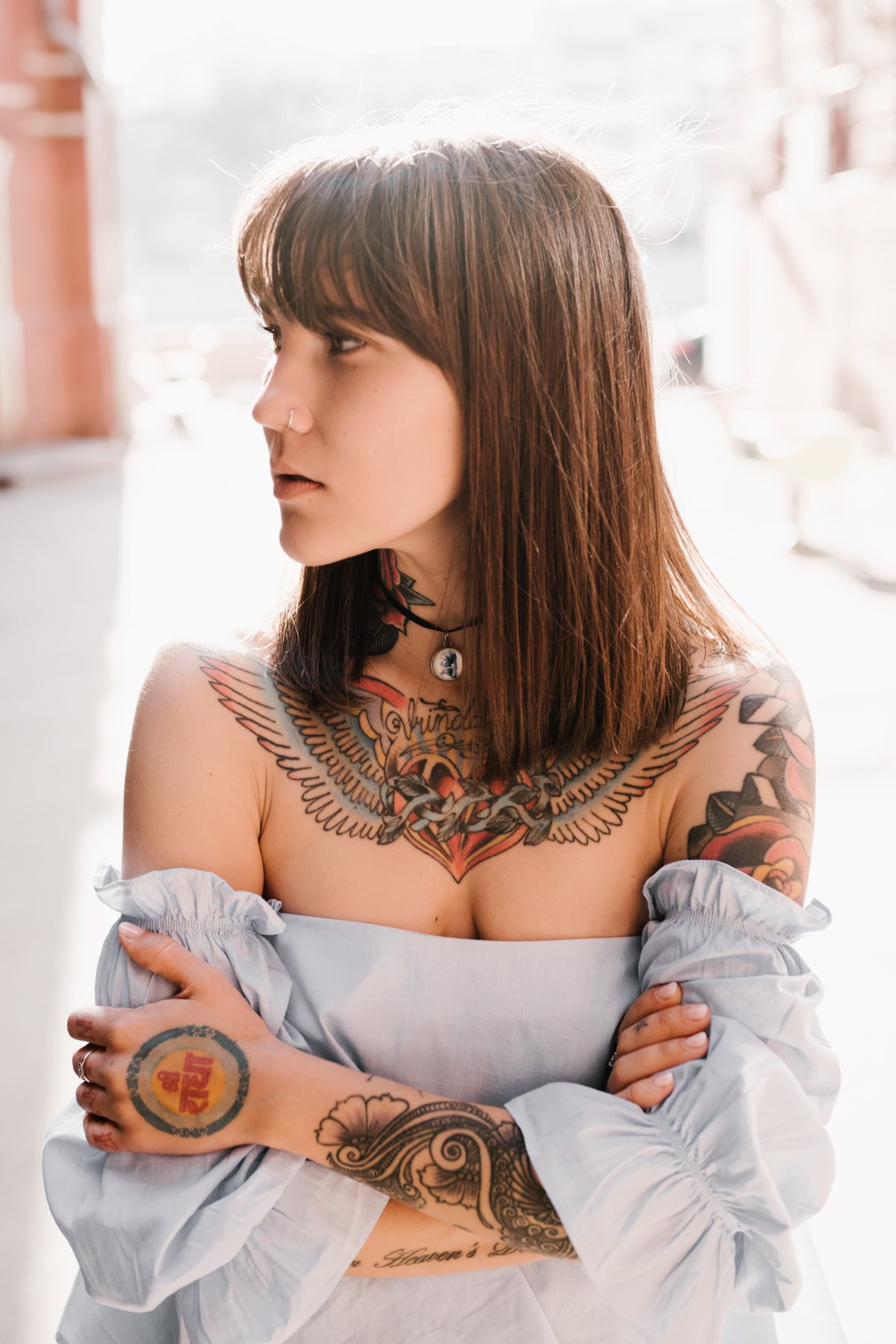
TL;DR: Tattoo trends 2026 break into two lanes: what Instagram is pushing and what collectors are actually booking. Blackwork and neo-traditional are holding strong for good reasons. Fine line demand has outrun the supply of artists who can execute it well. Micro realism is a gamble. Watercolour and generic geometric are cooling off. If you're building a collection, understanding the landscape beats chasing the feed.
Most people looking up tattoo trends 2026 want one of two things: validation that what they like is popular right now, or a cheat sheet for what not to get. This post is for neither.
It's for collectors who want to understand what's actually moving: where demand is concentrated, where the craft gaps are, and which styles are getting booked because they hold up versus which ones are riding a wave that's already breaking. There's a difference between what floods your explore page and what experienced collectors are walking out of shops with. That gap is worth paying attention to. For plain definitions of each style, see our tattoo styles guide. For the business side, see what the data says about the tattoo industry in 2026.
Blackwork Keeps Winning: Here's Why
Blackwork is not trending. It's grown. There's a difference.
It's not spiking on a hype cycle. It's been expanding steadily for over a decade because it solves every long-term problem at once. Packed black reads clean at scale. It ages without ambiguity. It works across placement, skin tone, and session count. When someone builds a sleeve or a bodysuit, blackwork is usually the structural backbone, even if other styles layer on top.
The artists pushing it forward: bold illustrative work, ornamental geometry, Japanese-influenced blackwork, tribal-adjacent heavy pieces. They're some of the most technically dialed people working right now. Waitlists reflect that. Browse artists working in blackwork and heavy styles on Tatulogue and you'll see booking windows stretching six to twelve months out on the better ones.
It's not going anywhere. If you've been sitting on a blackwork concept, the time to book was a year ago. The second-best time is now.
Fine Line: Demand vs. Reality Gap
Fine line is the most searched tattoo style right now, and it has a real execution problem.
The demand is real. The appetite for delicate linework, botanical pieces, single-needle portraiture, and minimal geometric work is massive. The pool of artists who can actually deliver that work in a way that heals clean and holds five years out is much smaller. That gap is where a lot of people are getting burned.
Fine line is technically unforgiving in a way that most clients don't appreciate until they're living with a healed piece that looks like it was drawn in pencil and left in the sun. Blown-out lines, faded linework, migrating detail: these are the failure modes. They're common, and they're permanent.
The artists who genuinely know what makes fine line tattoos last are doing things like strategic sizing, restraint on density, placement choices that account for skin movement and stretch. They're harder to find. Before you book any fine line artist, ask to see healed work. Not fresh photos: healed. That's where the truth is.
Neo-Traditional Is Back, and Not Just Nostalgia
Neo-traditional never fully went away, but it's seeing a real resurgence in 2026, and for legitimate reasons.
The style hits a middle ground that a lot of collectors are gravitating toward: bold linework and solid fill that ages well, combined with illustrative flexibility that goes beyond classic trad subject matter. Animals, botanicals, portraiture with a stylized edge, mythological pieces: neo-trad handles all of it without the fragility of fine line or the heaviness of full blackwork.
It rewards artists with strong drawing fundamentals, and those artists tend to produce work that holds up. A well-executed neo-trad piece in ten years looks intentional: slightly softened, but still readable. That's the goal. See how different styles hold up over time and neo-trad consistently outperforms the trendy options when it comes to healed quality.
If you've been put off neo-trad by older examples that felt dated or garish, look at what's being produced now. The range has expanded. The technique has evolved.
Micro Realism: High Risk, High Ceiling
Micro realism is technically impressive. It's also one of the higher-risk bookings you can make.
When it works: an artist who genuinely understands how to constrain detail for small scale, choosing the right placement, using the right amount of black and grey structure, it's exceptional. A small portrait done right hits different. The problem is the failure rate.
Tiny realism turns to mush when the artist doesn't know restraint. Too much detail packed into too small a space blurs on the heal. Fine gradients that read beautifully fresh fall apart on skin over time. Placement on areas with movement, inner wrist, inside elbow, ribcage, accelerates that breakdown. This is documented, not speculation. Understanding how tattoos age is especially relevant before booking micro realism on a problematic placement.
Ask for healed photos, specifically on the body part you're targeting. If the artist can only show fresh work, that's information.
Patchwork Sleeves and the Collector Approach
One of the more interesting shifts in 2026 is the normalization of the patchwork sleeve as a deliberate collector strategy rather than a default fallback.
Five years ago, a patchwork sleeve often meant someone had accumulated a bunch of unrelated flash with no coherent plan. That's still one version of it. But there's another version: collectors intentionally building varied, eclectic sleeves with pieces from multiple artists, multiple trips, different styles sitting next to each other without forced cohesion. The "built over time" look, worn honestly.
It's a different philosophy than the unified concept sleeve. Neither is wrong. But the intentional patchwork approach has picked up serious cultural traction because it reflects how collectors actually collect: piece by piece, artist to artist, experience to experience. You're not designing a graphic; you're documenting a body of work.
If you're building a sleeve or larger collection, knowing whether you're going unified concept or intentional patchwork before you start matters. It changes every decision from here out.
What's Fading: Watercolour and Generic Geometric
Honest take, because that's what you came for.
Watercolour had a real moment and it's over. Not because watercolour can't be beautiful, some artists do exceptional work in that space, but because the mainstream execution of it was almost always bad, and now it's aging badly on a lot of people. Colour saturation without strong line support bleeds and fades fast. The soft edges that made it look current in 2015 look washed out in 2026. Unless you've found an artist who genuinely knows how to build it with longevity in mind, this is a hard style to recommend.
Generic geometric, the mandala-based, compass rose, sacred geometry work that peaked around 2018–2020, is cooling. Not dead, but the over-saturated version of it is. There are artists doing genuinely technical geometric work with real craft behind it. That's different from the flash-sheet stuff. Know which one you're looking at.
Both styles illustrate the same principle: trending on Instagram and holding up as a tattoo are different things. The full styles guide breaks down what works long-term across all major categories.
Where Experienced Collectors Are Heading
Talk to people with substantial collections and a few patterns emerge.
Japanese is getting rediscovered. Not the tourist version: real Irezumi-influenced work with correct iconography, body flow awareness, background treatment. Artists who actually understand the tradition, not just the aesthetics. The waitlists on serious Japanese work are long and getting longer.
Black and grey realism at medium-to-large scale. Not micro: portrait work done with room to breathe, on placements that support it. Thigh, upper arm, back panel. Scale where the artist can work with restraint rather than cramming.
Large-scale blackwork with texture. Dotwork backgrounds, botanical fills, heavily textured black pieces that use the full skin canvas. This has been building for years and isn't slowing.
Artist-first collecting. The shift toward booking artists whose entire body of work you respect, regardless of specific style, rather than booking a style and finding whoever does it. That approach produces more cohesive, high-quality collections and tends to push collectors toward artists who have strong fundamentals across the board.
How to Use Trend Awareness Without Chasing It
Knowing what's trending isn't the same as being obligated to follow it.
The useful version of trend awareness is understanding the why behind what's moving. Blackwork is growing because it ages well and scales. Neo-trad is resurging because the craft is strong and the flexibility is real. Micro realism is popular because the ceiling is high, even if the floor is inconsistent. Watercolour is fading because the results are telling.
That context helps you make better decisions. If you're drawn to a style that's on an upswing, it's worth understanding why it's gaining traction: is it because the craft is genuinely strong, or because it's hitting an Instagram moment that'll feel dated in three years?
And if you love something that's past peak, a style that's cooling off in the feed, that's not a reason to avoid it. A properly executed piece holds its own regardless of where the trend cycle sits. Trend awareness is market intelligence. It's not a mandate.
Find artists by style on Tatulogue to see who's doing strong work in whatever direction you're heading.
FAQ
What tattoo styles are actually trending in 2026? Blackwork and neo-traditional are the strongest-performing styles in terms of sustained demand and quality output. Fine line has massive search interest but a real execution gap: artist quality varies wildly. Patchwork collecting is having a cultural moment. Japanese and large-scale black and grey are drawing serious attention from experienced collectors.
Is fine line worth getting in 2026? It depends entirely on the artist. Fine line has the highest variance of any popular style right now: the ceiling is exceptional, the floor is genuinely bad. Before booking, ask to see healed photos specifically. If an artist's portfolio is all fresh shots, keep looking. The work has to prove itself healed. See our complete fine line guide for what to look for in artist selection.
Is watercolour still a good choice? In most cases, no, not for longevity. Watercolour without strong underlying linework tends to bleed and fade faster than other styles. Most of the watercolour work done during its peak moment is not aging gracefully. If you're set on it, find an artist who builds structure into the piece and can show you healed examples. Don't rely on fresh portfolio shots.
What are the tattoo trends to avoid in 2026? Generic mandala and compass geometric work is oversaturated and aging visibly on a lot of people. Watercolour applied without strong line support. Micro realism on high-movement placements, or from artists who can't show healed work. The pattern is consistent: styles that look impressive fresh but don't hold up are the ones to pressure-test before booking.
How do I know if a tattoo trend will hold up long-term? Ask whether the style has strong line work as its foundation. Packed black and bold linework age the best: that principle underpins why trad, neo-trad, and blackwork consistently outlast softer, more delicate approaches. Also factor in placement, scale, and artist experience with healed outcomes. The aging and longevity guide is worth reading before any booking decision.
The landscape in 2026 is clear once you stop letting the feed do your thinking. Blackwork and neo-trad are earning their momentum. Fine line is worth pursuing carefully, from the right artist. Some stuff is fading for good reasons. And the collectors building the most interesting work are doing it artist-first, not trend-first.
If you want to stay across what's moving in the tattoo world without the noise, the Tatulogue newsletter covers this kind of breakdown regularly: not hype, just what's actually worth paying attention to.