ARTICLES
Swimming With a New Tattoo: When It's Safe and When It Destroys the Work
Chlorine kills color. Ocean water brings bacteria. Here's the actual timeline for when you can swim, and what happens to the piece if you go too early.
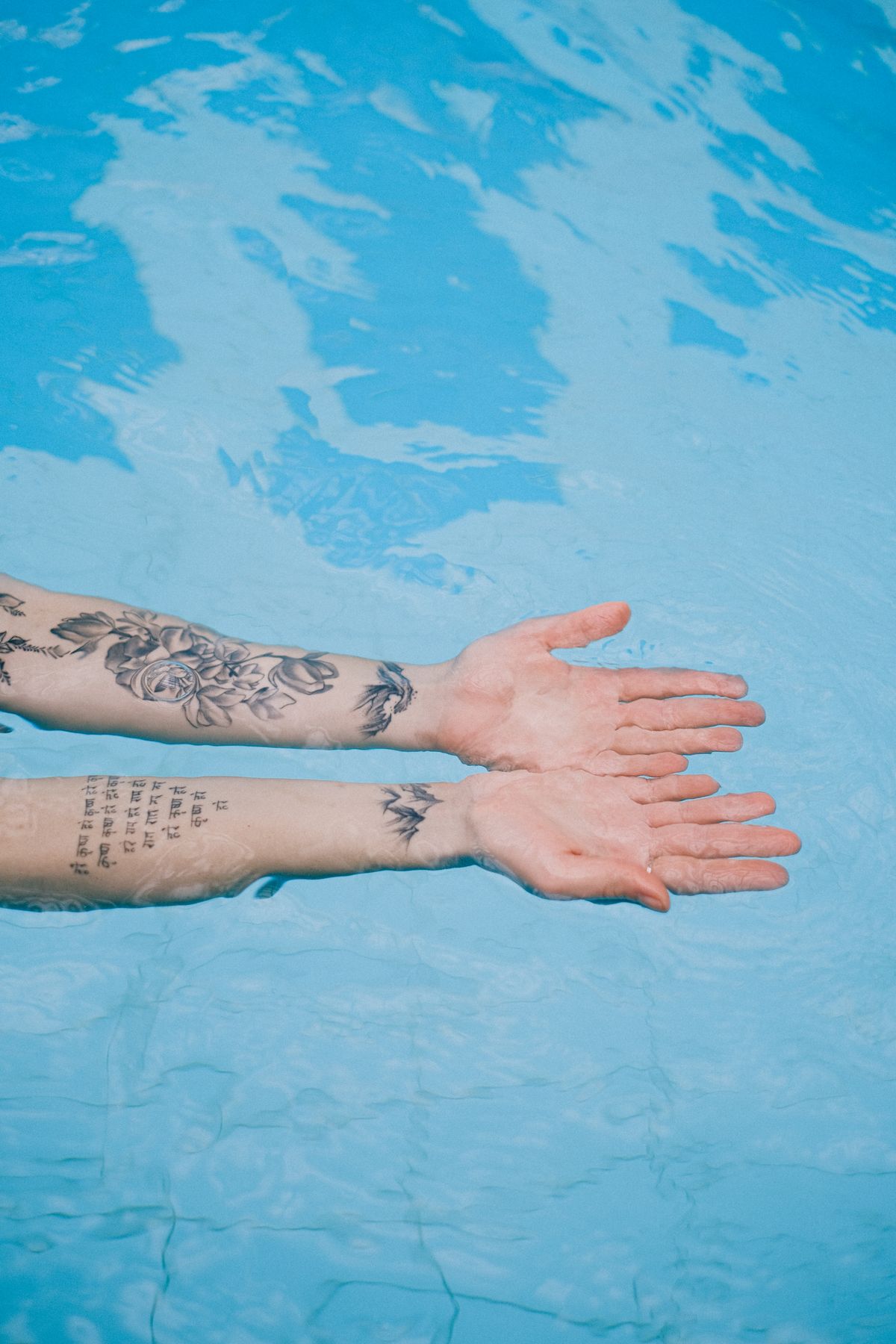
TL;DR: Swimming with a new tattoo will wreck it. Chlorine bleaches color and breaks down linework. Ocean water carries bacteria straight into an open wound. You need at minimum 4–6 weeks before any submersion, and honestly, longer is better. If you've got a beach trip booked and you just sat for fresh work, plan to stay dry or plan to go back for a touch-up.
You just got tattooed. Decent session, piece looks clean, artist was happy with it. And you've got a beach trip in two weeks. For everything else about caring for it, start with our tattoo aftercare guide.
You're already doing the mental math. It'll be mostly healed by then, right? I'll just keep it dry. Maybe you've been googling waterproof bandage options. Maybe somebody in a forum told you two weeks is fine.
It's not fine. Two weeks is when a tattoo looks healed on the surface and absolutely is not healed underneath. That's exactly when a long soak in the ocean does the most damage, because the skin is still building out fresh dermis and that top layer is barely sealed.
This post breaks down exactly why water is the enemy, what each type of water does differently, the real healing timeline, and what actually goes wrong when people jump in early. If you're looking for the full aftercare picture, read our tattoo aftercare guide alongside this.
Why Water Is Bad for a Healing Tattoo
Short answer: A fresh tattoo is an open wound. Water, especially standing water, introduces bacteria, dilutes healing plasma, and chemically attacks pigment before the dermis has locked it in place. The skin hasn't closed yet. You're soaking the ink before it's set.
The wound phase lasts longer than people expect. For the first week, the skin is actively weeping plasma, the epidermis is damaged, and the body is building a scab layer. During this phase, any submersion is a direct infection vector. No debate there.
But the sneaky danger window is weeks two through four. The surface looks done. Peeling is finished, the tightness fades, and it feels almost normal. That's the epidermis doing its job. The dermis underneath, where the ink actually lives, is still rebuilding. The skin barrier isn't fully restored. Water still gets in.
Chlorine specifically is corrosive to fresh pigment. It's an oxidizing agent designed to kill organic material in pool water. It doesn't care if that organic material is bacteria or the color sitting in your dermis. Yellow and lighter colors take the worst of it. Blues and greens fade fast under chlorine exposure. Even black can look washed out after a single long pool session on a piece that's only three weeks old.
The soaking vs. brief contact distinction matters. Rinsing a tattoo in a shower is fine from day one: that's not soaking, it's passing water contact. The problem is submersion: pools, hot tubs, baths, lakes, ocean. Minutes of submersion on a healing piece does more damage than a full week of showers.
Pools vs. Ocean vs. Lakes: Different Risks, Same Answer
All three are bad for a healing tattoo. But they're bad in different ways, and understanding which is which tells you why "just a few minutes" doesn't fix the problem.
Pools: The chlorine issue is the main one, but it's not just chlorine. Public pools carry a full menu of bacteria, body fluids, and chemicals. The chlorine keeps it from becoming a biohazard, but it doesn't make it safe for a wound. Hot tubs are worse: higher temperature opens pores, higher chemical concentration, more bacteria per gallon. Hot tubs can push a healing tattoo into infection territory fast.
Ocean water: Different risk profile. Ocean water contains naturally occurring bacteria, including some aggressive ones like Vibrio vulnificus, which causes serious soft tissue infections and thrives in warm coastal water. This isn't rare-extreme-case stuff; it's documented in wound care literature. Saltwater also pulls moisture out of skin aggressively through osmosis, which disrupts the healing layer. The salt itself isn't the killer, but the bacterial load is real.
Lakes and rivers: Arguably the worst of the three for infection risk. Fresh water carries microorganisms that saltwater doesn't, and there's no chemical treatment killing anything. Stagnant warm water in lakes can carry Pseudomonas and other bacteria that are difficult to treat once established in tissue. This isn't paranoia; it's basic wound care applied to a very specific situation.
The universal answer is still the same: stay out until the piece is fully healed.
The Actual Timeline: Surface Healing vs. Full Dermal Healing
This is where most people get the math wrong. They think "healed" means the surface looks normal. That's surface healing. Full dermal healing is a different stage entirely, and it's what matters for swimming.
For a full breakdown of what's happening week by week, our healing stages guide goes deep on this. The short version for swimming purposes:
Weeks 1–2: Do not go near any body of water beyond a shower. Surface is actively damaged. Risk of infection is high. This is non-negotiable.
Weeks 2–4: Surface looks healed. Peeling has finished. Tattoo looks dull (that's normal; it's under a fresh layer of skin). The dermis is still regenerating. Submersion here is where people make the mistake: it looks fine, so they assume it is. It's not.
Weeks 4–6: For most placements on most people, the surface is well-sealed by now. Brief, incidental water contact is lower risk. But "lower risk" isn't "no risk", and slow-healing areas (hands, feet, elbows, anywhere that flexes constantly) are still not ready.
2+ months: Full dermal healing for most people. This is when you can reasonably say the ink is locked in and the skin barrier is completely restored. Conservative? Yes. But this is the number that accounts for individual variation in healing speed, placement difficulty, and how hard the session was.
Placement matters more than people realize. A piece on the forearm heals faster than one on the ribs, the ditch, or the foot. Dense work heals slower than clean linework with breathing room. Heavy black and grey with lots of packing takes longer than a tight outline. Factor your specific piece, not just the average timeline.
What Actually Happens When You Go In Early
This is the part that makes people understand why it's a real problem and not just paranoid advice.
Blown-out or faded color. Chlorine exposure on fresh pigment can pull color out or shift it before it's fully encapsulated by the dermis. Lighter colors, whites, light yellows, pinks, are most vulnerable. You won't always see the damage right away. You'll see it six months later when the piece has healed fully and there are dull spots, washed-out patches, or uneven saturation.
Patchy healing. When water gets into a healing tattoo repeatedly, it disrupts the plasma layer that protects the fresh dermis. The result is uneven healing: some areas settle cleanly, others look blurry, pitted, or inconsistently filled. Especially bad in areas with dense black work where the edges need to stay crisp.
Infection. This is the worst case and it does happen. Signs include: redness spreading beyond the tattoo border, swelling that's getting worse rather than better after day three, hot skin, pus, fever. If you're seeing any of that, especially after water exposure, see a doctor, not a tattoo forum. Infections in fresh tattoos need antibiotics. They don't resolve with more aftercare balm.
Touch-up work. In the best case, early swimming means you're booking a touch-up appointment. Your artist is going to see the damage and know what happened. It's avoidable.
If You Absolutely Have to Be Around Water
Sometimes the trip is booked. The wedding is at the beach. The situation isn't negotiable. Here's the honest version of damage reduction:
Second Skin (Saniderm/Tegaderm) is a medical-grade adhesive bandage that creates a barrier over the tattoo. Your artist probably sent you home with it already. If your piece is in the first two weeks and properly covered with a fresh, well-sealed Second Skin application, it provides real protection from incidental water contact. It is not waterproof for extended submersion: a long swim will eventually push water under the edges. But for splashing at the beach or being near a pool without going in, it's legitimate protection.
After the second skin phase is done, a small piece of quality waterproof dressing applied well before any water exposure can help, but the same limits apply. No seal is permanent in water.
Avoid submersion entirely if the piece is under four weeks old. Apply sunscreen to healed skin around the tattoo (not on the healing area; SPF on a healing tattoo is too much for fresh skin). Stay in the shade when you can. Rinse with clean water if ocean spray or pool water touches it, and pat dry immediately.
The honest answer: none of this is as good as waiting. These are risk-reduction options, not a free pass to swim.
What "Healed Enough" Actually Means
There's no official clearance date. No doctor signs off. Your artist isn't going to send you a text at six weeks saying you're good to go.
The practical test: the skin over the tattoo should look and feel the same as the surrounding skin. No tightness, no shininess, no texture difference. Press gently: no tenderness. No dry or flaky patches left. When it looks like normal skin and feels like normal skin, it's behaving like normal skin, which means the barrier is restored.
If you're unsure, wait another two weeks. That's the actual shop answer. There's no downside to waiting longer. There's a very real downside to going too early.
And if you're planning your next piece and know there's a summer trip coming: talk to your artist through Tatulogue and time the appointment accordingly. Booking six to eight weeks before the trip is the move. Don't put yourself in this situation.
FAQ
How long after getting a tattoo can I swim in a pool? Most artists say a minimum of four weeks, and conservative recommendations go to six weeks or longer. The surface of the tattoo may look healed well before that, but the dermis is still rebuilding. Chlorine exposure on partially-healed skin can fade pigment and disrupt the healing layer. If the piece is large, heavily worked, or on a slow-healing placement like hands or feet, wait the full six weeks minimum.
Can I use Saniderm or waterproof bandages to swim with a new tattoo? Second Skin (Saniderm/Tegaderm) provides a real barrier for incidental water contact in the first two weeks, but it's not designed for submersion. Water will eventually get under the edges during a swim. For brief beach splashing or poolside activity without going in, a well-applied, fresh piece of waterproof bandage offers meaningful protection. For actual swimming, no bandage makes it safe while the piece is still healing.
What happens if saltwater gets on a fresh tattoo? Saltwater pulls moisture out of skin through osmosis and carries bacteria, including potentially serious ones in warm coastal water. If ocean water gets on a fresh tattoo, rinse it immediately with clean fresh water, pat it completely dry, and apply a thin layer of your aftercare. Watch for signs of infection over the next few days: spreading redness, swelling, heat, or discharge. One brief exposure probably won't destroy the piece, but repeated ocean contact during healing will cause damage.
Why does chlorine specifically hurt tattoo ink? Chlorine is an oxidizing agent: it chemically breaks down organic compounds. Tattoo pigment sitting in the dermis before it's fully encapsulated is vulnerable to this oxidation. Lighter pigments (whites, yellows, light blues) are most susceptible because they're less chemically stable to begin with. The damage often shows up gradually: the piece looks fine immediately after, but heals patchy or faded weeks later.
Can I take a bath with a new tattoo? No. Baths are submersion, same as a pool. Even plain tap water sitting against a healing tattoo for the length of a bath disrupts the healing plasma layer and softens the fresh scab. Take showers, brief, with lukewarm water, and keep the tattooed area out of direct stream pressure. No baths, no hot tubs, no soaking until the piece is fully healed.
The bottom line is simple: fresh ink and water don't mix. Not for two weeks, probably not for four, and if you want to be safe, not for six. The piece cost you money, time, and some level of discomfort. Don't wreck it for a pool day.
For everything else you need to know about keeping a new tattoo in good shape, the full aftercare guide covers the complete process from wrap removal through long-term care. And if you're hunting the right artist for your next piece, Tatulogue's artist directory is the place to start.