ARTICLES
Watercolour Tattoos: The Honest Guide to How They Age
The look that made you want it is usually the first thing to fade. Here's what watercolour tattoos actually look like years later, and what to do about it.
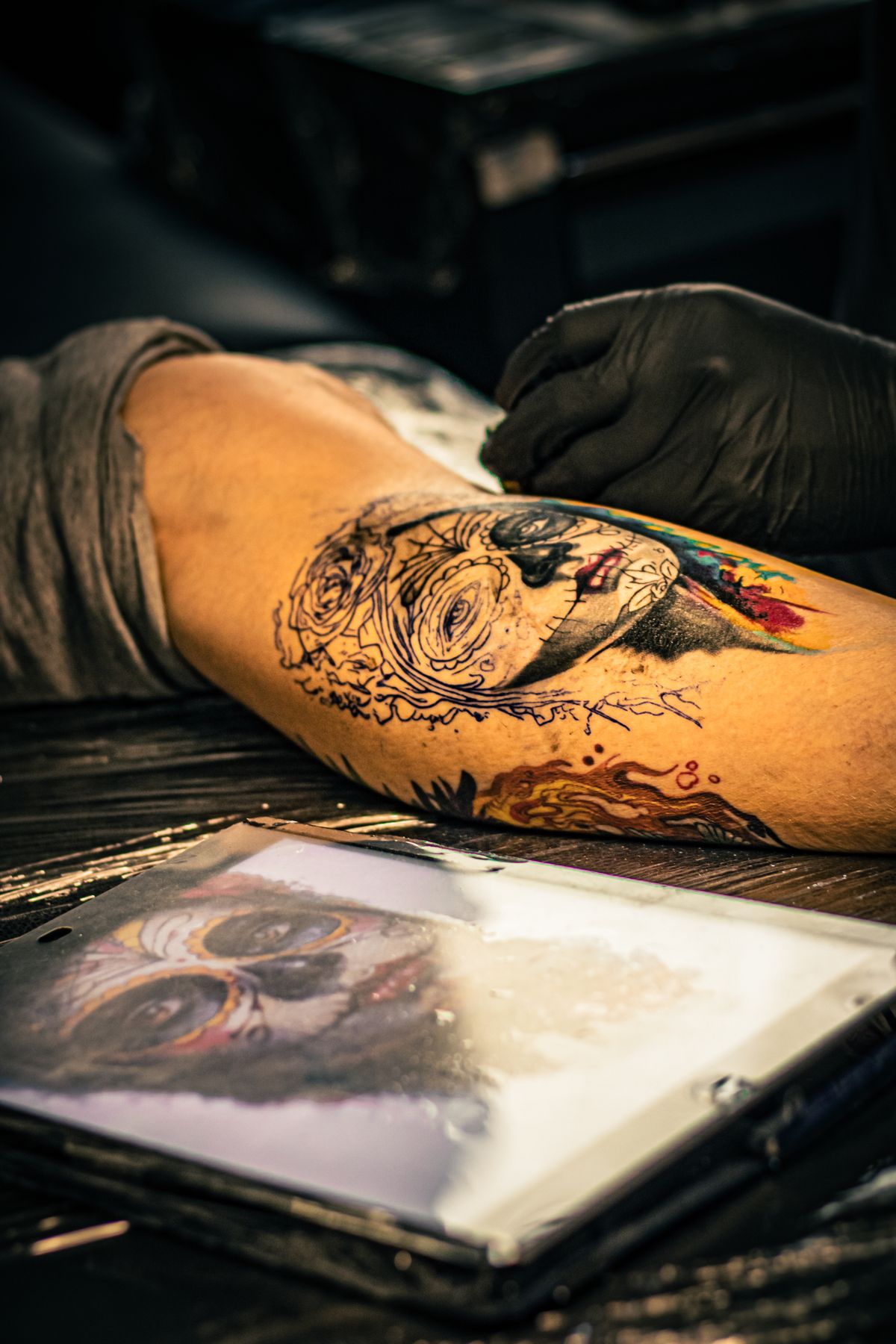
TL;DR: Watercolour tattoos are some of the most striking work you can get, fresh. The soft edges, the colour bleeds, the no-outline painterly look. The problem is that all of that is also what fades first. Without solid structure underneath, most watercolour pieces lose their defining character within five years. That doesn't mean don't get one. It means go in with eyes open, pick the right placement, and find an artist who tells you the truth about what healed work actually looks like.
Someone at a shop showed me a photo once. Fresh piece on their forearm: a loose hummingbird in violet and teal, colour bleeding into negative space like a wet brushstroke. Genuinely looked like a painting. The kind of thing you screenshot for a mood board. Then they pulled up a photo from five years later. Same piece. The edges had spread. The lightest washes had faded to almost nothing. The colours that survived had muddied together. It looked like a bruise healing out. Not ruined exactly, but not the painting either. That's the conversation nobody wants to have, and also the one you need to have before you book.
Watercolour tattoos still get done well. Artists are pushing the style forward. But the honest truth is the thing that drew you to the style, those soft bleeds, those feathered edges, that barely-there negative space, is also the least stable part of what gets tattooed into your skin.
What Actually Makes a Watercolour Tattoo Different
Watercolour tattooing is a technique-first style, not just an aesthetic. The look comes from specific choices about how ink is applied. No hard black outlines anchoring the design. Colour is laid in diluted, layered washes: thin passes of pigment rather than fully packed coverage. Edges are intentionally soft or undefined. Some sections might taper off into bare skin with no boundary at all.
That's what creates the painted-on effect. It's also technically demanding work. The artist is controlling pigment density, blending on the skin, and building luminosity through layering rather than saturation. Done right, fresh watercolour work looks like nothing else. Done sloppy, it looks muddy straight off the table. There's very little room for error.
For a broader look at how this style fits into the tattoo landscape, see the Tatulogue styles guide.
Why Watercolour Fades Faster Than Other Styles
The same properties that make it look like a painting are exactly why it doesn't hold the way trad or blackwork does.
No outlines means no anchor. In traditional tattooing, bold linework acts as a structural frame. The colour inside those lines has edges to push against. Without that structure, pigment spread over time has nowhere to stop. Soft edges get softer. Eventually they just disappear into the skin.
Thin ink deposits fade faster. Watercolour technique relies on diluted pigment: intentionally lighter application to create that washed look. The tradeoff is less ink in the skin. Less ink means more visible fading over the same timeframe. Heavy-packed black is still readable on a 40-year-old tattoo. A pale teal wash from ten years ago is often gone.
Light colours are the first to go. Yellow, light pink, white, the palest blues: these struggle to hold in any style. In watercolour, where the whole effect depends on those lighter tones doing heavy lifting, colour shift is a serious issue.
We go deeper on what drives tattoo aging across all styles in the how tattoos age guide.
What Watercolour Tattoos Look Like at 2, 5, and 10 Years
Here's the honest timeline, assuming average sun exposure and decent aftercare.
2 years: Most pieces still look solid if the work was done well. Some softening on the thinnest edges. Light colours may have shifted slightly: a bright yellow going more muted, a white highlight nearly invisible already. The overall composition reads clearly. This is often when owners are still showing it off.
5 years: This is where the separation happens between well-built pieces and ones that were always going to struggle. If there was structural ink underneath the colour work, the design usually still reads. If it was pure colour washes with no underlying framework, the defining details are often gone or blurred beyond recognition. The "bleeding" effect looks less intentional and more like the tattoo is just spreading.
10 years: Without touchups, most purely painted-style watercolour pieces have lost significant definition. The softer sections have diffused into the surrounding skin. What's left is often the mid-tones and darker pigments, which sometimes creates an interesting evolved look, but is rarely what the person wanted when they first got it. Pieces with structure under the colour hold shapes, even if colour has shifted.
Placements That Hold Better (and the Ones That Don't)
Placement matters more with watercolour than almost any other style.
Better placements:
- Upper arm / outer bicep: lower movement, less friction, good flat canvas
- Thigh: similar reasons; larger area allows the design room to breathe without compression
- Back / shoulder blade: protected from sun, relatively stable skin
Difficult placements:
- Hands and fingers: constant movement, friction, skin regeneration; watercolour on hands fades fast regardless of quality
- Feet: same issues; also constantly in socks and shoes
- Inner elbow / inside wrist: crease zones chew through soft-edged work quickly
- Ribs: great canvas for composition, but the stretch during breathing and weight fluctuation speeds up spread on unanchored edges
- Neck: sun exposure, movement; tough for longevity in any style
Sun exposure is the other major variable. Watercolour pieces that live on forearms, hands, or other frequently exposed skin need committed SPF routines. UV breaks down pigment faster than anything else. A piece that ages well on someone's thigh might look washed out in three years on someone's forearm.
How to Find an Artist Who's Honest About Longevity
Most artists who specialize in watercolour know exactly how these pieces age. The good ones will tell you without being asked. The ones to watch out for are artists whose portfolio is all fresh shots: no healed work, no multi-year photos, nothing that shows what their pieces actually do over time.
Ask directly: Do you have photos of healed watercolour work? Two years or older? If they can't show you any, that's information. Every tattooer who's been doing this style seriously has healed reference. It's not a weird question; it's a reasonable one.
Also look at how they talk about the limitations. A good watercolour artist isn't going to oversell longevity. They'll probably lead with structure, mention touchup intervals, and flag which placement choices will fight against you. Someone who tells you watercolour holds just as well as trad is either misinformed or telling you what you want to hear.
Find artists who post healed watercolour work on Tatulogue.
The Bold Outline Underneath Debate
There's a persistent conversation in the tattoo world about whether putting a solid black outline under watercolour colour work extends the life of the piece. The short answer: yes, but it changes what the piece looks like.
The longer answer is more complicated. A hidden structure, fine linework that the colour is built on top of, gives the pigment something to adhere to and gives the design edges that survive even when the light tones fade. The piece doesn't become a traditional tattoo; it becomes a watercolour piece with bones. Many artists who specialize in the style do this by default.
The tradeoff is that as the colour fades over years, the underlying line structure becomes more visible. The piece evolves toward something that reads more like a loose illustrative design than a pure painted effect. For some people, that's an acceptable deal. For others, it's not what they wanted.
If you want the purest no-outline look, go in knowing that touchups are part of the commitment: more frequent than with most styles, probably every three to five years to maintain definition. That's not a dealbreaker. It's just the math of how the style works.
Alternatives If You Love the Look But Want It to Last
The watercolour aesthetic has influenced a lot of adjacent styles that build in more longevity.
Neo-traditional with colour washes. Bold neo-trad linework as the foundation, with loose colour work bleeding outside the lines. You get the painterly quality, the colour bleeds, and a frame that survives the long haul. Works especially well for botanical subjects, animals, and portrait-adjacent subjects.
Illustrative colour. Sketchy linework, visible brushstroke marks built into the design itself, deliberate colour bleeds within a stronger structural base. Less obviously "watercolour" than the pure style, but holds far better and often reads more powerfully as it ages.
Japanese with watercolour elements. Some artists are doing background work in a loose watercolour wash style under traditional Japanese subject matter. The main subject holds; the background evolves gracefully.
For a direct comparison to another style with similar longevity challenges, the fine line tattoo guide covers the same aging mechanics from a different angle.
The Bottom Line
Watercolour tattoos are genuinely beautiful work. The best examples are among the most visually interesting things happening in tattooing right now. But the look that pulled you to the style, those wet bleeds, those soft transparent edges, is also what the skin eats first.
None of that means don't do it. It means do it knowing what you're signing up for. Placement matters. Artist selection matters. Structure under the colour matters. Touchup intervals matter more with this style than most.
Find an artist who shows you healed work. Ask the hard questions before you book. And go into it understanding that what you're getting is something that will look different in ten years, maybe still great, maybe significantly changed, depending on how it was built.
Frequently Asked Questions
Do watercolour tattoos fade faster than regular tattoos? Yes, generally. The technique relies on diluted ink deposits and soft, unanchored edges, both of which are more vulnerable to fading than packed traditional colour or bold linework. Light tones (yellow, white, pale pink) typically show the most significant change within the first two to five years. Placement and sun exposure are major factors.
Can watercolour tattoos be touched up? Yes, and most serious watercolour artists expect touchups to be part of the long-term process. Refreshing faded colour washes and tightening softened edges is straightforward for an artist familiar with the style. Budget for a touchup somewhere in the three-to-five year range after the original session, and adjust based on placement and how your skin takes ink.
What placements work best for watercolour tattoos? Upper arm, outer bicep, thigh, and back pieces generally hold better than hand, foot, wrist, or high-friction crease placements. The main factors are movement (which accelerates edge spread), sun exposure (which breaks down pigment), and skin regeneration rate in the area. Ask your artist specifically about the placement you're considering. They'll know what their work does on different parts of the body.
Is it worth getting a bold outline under a watercolour tattoo? For longevity, yes. A structural layer under the colour work extends the readable life of the design, because when the lightest tones fade the outline remains visible. The tradeoff is that the piece will read differently as the colour ages: closer to an illustrative design than a purely painted effect. Many artists who specialize in watercolour use this approach by default; others prefer building without outlines and building in regular touchup schedules instead.
How do I find a good watercolour tattoo artist? Look for healed work: photos from two or more years post-session. Any artist working seriously in the style will have this available. Ask directly if you don't see it in their portfolio. Look for artists who discuss structural choices openly rather than only showing fresh pieces. Avoid booking based on fresh photos alone; the real measure of a watercolour tattooer's skill is what their work looks like after it's lived in skin for a few years.