ARTICLES
Tattoo Pain Chart: The Most and Least Painful Spots to Get Tattooed
A no-nonsense tattoo pain chart ranking placements from brutal to barely-there: ribs, spine, hands, forearm, thigh, and exactly why each one hurts.
TL;DR: This tattoo pain chart ranks placements by how much they hurt and why. Ribs, spine, ankles, hands, and feet are the brutal ones: thin skin over bone, packed with nerve endings, no padding. Outer thigh, forearm, and calf are the easy sits: fat and muscle cushion the needle. Pain is real, but it's predictable. Pick your first spot knowing what you're walking into.
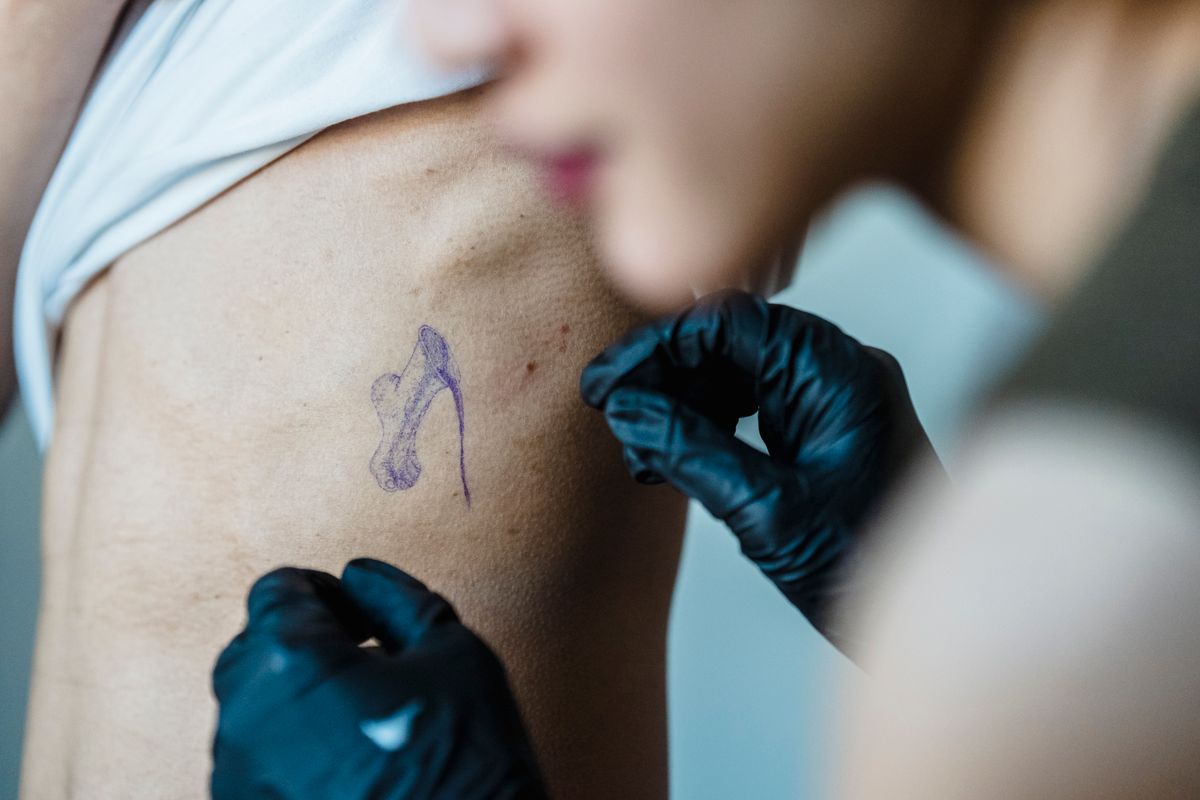
You're sitting in the chair, sleeve rolled up, and the artist drops the needle on your ribs for the first line. That sharp, hot scrape that makes your whole torso flinch? That's not you being soft. That's thin skin stretched over bone with nowhere for the pain to go. Ribs hurt. They're supposed to.
A tattoo pain chart isn't about scaring you off. It's about walking in informed instead of blindsided. Every placement on your body sits somewhere on a scale from "I forgot the needle was running" to "I counted every second." The difference comes down to three things: how much fat and muscle padding sits under the skin, how many nerve endings are crammed into the area, and whether there's bone right underneath.
Get those three factors and you can predict almost any spot. Nervous first-timer choosing placement? Start where the chart is kind. Here's the honest breakdown, most painful to least, and what each one actually feels like in the chair.
The Three Things That Decide How Much a Tattoo Hurts
Tattoo pain comes down to padding, nerve density, and bone. Areas with thick skin, plenty of fat or muscle, and few nerve endings barely register. Areas with thin skin stretched over bone and packed with nerve endings light up. Healthline's tattoo pain chart breaks it down to exactly these factors: fat padding, nerve density, and skin thickness.
Padding is your buffer. The needle is vibrating at the surface, but fat and muscle underneath absorb the impact and spread it out. Outer thigh, calf, upper arm: these spots have meat under them, and the needle never reaches anything that screams.
Nerve density is the loud one. Your skin isn't wired evenly. Fingertips and hands carry one of the highest concentrations of nociceptors, the receptors that fire pain, anywhere on the body. Research published in the journal Current Biology on the "fovea for pain" at the fingertips confirms the hands are built for fine sensory acuity, which is exactly why they're miserable to tattoo. More receptors firing means more signal hitting your brain.
Bone is the multiplier. When there's no fat between skin and skeleton, like ribs, spine, ankles, shins, and sternum, the needle's vibration rattles straight into bone. There's nothing to absorb it. That's the deep, teeth-grinding ache people describe on the worst placements.
Hold those three in your head and the rest of this chart makes sense.
Most Painful: Ribs, Spine, Sternum, Ankles, Hands, Feet
The brutal tier is every spot where thin skin sits over bone with nerve endings and zero padding. Ribs, spine, sternum, ankles, hands, fingers, and feet top almost every tattoo pain chart out there. If it's bony and you can't pinch much skin there, expect it to hurt.
Ribs are the famous one. The skin is thin, stretched tight over the rib cage, and there's basically no fat between needle and bone. Worse, you can't stop breathing: every inhale moves the exact surface being tattooed, so the sensation never settles. People describe it as a hot, scraping burn that gets sharper the longer the session runs. A full rib panel is a sit, not a quickie.
Spine is arguably worse. You're running a needle directly over the vertebrae, bone with almost no cushioning, and the column of nerves underneath makes everything more intense. The bony bumps of each vertebra are the spikes; the dips between them are slightly more bearable. Zensa's tattoo pain breakdown puts the spine and ribs near the top of the most-painful list for exactly this reason.
Ankles and shins have the bone right under the skin with no padding at all. The needle rattling against the ankle bone produces a sharp, vibrating pain a lot of people rank higher than they expected for such a small area.
Hands, fingers, and feet combine everything bad: thin skin, bone close to the surface, and that brutal nerve density. On top of the pain, these spots heal inconsistently and fade fast, but that's a placement-and-aging conversation. If you want the long view on how hand and finger work holds up, read How Tattoos Age: What Actually Happens to Your Ink Over Time.
Sternum, armpit, inner elbow, and groin round out the worst tier: thin skin, nerve clusters, and in the armpit's case, a spot so rough most artists will talk you out of it. Removery's pain chart flags these high-nerve, low-fat zones as the ones that consistently push people to the edge of what they can sit through.
High but Doable: Inner Arm, Inner Thigh, Knee, Elbow
The mid-high tier hurts but most people sit through it fine. Inner arm, inner thigh, the back of the knee, and the elbow ditch all have thinner, more sensitive skin than their outer counterparts, but enough going on around them that it's a different beast than ribs.
Inner arm and inner bicep skin is soft and rarely sees the sun, which makes it more sensitive than the outer arm right next to it. It's a sharp, stingy pain rather than the deep bone ache of the ribs. Inner thigh is similar: softer skin, closer to a nerve-heavy region, noticeably worse than the outer thigh just inches away.
The knee and elbow are joints, which means thin skin over hard structure plus constant movement. The kneecap and the point of the elbow are bony and sharp to tattoo; the soft ditch behind the knee or inside the elbow stings in a different, more electric way. Doable, but you'll know you're getting tattooed.
This tier is where fine, delicate work gets risky. Not just for pain but for longevity, since high-flex areas blur faster. If you're set on delicate linework somewhere bendy, the complete fine line tattoo guide covers which placements actually hold that style.
Tattoo Pain Chart: Placement Ranked
Here's the quick-reference version. Pain is subjective: your tolerance, the artist's hand speed, the session length, and how packed the work is all shift it, but the ranking holds up across almost every chart and every artist you'll ask.
| Placement | Pain level | Why | |---|---|---| | Ribs | Severe | Thin skin over bone, constant breathing movement | | Spine | Severe | Bone with no padding, dense nerve column | | Sternum / chest plate | Severe | Thin skin over bone, nerve-heavy | | Ankles / shins | Severe | Bone directly under skin, no fat | | Hands / fingers | Severe | Very high nerve density, thin skin, bone close | | Feet / toes | Severe | Thin skin, bone, dense nerve endings | | Armpit | Severe | Nerve cluster, almost no one recommends it | | Inner elbow / groin | High | Soft skin, nerve-heavy, sharp electric sting | | Inner thigh | High | Soft sensitive skin near nerve-dense region | | Inner arm / bicep | Moderate-high | Soft, sun-protected skin, stingy | | Knee / elbow | Moderate-high | Thin skin over joint, movement | | Stomach | Moderate | Varies with body composition | | Shoulder | Moderate | Some bone, decent muscle nearby | | Upper back | Moderate | Mostly muscle, some shoulder-blade bone | | Calf | Low-moderate | Fleshy, good muscle padding | | Upper arm | Low | Muscle padding, few nerve endings | | Outer forearm | Low | Fleshy, little bone, few nerve endings | | Outer thigh | Low | Most fat and muscle padding on the body |
Use this to plan placement, not to rule spots out. A rib piece you love beats an easy forearm piece you settled for.
Least Painful: Outer Thigh, Forearm, Calf, Upper Arm
The easy tier is anywhere with real fat and muscle padding and few nerve endings. Outer thigh, outer forearm, calf, and upper arm are where most artists send first-timers and where long sessions are most survivable. These are your friendly placements.
Outer thigh is the gentlest spot on the body for most people. It carries more fat and muscle padding than anywhere else, and the nerve endings are sparse. You can knock out a big piece here in one long sitting and walk out wondering what the fuss was about. If you're nervous and want a real tattoo without the trauma, this is the move.
Outer forearm is the other classic easy sit: fleshy, barely any bone in the firing line, low nerve density. It usually rates around a 3 out of 10. It's also prime real estate: visible, ages well, sits flat. A lot of people's first piece lives here for exactly these reasons.
Calf is fleshy and well-padded with muscle, which makes it a frequent artist recommendation. The meat of the calf takes a needle comfortably; just know the area down near the ankle bone climbs the pain scale fast as the padding runs out.
Upper arm, the outer shoulder-to-bicep stretch, has muscle underneath and few nerve endings. Solid, low-drama placement for a first or a long one.
Padding doesn't make you immune. A six-hour session of packed black anywhere will wear you down as your body fatigues and the skin gets raw. But starting on these spots gives you a real read on your own tolerance before you book something on your ribs.
Managing the Pain When You're in the Chair
You can't make a tattoo painless, but you can stack the deck. Show up rested, fed, and hydrated: going in tired, hungover, or running on an empty stomach makes everything sharper and your blood sugar crash mid-session is real.
Eat a proper meal beforehand and bring a snack and water for longer sits. Sleep matters more than people think; a wrecked nervous system feels more pain. Skip alcohol the night before: it thins your blood and makes you bleed more, which pushes ink out and frustrates the artist.
Breathe through it. The instinct on a sharp line is to tense up and hold your breath, which makes it worse. Slow, steady breathing keeps you loose and the session moving. Tapping out for a two-minute break is completely normal: every artist expects it. Pushing past your limit just to look tough usually ends with a shaky, restless client, which is harder to tattoo.
Numbing creams exist and some artists are fine with them, especially on the brutal placements. Many aren't, because some products affect the skin texture while they work. Ask before you book: don't show up pre-numbed and surprise your artist.
And know that the worst of it passes once the needle stops. The real work starts after, when the tattoo healing stages kick in, and how you handle that week determines how the piece settles. The full routine is in the complete tattoo aftercare guide, and if summer's coming, read swimming with a new tattoo before you get anywhere near a pool.
The pain is real, it's predictable, and it's temporary. A tattoo pain chart doesn't exist to talk you out of the ribs: it exists so you walk in knowing the ribs are a sit, the outer thigh is a breeze, and your tolerance is yours to learn. Nervous first-timer? Start somewhere padded, find out how you handle a needle, then build from there. The spot you love is worth the hour you sweat through.
If you want more straight talk on placement, healing, and how work actually holds up over time, the Tatulogue newsletter at tatulogue.com is where we keep it honest: real collector experience, no content-farm filler.