ARTICLES
When Not to Use a Second-Skin Bandage on Your New Tattoo
Second-skin bandages like Saniderm work great for most people, but not everyone. Here's how to patch-test first, spot a reaction early, and know when to skip it.
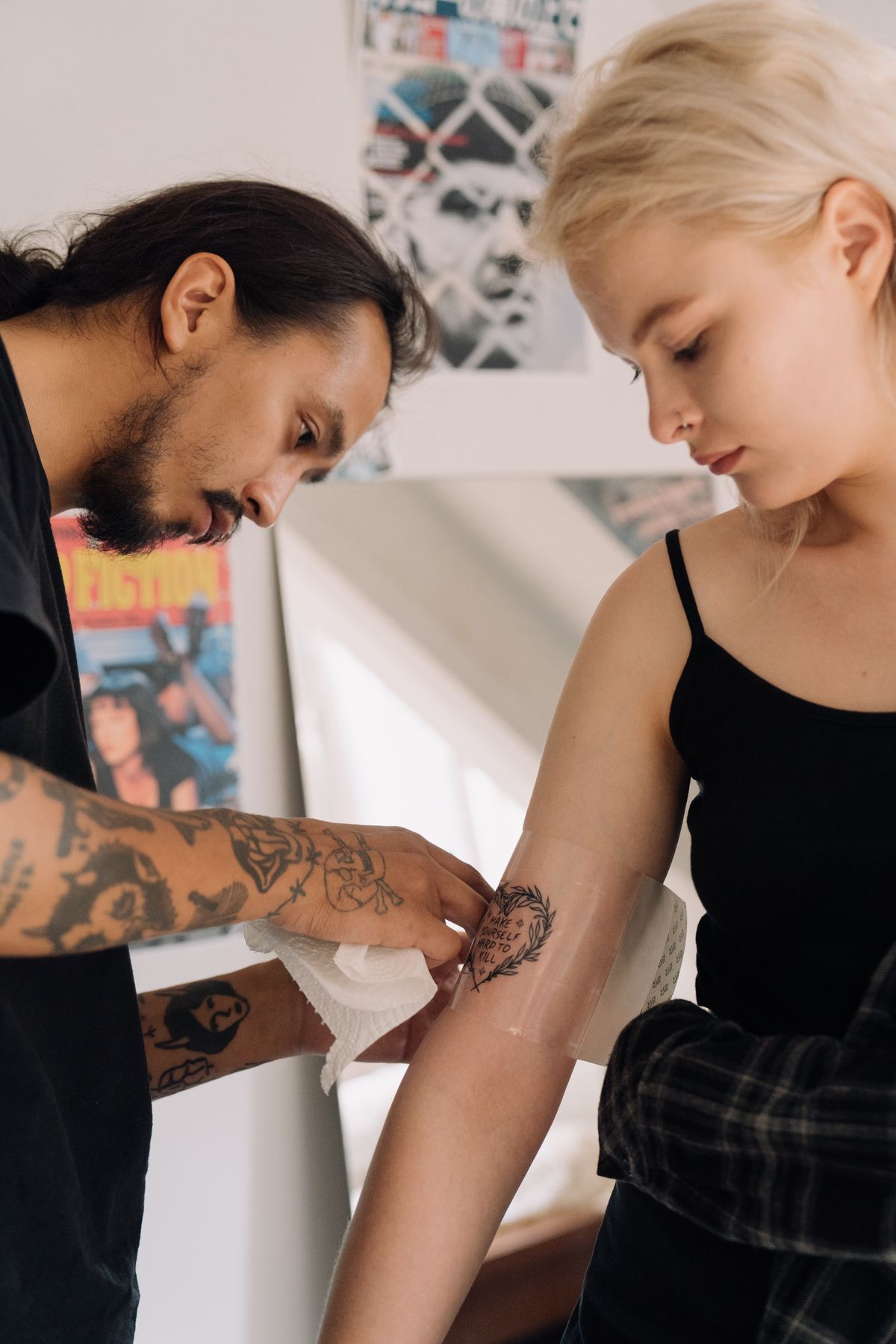
You just got tattooed, the artist smooths a second-skin bandage over it, and you're told to leave it on for three to five days. For most people that's the easiest aftercare there is. For some people, it's the start of a rash that has nothing to do with the tattoo itself.
I've watched this play out a lot of times. Here's when second-skin makes sense, when it doesn't, and how to tell the difference before it becomes a problem.
What Actually Causes a Reaction to Second-Skin Bandages?
Almost always, it's contact dermatitis from the adhesive itself, not the tattoo underneath. Saniderm's own FAQ on allergic reactions confirms this is the most common pattern: redness and itching that shows up at the edges of the bandage, on skin that was never tattooed, while the tattoo underneath heals fine. A true allergy to the bandage material is rare.
That distinction matters. If the whole tattoo looks angry, that's a different conversation with your artist. If it's just a ring of irritation tracing the outline of the bandage, that's the adhesive talking.
How to Patch-Test Before You Commit
Have you ever had a reaction to a bandaid or medical tape? That's your answer right there, skip second-skin and go straight to ointment-based aftercare.
If you're not sure, a real patch test is quick. Cut a small piece, stick it to a clean patch of skin on your forearm, and give it 15 to 20 minutes per Saniderm's own guidance. That's enough time for immediate contact sensitivity to show up as redness or itching right where the adhesive sits. It's not a guarantee against every possible reaction, but it catches the common ones before you've got a full bandage on fresh, healing skin.
If You Sweat a Lot, Think Twice
Second-skin is breathable, but it's not built to handle heavy sweat sitting underneath it for hours. If you're planning to work out, run, or do anything that has you sweating through the first few days, that moisture gets trapped against the tattoo instead of evaporating.
That doesn't mean you have to skip the gym for a week. It means either timing your workouts before the bandage goes on, switching to a breathable ointment-based aftercare routine on heavy-sweat days, or just accepting you might need to change the bandage early if it's pooling with sweat. Check our tattoo healing stages guide for what's actually happening under there day by day, and our guide to swimming with a new tattoo if water and moisture exposure is the bigger question for you.
Sensitive Spots Where Adhesive Causes More Problems Than It Solves
Some spots on the body just don't play well with adhesive, sensitive or not. The one I see cause trouble most often is the underarm, that soft, constantly-moving skin near the armpit takes a beating from adhesive that's built for flatter, less mobile areas. Inner elbows and the backs of knees can be similar for the same reason: skin that folds and stretches doesn't hold an adhesive edge the way a forearm or shin does.
If you're getting tattooed in one of those spots and still want to try second-skin, look for the thinner matte film varieties instead of the standard glossy ones. In my experience they use a less aggressive adhesive, which makes a real difference on skin that's already prone to irritation.
Signs You Should Pull the Bandage Off Now
Redness, itching, or small bumps that are tracing the edges of the bandage, not spread across the whole tattoo, are your cue to take it off. Clean the area gently with mild soap and water, pat it dry, and switch to a standard ointment-and-wash routine for the rest of healing. Most reactions calm down fast once the adhesive is gone, per 3 of Spades Tattoo's guide on the topic.
Second-skin isn't a failure if it's not for you. It's one aftercare option among several, and the goal is a healed tattoo, not forcing a bandage to work if your skin is telling you otherwise.
If you're weighing your options before your next session, browse artists on Tatulogue who can walk you through the aftercare that actually fits your skin, not just what's fastest to apply.