ARTICLES
How to Apply SecondSkin™ Tattoo Bandage: Step by Step
How to apply SecondSkin tattoo bandage the right way: the official steps, what plasma buildup means, when to change it, and how to get it off clean.
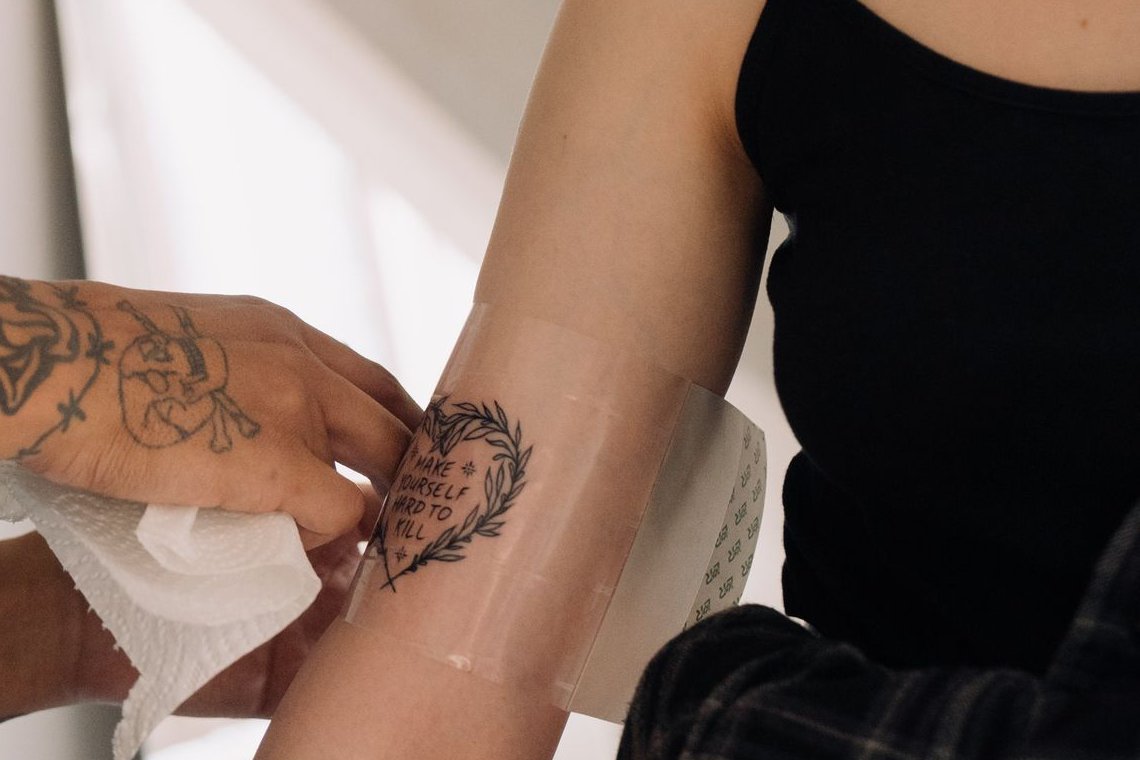
TL;DR: To apply SecondSkin™, clean and dry the tattoo, cut a piece with an extra inch of dry skin on every side, crack it at the blue stripe, peel the backing, smooth it on, then pull the clear support layer and smooth again. Plasma under it in the first 24-36 hours is normal. Change it only inside that 36-hour window. Total wear is up to seven days.
If you want to know how to apply SecondSkin tattoo bandage without trapping air, wrinkling it over a joint, or peeling it off three hours later, the steps are short. The mistakes happen when people rush them.
Disclosure: Eric runs SecondSkin Tattoo Aftercare. The numbered steps below are the official ones, word for word. Everything around them is how to actually pull them off on real skin.
SecondSkin™ is a clear adhesive film that goes over a fresh tattoo. The Coalition Supply product listing describes it as latex-free, waterproof, breathable and hypoallergenic, and sells it as a 6" x 33' roll or a personal pack of four 5" x 7" sheets. Before you put any adhesive on fresh skin, read our post on when not to use a second-skin bandage. It covers patch testing and what an adhesive reaction looks like.
How to apply SecondSkin, step by step
The short answer: clean and dry the tattoo, size the piece with an inch of margin, crack it at the blue stripe, peel the backing, smooth it on, then remove the clear support layer. Plasma in the first day or so is normal. These are the official steps, in order:
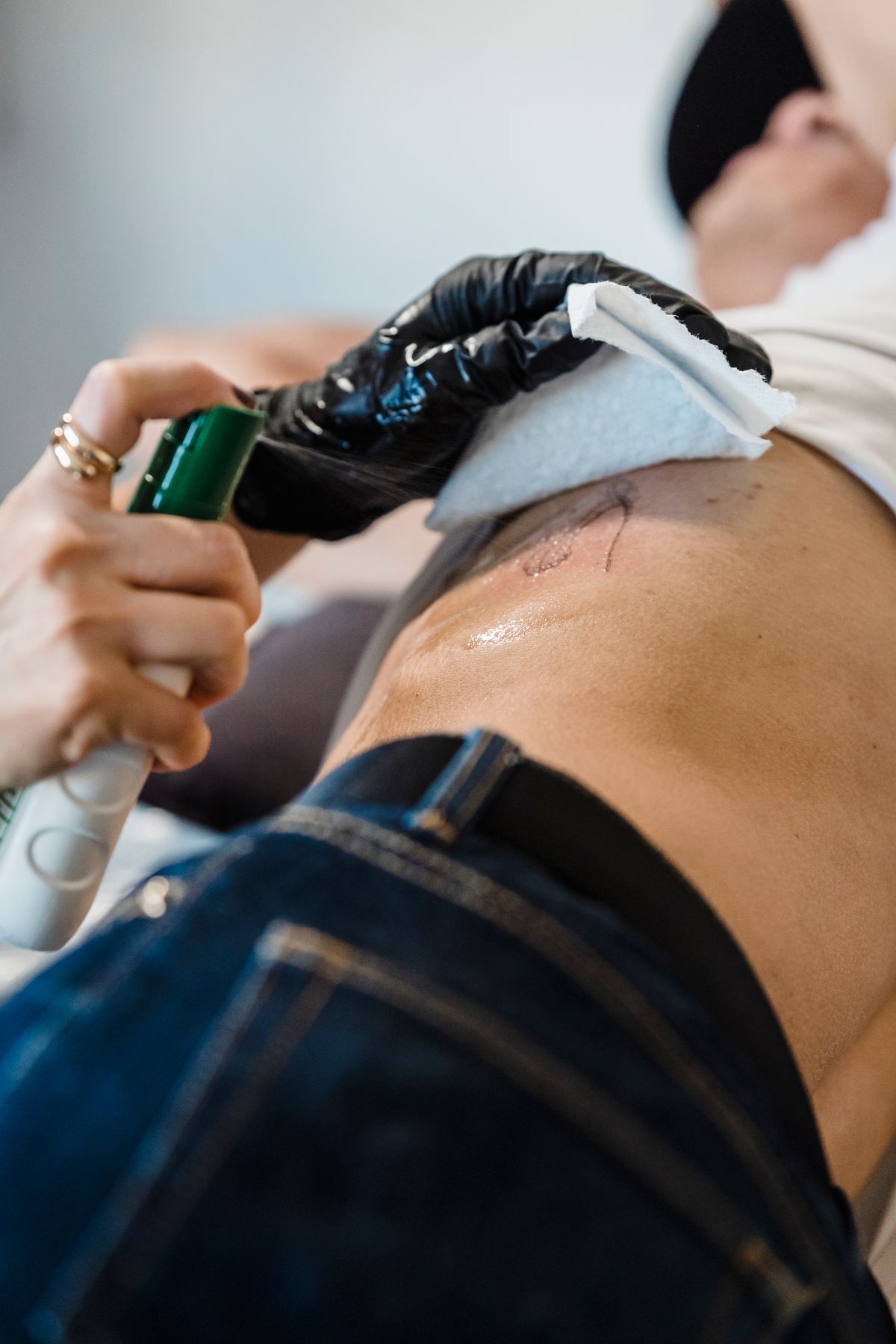
- Clean and dry the tattoo thoroughly.
- Cut the SecondSkin™ to the desired length and shape, using multiple pieces overlapped at least one inch if needed.
- You should account for an extra inch on each side of the tattoo to cover un-tattooed, dry skin.
- "Crack" the wave by bending the piece in half at the blue stripe.
- Expose the sticky side by peeling off the backing.
- Smooth SecondSkin over the tattoo pushing out any air bubbles.
- Remove supportive clear backing and smooth over the skin.
- A buildup of plasma in the first 24-36 hours is normal. In the event that does happen though we recommend changing the bandage (only in the first 36 hours, any more than that and the tattoo will start to heal). You can leave it on for a total of up to seven days.
Before it goes on: clean, dry, sized right
Steps 1 through 3 decide whether the bandage holds. Adhesive needs dry skin to grip. If there's soap, water, ointment or fresh weeping under the edge, the seal is compromised before you've started.
Dry means dry. No shine on the tattoo or the margin when the film goes down.
Then size it. That extra inch on each side of the tattoo is not a suggestion. The edge of the bandage has to stick to un-tattooed, dry skin, because that's what holds the seal. If you trim it tight to the linework, the edge sits on the part that's weeping, and it lifts.
Big piece? Use multiple pieces overlapped at least one inch. The overlap is what keeps fluid from finding a gap.
Cracking the wave and laying it down
Bend the piece in half at the blue stripe. That "cracks" the wave and gives you an edge to start peeling the backing from, without fingers all over the sticky side.
Peel the backing, then lay the film on and smooth from the middle outward, pushing air bubbles toward the edges as you go. Don't stretch it as you lay it down. Let it sit on the skin in the position the skin is actually in.
Then pull the clear support layer and smooth again, running a finger around the whole border.
Joints are where it goes wrong. Elbows, knees, wrists: if you apply it with the limb fully straight, the film wrinkles or pulls the second they bend. Wrinkles make channels, and channels let fluid run to the edge. Position the joint the way it sits most of the day, and use two overlapped pieces instead of one long strip if you have to. Our second-skin post also covers spots like underarms and inner elbows, where adhesive tends to cause more trouble than it's worth.
What plasma buildup looks like under SecondSkin
Plasma buildup is a pocket of fluid trapped under the film, usually right over the tattoo. It can look cloudy and tinted with ink, sometimes with a little blood mixed in. Per the official steps, a buildup of plasma in the first 24-36 hours is normal.
It looks rough. The ink can look like it's sliding off. It isn't. That's the same weeping you'd see without a bandage, just held in place. Our tattoo healing stages guide walks through what fresh skin is doing in those first days.
What's not normal is redness, itching or bumps tracing the outline of the bandage on un-tattooed skin. That points to the adhesive, not the tattoo. The when-not-to-use post covers exactly what to do if you see it.
When to change the bandage and when to leave it alone
If plasma builds up, the recommendation is to change the bandage, but only in the first 36 hours. After that, leave it. Any more than 36 hours and the tattoo starts to heal, so a fresh piece just means pulling adhesive off skin that's already working. Total wear can be up to seven days.
- Inside 36 hours, with a fluid pocket: take it off, clean and dry the tattoo, and put a fresh piece on using the same steps.
- Past 36 hours: leave the bandage alone. Some fluid you can see from earlier isn't a reason to change it.
- Any time: if the edge has lifted and the seal is broken, our healing stages guide says to take it off, since a broken seal can trap bacteria instead of keeping it out.
Seven days is a ceiling, not a target. If your artist says less, go with your artist.
How to remove a SecondSkin tattoo bandage
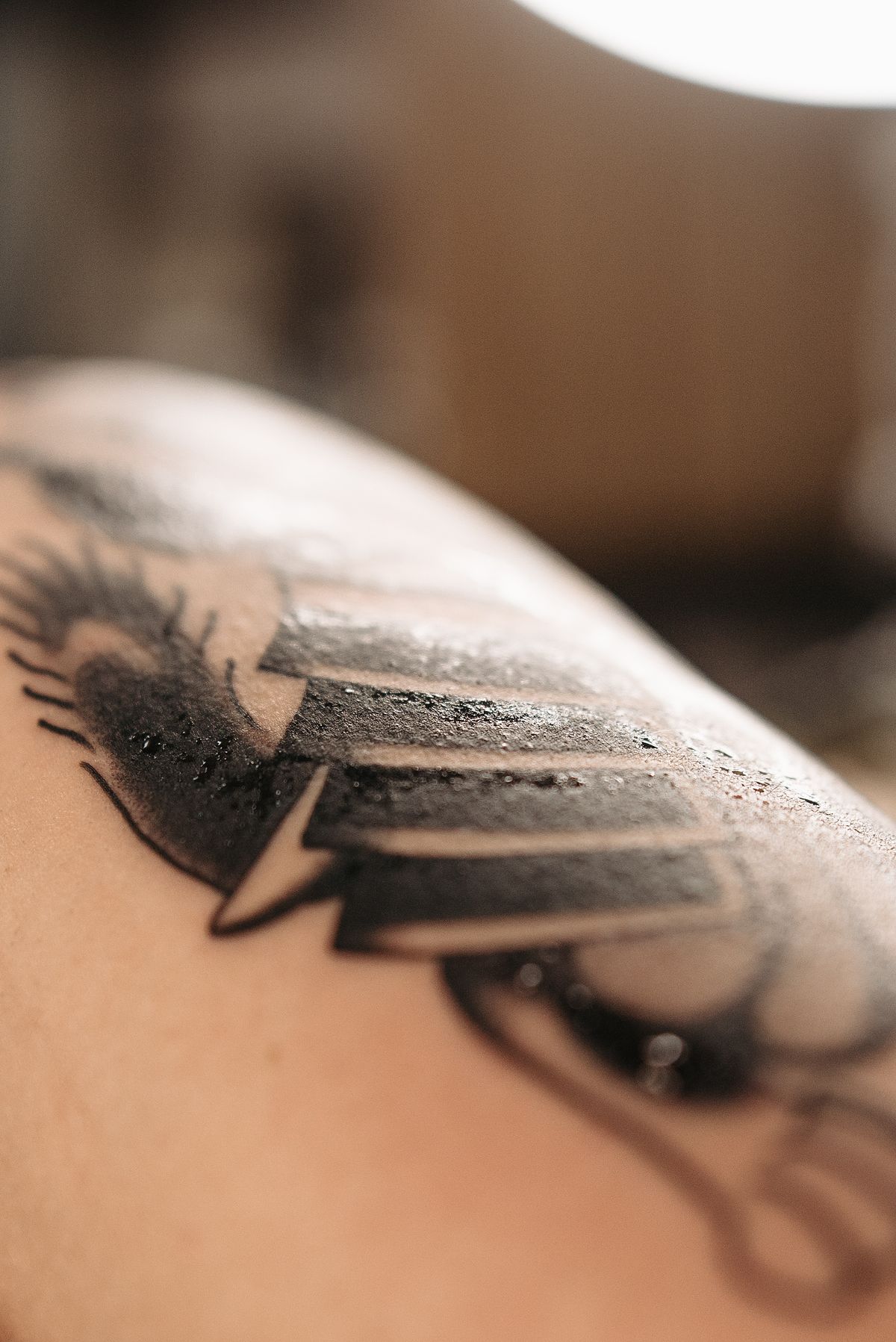
Take it off slowly, ideally in the shower with warm water running over it. The Cleveland Clinic's aftercare advice is to soak the bandage in warm water to soften it before gently peeling it off. Wet adhesive lets go easier, and that matters on skin that's been healing under it.
The general technique most shops teach:
- Find an edge on un-tattooed skin and lift a corner.
- Peel low and parallel to the skin, folding the film back over itself, not straight up and away.
- Stretch it along the skin to break the adhesive bond, rather than yanking.
- Go slow. If a section fights you, let more water run over it and try again.
Once it's off, wash gently and switch to the routine in our tattoo aftercare guide.
Common mistakes when you apply second skin
Most bandage problems come from the same shortcuts. Each one breaks the seal or makes removal worse.
- Applying on wet skin. Leftover water, soap or ointment under the edge and it won't seal. Step 1 says thoroughly for a reason.
- Margins too tight. Skip the extra inch and the edge sits on weeping skin and lifts.
- Wrinkles at joints. Applied with the limb locked straight, it creases the moment you move.
- Changing it after 36 hours. Past that point, a fresh piece just pulls at healing skin.
- Yanking it off dry. Use warm water and peel low and slow.
- Skipping the patch test. If you've ever reacted to a bandaid or medical tape, read the when-not-to-use post first.
The bottom line
Clean, dry, an inch of margin, crack the wave, smooth it, pull the clear layer, smooth again. Change it only inside 36 hours if plasma builds up, and leave it on for up to seven days total. Take it off slow and wet.
If you're still looking for the artist who'll put the piece under that bandage, you can browse artists by style on Tatulogue.
FAQ
How long can you leave SecondSkin on a tattoo?
You can leave SecondSkin™ on for a total of up to seven days. If plasma builds up, change it only within the first 36 hours. Your artist may tell you to take it off sooner, and their instructions come first.
Is fluid under SecondSkin normal?
Yes. A buildup of plasma in the first 24-36 hours is normal. It can look cloudy and ink-tinted. Redness or itching tracing the bandage edge on un-tattooed skin is different and points to an adhesive reaction.
Should I replace SecondSkin if plasma builds up?
If it happens within the first 36 hours, the recommendation is to change the bandage. After 36 hours, leave it on, because the tattoo has started to heal and a fresh piece means pulling adhesive off healing skin.
How do you take SecondSkin off without hurting the tattoo?
Do it slowly in a warm shower so the adhesive softens. Lift an edge on untattooed skin, then peel low and parallel to the skin, stretching it along the surface instead of pulling straight up.