ARTICLES
How Tattoo Artists Price Tattoos: Flat Rate, Hourly, Day Rate and Tap-Out
How tattoo artists price tattoos: flat rate flash, hourly, day and half day rates, tap-outs, deposits, and how to budget a multi-session sleeve.
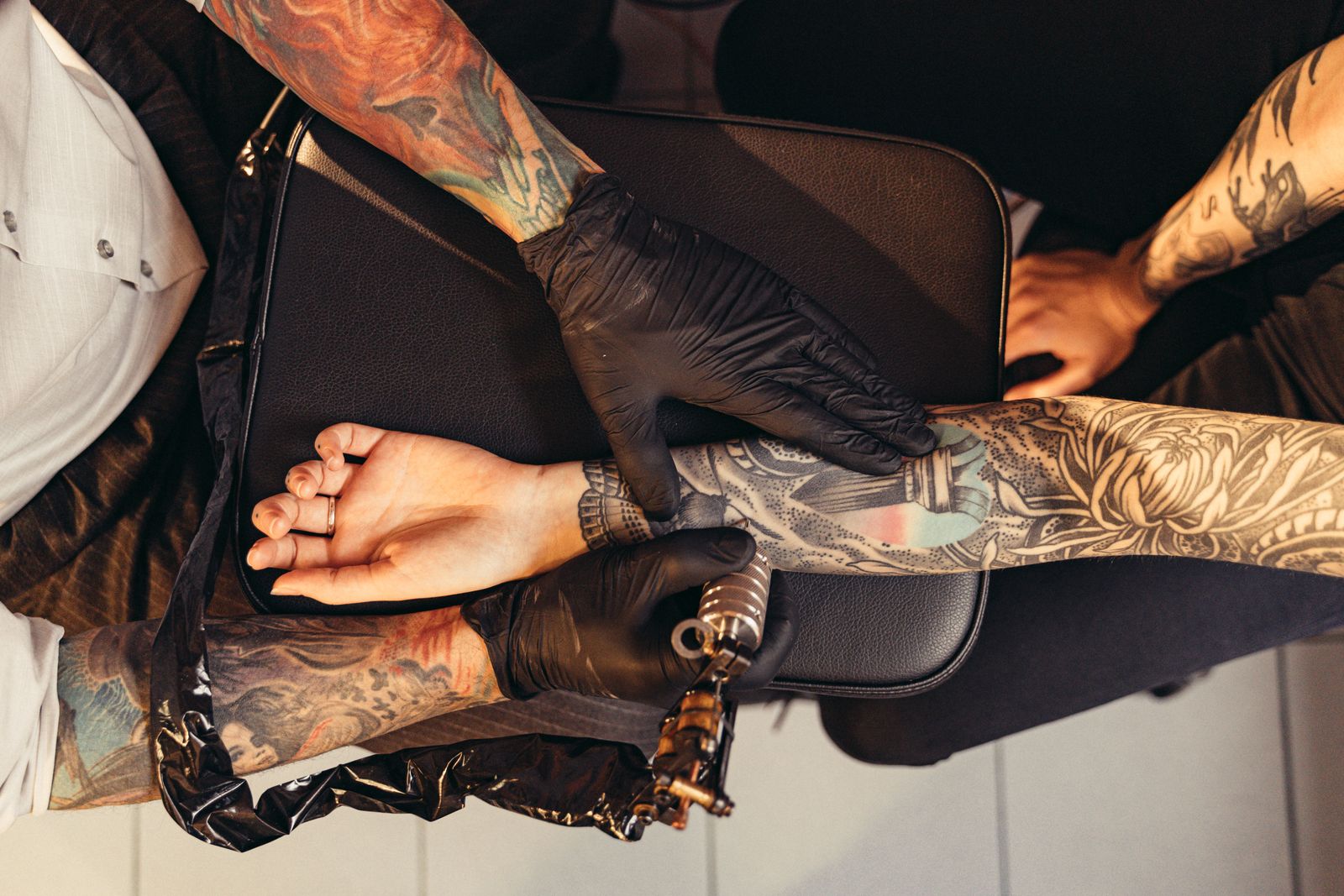
TL;DR: How tattoo artists price tattoos comes down to a few models: a flat rate for the piece (usually flash), an hourly rate, and a day or half day rate. A few tattooers also offer a "tap-out" rate. Ask which model applies, what the clock covers, and where your deposit goes before you sit down.
When someone asks how much a sleeve costs, there's a phrase that tattooers like to use to answer the question: "How much does a bag of groceries cost?"
And that alludes to the fact that, it depends. It depends on things like what the design is, the size of the arm (or leg) in question, and the tattooer themselves, along with other things.
So this post isn't a price list. If you want numbers by size and city, our tattoo cost guide has them. This is about how tattoo artists price tattoos: the models they use, what each one actually covers, and how to not get blindsided at the counter.
How tattoo artists price tattoos: the short version
There are essentially three ways that tattoos can be priced. A flat rate for the piece itself, an hourly rate, and a day (or half day) rate. A small number of tattooers add a fourth, the tap-out rate. Which one you get depends on the piece, the artist, and how they run their book.
Same tattooer, different models. A lot of artists use all of them. Flash on the wall gets a flat price, a custom forearm piece gets the clock, and a back piece gets booked in full days.
Nobody is hiding the ball here. You just have to ask which one you're on.
Flat rate: how flash and wannados get priced
A flat rate often will apply to flash, or pre-drawn designs that the tattooer has posted that they want to do (see also: wannados). You pay one agreed price for the piece, not for the hours. It usually comes with conditions on size, color and placement.
They'll usually include some stipulations, for example a specific size, color or black and grey, and a specific location such as "arms or legs only." This is because an artist will know roughly how long it should take them to tattoo the design, and that it compensates them fairly for a piece they're excited to do.
You can see this in real booking pages. Portland tattooer Lorin Devine's flash appointment page prices each design in the book at a flat rate from $300 to $800, limits placement to arms and legs, and says there's no custom drawing or modifications at flash appointments. Another artist, PaigeTatts, lists repeatable flash at a $150 to $400 flat rate, but exclusive flash at $150 an hour.
That last bit matters. "Flash" doesn't always mean flat. Ask.
And if you start asking for changes, you're drifting out of flash territory and into custom. Expect the price model to change with it. Flash day specials are their own animal; our post on flash tattoo sales covers those.
Hourly rate: what the clock should and shouldn't cover
Hourly is just like it sounds, with rates often averaging between 150-250 / hr depending on geographic location and experience of the tattooer. They can often give you a guesstimate of how long they think it may take, but it's often different.
An hourly rate should not include drawing time, stencil prep and placement, and any breaks taken.
Some shops make that mechanical. Marked Studios in Reno says each artist's machine has a timer that records actual tattooing time, and you don't pay for breaks or down time. The artist behind GabTatts says the same thing in plainer words: they only charge for actual tattoo time.
The guesstimate is the part people get burned on. Your skin, the placement and how well you sit all change the pace. Spots that hurt more usually mean more breaks and a slower session, so check the tattoo pain chart before you assume a time estimate is a promise.
Hourly makes sense for custom work where nobody can honestly promise how long it takes. Just know the estimate is an estimate.
Day rate and half day rate: paying for the chair, not the clock
A day rate, or half day rate, is an amount you agree to pay to be tattooed for the day. Often there is a time limit (eight hours for example). This can range from the mid or upper hundreds of dollars into thousands of dollars, depending on the tattooer.
This is where sleeves, back pieces and big chest panels usually live. Real examples from shops we checked:
| Artist or shop | What their page says |
|---|---|
| Virginia Swamp Witch, Virginia Beach | Full days are a flat $1,200, half days a flat $600, booked in 3 hour blocks |
| GabTatts | $1,000 full day, $650 half day |
| PaigeTatts | Half and full days at a flat rate, full days typically 10 AM to 5 PM |
| The Inkuisition, Egg Harbor Township, NJ | Artists may offer full day flat rates; ask your artist for theirs |
Read the fine print on what the day covers. PaigeTatts says its day pricing covers all the reserved time, including freehanding, stenciling, placement and breaks. That's the opposite of the hourly deal, and it's fair: you bought the whole day.
Some artists soften it if the work wraps early. Virginia Swamp Witch says it will drop a full day that ends early to $200 an hour, as long as it meets the 4 hour minimum.
Day rates are a good deal if you can sit. They're a bad deal if you're done at hour three.
The tap-out rate: as long as you can take it
Occasionally a tattooer will offer a "tap-out" rate. It's not very common, but it is a flat rate that the client can pay to be tattooed for as long as they can take it, until they "tap out." You're betting on your own pain tolerance.
Read the terms, because some have a floor. Golden Toad Tattoo in St. Louis lists a 10 hour tap-out at a fixed $2,000 and says if you tap early it's still $1,000 for the service.
Plenty of shops don't offer it at all. Greg's Tattoos answers the tap-out question in its FAQ with a flat "no."
If you've never sat longer than two hours, a tap-out is not where you find out. Book a half day first.
Deposits: where that money actually goes
Most shops take a deposit to book, and it usually comes off your final price rather than being an extra fee. On multi-session work it often rolls to the last session. Deposits are commonly non-refundable, so read the reschedule terms before you pay.
Orchard Street Tattoos in New York says the deposit comes off the final price of your tattoo, and that it covers the artist's drawing and prep time. On a multi-session piece, GabTatts says the deposit rolls over and is applied to the final session. Lorin Devine's flash page says the deposit is deducted from your total.
Deposits also tend to be non-refundable. Orchard Street, PaigeTatts and Virginia Swamp Witch all say so. Orchard Street lets it transfer if you give notice, and Lorin Devine notes that switching a flash appointment to custom forfeits the deposit, because it reserved the time.
So ask two things: does it come off the total, and what happens if I reschedule. Get the answer in writing. Our guide on how to vet a tattoo artist covers the rest of what to check before you hand money over.
Shop minimums, briefly
A shop minimum is the floor. Even a tiny piece costs at least that much, because a needle, ink caps, barrier film and a station breakdown cost the same whether you get a dot or a dagger.
Real floors vary. Orchard Street calls $99 its shop minimum. The Inkuisition lists $80. Virginia Swamp Witch lists $250, with a lower minimum on walk-in days. Small flat-rate flash at or near the minimum is usually the best value move. Our cost guide goes deeper on minimums.
Why the sleeve question has no single answer
A sleeve price depends on the design, the size of the arm or leg, the tattooer's rate and how many sessions it takes. Two people asking for "a sleeve" can be asking for completely different amounts of work. That's the grocery bag again.
A bold trad sleeve with open skin goes in faster than a wall-to-wall black and grey realism sleeve. A big arm is more skin than a small one. And an artist with a long waitlist charges what that waitlist supports.
So the artist won't quote "a sleeve." They'll quote a rate and an estimate of hours or sessions, and that estimate will move.
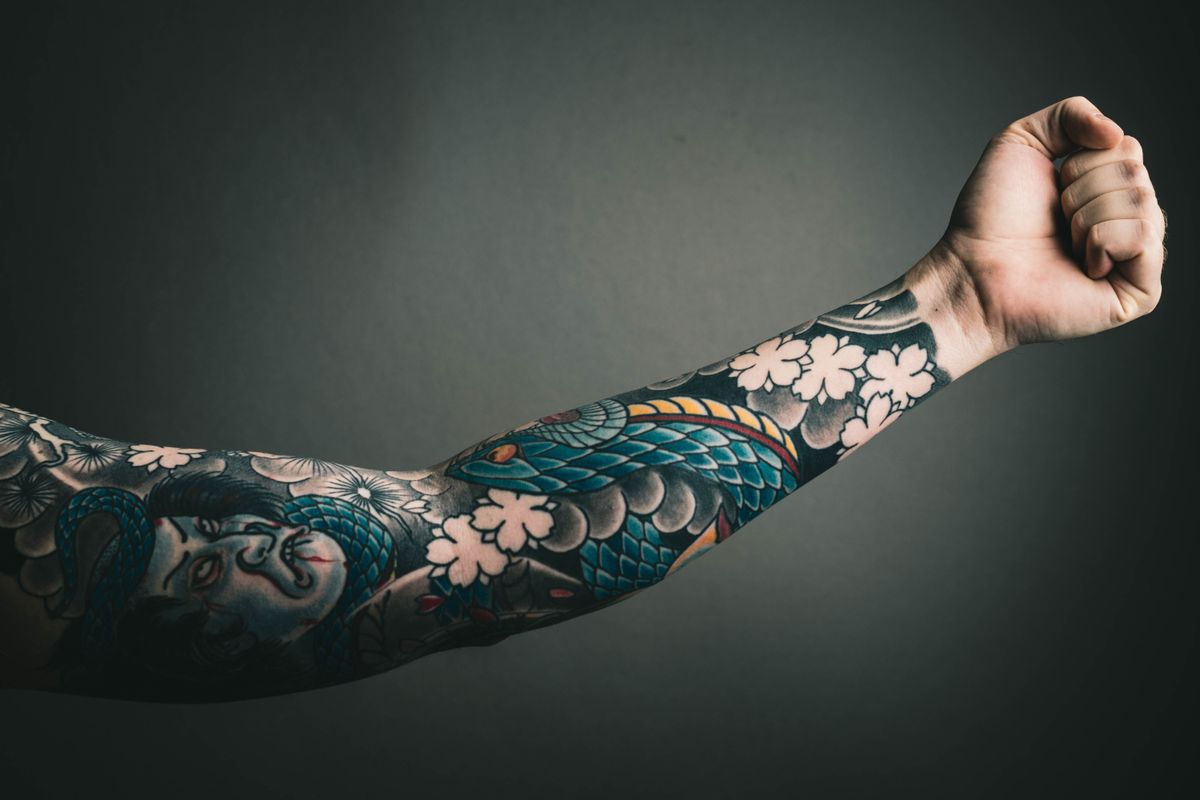
How to budget a multi-session sleeve: hourly vs day rate
Hourly means you pay for each session as it happens, so cost follows real tattooing time. Day rate means a fixed number per day, so cost follows how many days it takes. Either way, budget per session, leave room for healing between sittings, and plan a cushion for extra time.
Here's a made-up example, just to show the math. Say an artist charges $200 an hour and guesstimates 20 hours of tattooing. That's $4,000 if the estimate holds. But it's often different, so build in a buffer. If it runs 25 hours, you're at $5,000.
Now say the same artist offers a $1,200 day. What matters is how many days it takes. Four days is $4,800. Five days is $6,000. The day rate only wins if you can sit long, productive days, and if the artist can get more done per day than the hourly math suggests.
Ways to keep it sane:
- Ask for a session plan, not just a total. How many sittings, how long each, how far apart.
- Pay per session and budget the next one before you book it.
- Remember the deposit probably comes off the last session, not the first.
- Add the tip. On a long piece that's real money. Our tipping guide covers per-session vs end-of-project tipping.
- Book back to back if you can sit it. Travis Ross's pricing page suggests two days back to back for large projects to maximize progress.
What to ask in the consult, by pricing model
The fastest way to avoid a surprise is to ask about price structure out loud before the stencil goes on. A good tattooer will answer without flinching. These are the questions that matter for each model.
Flat rate (flash):
- Is this a flat price or hourly?
- What size, placement and color options does that price cover?
- Can I change anything, and does that change the price?
Hourly:
- What's your rate, and what's your guesstimate on time?
- Does the clock run only while you're tattooing, or does it include drawing, stencil and breaks?
- Will you tell me if we're running long?
Day or half day rate:
- How many hours is a day with you?
- Does that include drawing, stencil and breaks?
- What happens if we finish early, or if I have to stop?
Tap-out:
- What's the price, and is there a maximum number of hours?
- Is there a minimum charge if I tap early?
Every model:
- How much is the deposit, does it come off the total, and what are the reschedule rules?
The bottom line
How tattoo artists price tattoos isn't a secret, it's just not one number. Flat rate for flash. Hourly for custom work where time is a guess. Day or half day rates for big projects. Tap-outs if you find a tattooer who offers one and you've got the grit.
Ask which one you're on, what the clock covers and where the deposit goes. Then budget per session, not per dream.
Still choosing who to book for that sleeve? Browse artists by style on Tatulogue and look at their healed work before you ask about rates.
FAQ
How do tattoo artists price tattoos?
Most use a flat rate for the piece (common for flash), an hourly rate, or a day or half day rate. A few offer a tap-out rate, a flat price to be tattooed until you can't take any more. Many artists use more than one model depending on the project, so ask which applies.
What is a tattoo day rate?
A day rate is a fixed amount you agree to pay to be tattooed for the day, often with a time limit such as eight hours. It can range from the mid or upper hundreds of dollars into the thousands, depending on the tattooer. Half day rates work the same way for a shorter block.
What is a tap-out tattoo session?
A tap-out is a flat rate to get tattooed for as long as you can handle it, until you "tap out." It isn't common. Some shops set a minimum charge if you stop early, so read the terms before you book.
Does a tattoo hourly rate include breaks and drawing time?
It shouldn't. An hourly rate should not include drawing time, stencil prep and placement, or breaks. Some shops even run a timer on the machine. Day rates are different: some artists say the day price covers all reserved time, breaks included. Confirm with your artist.
Does a tattoo deposit come off the final price?
Usually, yes. Many shops apply the deposit to the total, and on multi-session work it often rolls to the final session. Deposits are commonly non-refundable, so ask about reschedule rules before you pay.