ARTICLES
Stick and Poke Tattoos: What Dermatologists Say About the Risks
Stick and poke tattoo safety explained: what dermatologists and health officials say about DIY risks, and what to ask a licensed hand-poke artist first.
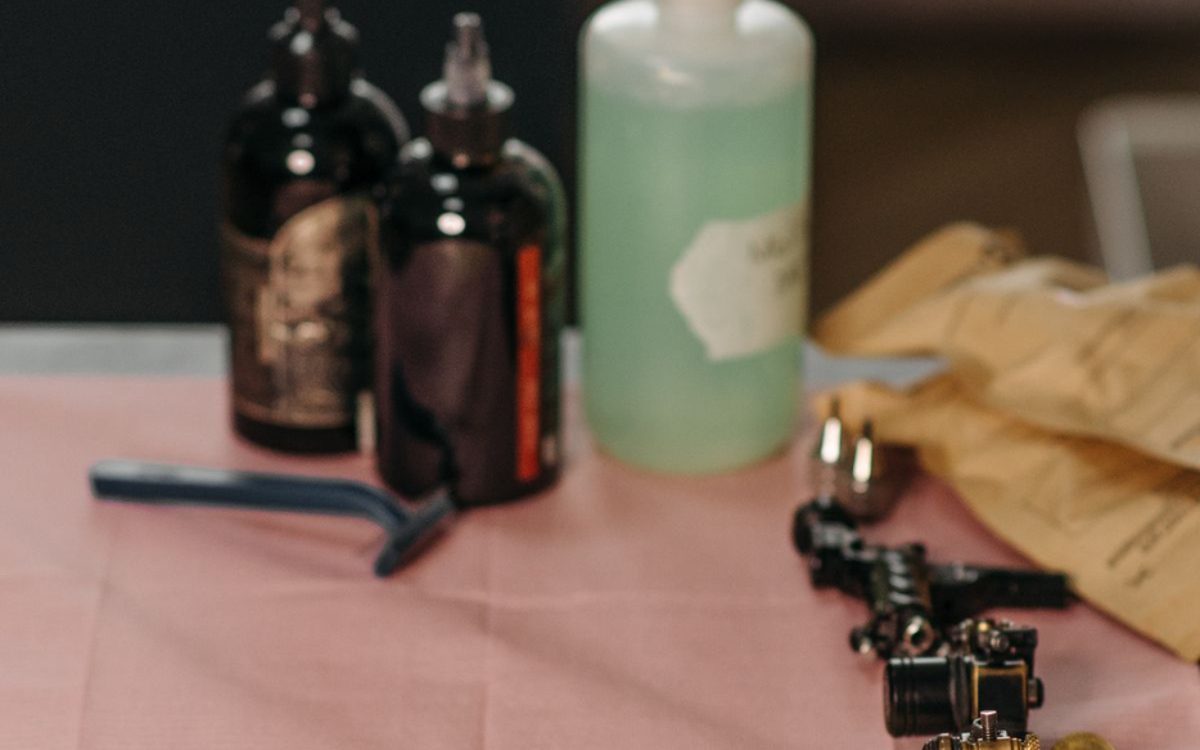
TL;DR: Stick and poke is a real tattoo technique, and plenty of hand-poke artists work in licensed shops. The risk is the DIY version. Dermatologists and health officials warn about infection, bloodborne disease and ink that was never meant for skin. One Ohio health official says licensed work in an inspected facility is not a concern. Even then, reactions can happen. Check licensing, needles and ink before you book.
Stick and poke tattoo safety comes down to two questions: who is holding the needle, and where are they sitting?
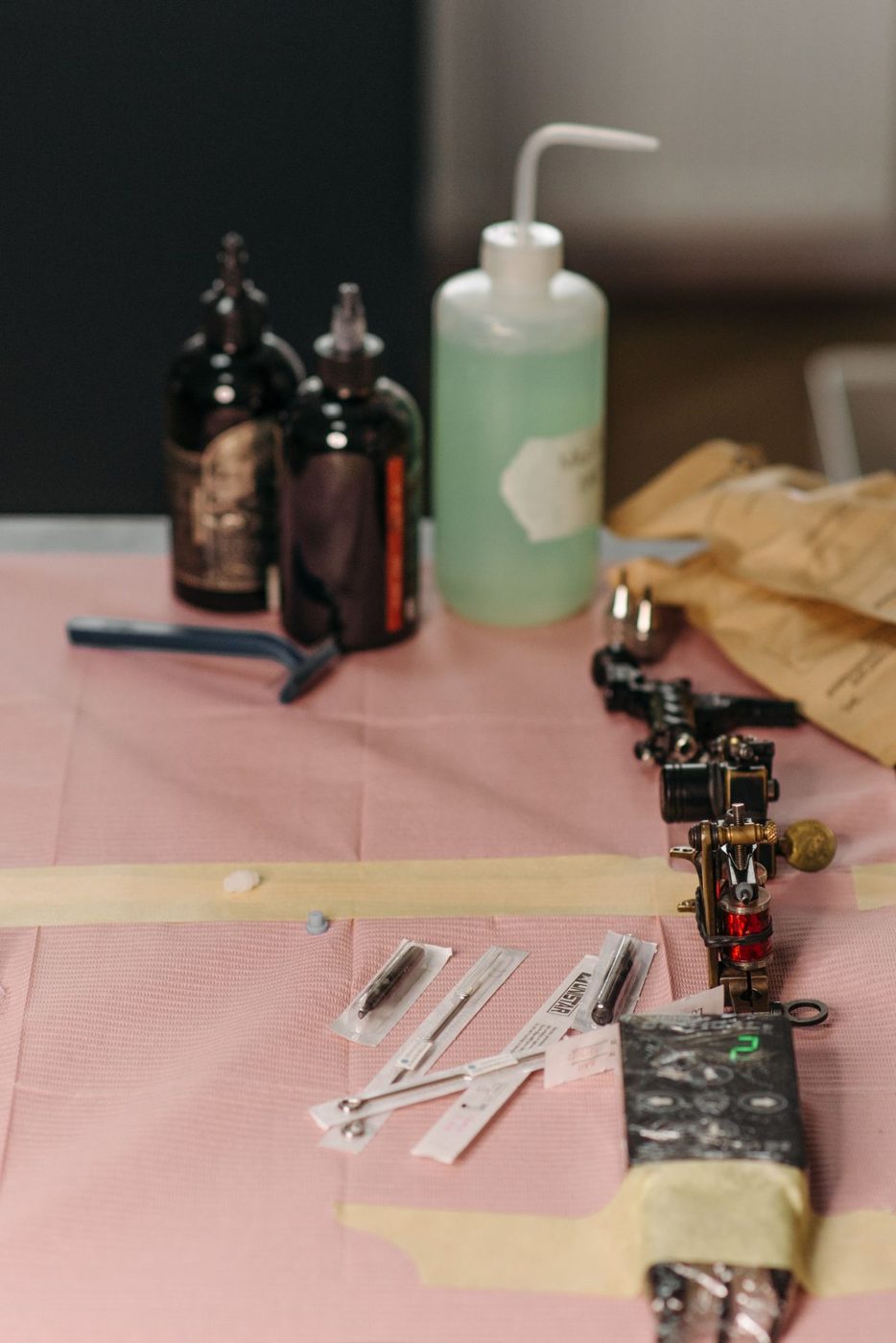
Picture a lamp on a kitchen table. A sewing needle. A bottle of craft-store ink. Now picture a clean, licensed studio with a gloved artist, a fresh sealed needle and a wiped-down station. Same technique. Completely different risk.
Hand-poked tattoos are not the problem. The dotted, handmade look is popular for good reason, and plenty of people want it. The trouble starts when the kit comes in a mailer and the "studio" is somebody's bedroom. Dermatologists have spent years warning about the home version, and the warnings are fairly consistent: infection, bloodborne disease, ink that was not made for the job. We read what the doctors, health officials and artists actually said, and some of it is more nuanced than the scary headlines. This is not a how-to. It is the case for letting a pro do it.
What is a stick and poke tattoo?
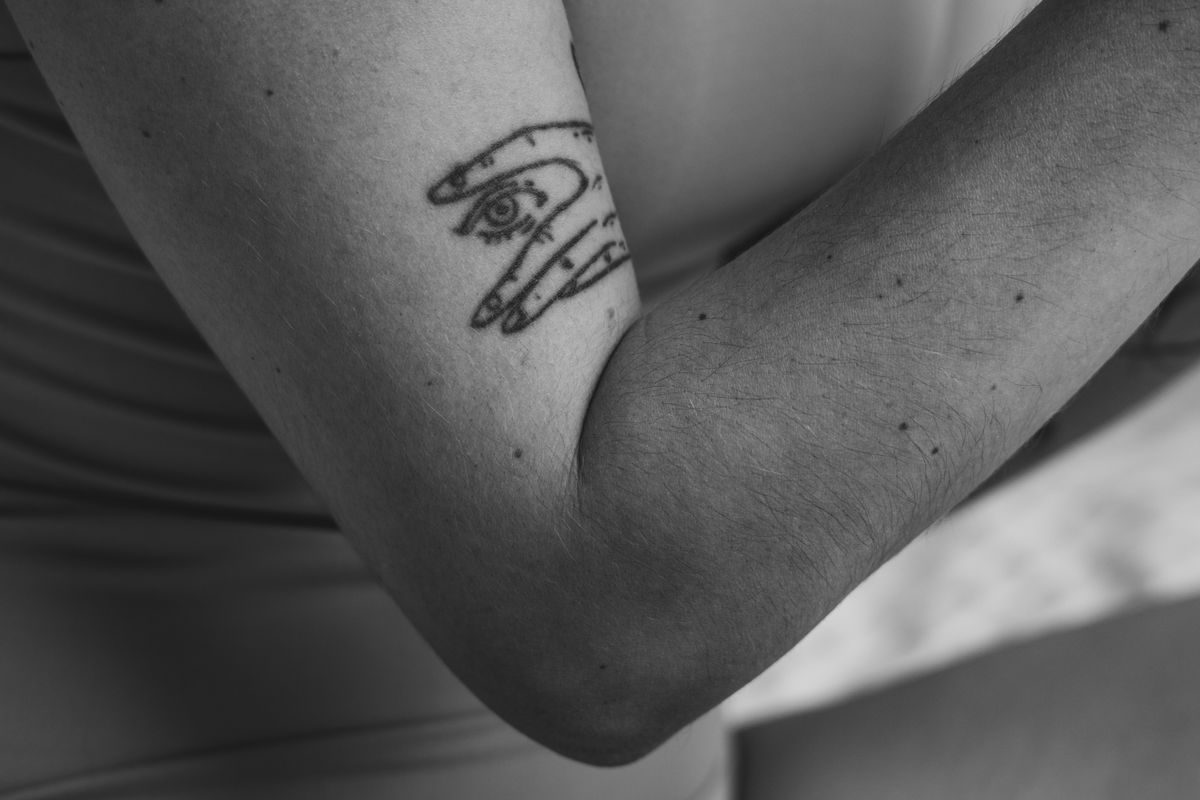
A stick and poke tattoo, also called a hand-poked tattoo, is done without a machine. The artist places ink in the skin with a needle, by hand. The Healthy describes the result as a pattern of dots that converge into lines, and one hand-poke artist it quotes says the dot-by-dot approach is less abrasive than pulling lines.
That is the style. Hand-poke is a legitimate technique with working professional artists behind it. The same name also covers the DIY version, which is what health officials keep warning about. Cleveland Clinic calls stick and poke the most common self-tattoo method.
Is stick and poke tattoo safety different from machine work?
In a sterile, professional setting, the artists we found say the infection risk is about the same as machine tattooing. That is their view, not a clinical trial. What changes is control: a machine holds a steady depth, and a hand-poke leans on the artist's skill.
Dermatologist Jennifer Baron told The Healthy that a safe tattoo needs a fine needle, no harmful material such as bacteria pushed into the skin, and a depth of less than about a millimeter. She said a machine is set to a consistent depth, while a hand-poked tattoo relies on the artist's hand for consistency and safety. She also said safety runs from zero percent to 100 percent depending on conditions.
Two hand-poke artists quoted in the same piece, Jane Romm and Lauryl Sandman, said infection risk in a sterile setting matches machine work and is low. Romm lists red flags: no gloves, working on fabric surfaces, items not wrapped in barrier film.
One practical note comes from the writer of a 2017 Vice piece, not from the dermatologist quoted in it: poked designs often look lighter, since the needle doesn't place ink as deeply. If you want crisp, saturated work, expect that.
What do dermatologists say about the risks of DIY tattoos?
Short answer: breaking the skin is breaking the skin. Every doctor we found makes the same point. Open skin is a door, and what comes through it depends on the needle, the ink and the room.
Here is who said what.
| Risk | What the source says | Source |
|---|---|---|
| Staph and cellulitis | Bacteria can enter broken skin easily, and unsanitary needles are the main worry | Cameron Rokhsar, Mount Sinai dermatologist (Vice, 2017) |
| Bloodborne disease | A shared needle makes HIV and hepatitis B and C possible | Rokhsar (Vice, 2017) |
| Viral infections | Warts, HPV, molluscum and herpes simplex, plus ink allergies | Neill Peters, Northwestern dermatologist, as summarized by The Evanstonian (2018) |
| Unknown sterility | At home, nobody can be sure tools or surroundings are properly sterilized | Jessica Lum, MD, infectious disease (Cleveland Clinic, 2019) |
| Wrong ink | Ballpoint pen ink is not made to be injected into the body | Rokhsar (Vice, 2017) |
| Regret | A DIY tattoo you later dislike can mean expensive laser removal | The Evanstonian's writer, not Peters (2018) |
A note on those sources. The Peters quote comes from a 2018 feature in The Evanstonian about teens doing it themselves. It is a real Northwestern dermatologist, but a small outlet. The Cleveland Clinic piece is from 2019. The core medical points have not changed, but we are flagging the dates.
Cuyahoga County's health board put it bluntly. Gerry Scott, an environmental health supervisor there, told News 5 Cleveland the risks of DIY tattooing are extreme and told people not to buy a kit online to use on themselves or a friend.
Why does the ink matter so much?
Because ink goes under the skin and stays there. The FDA says no color additive is approved for injection into the skin, and that many pigments are not approved for skin contact at all. Some are industrial colors used in things like printer's ink or auto paint.
The FDA also says infections can come from contaminated ink even when an artist follows good hygiene. Unsterile equipment can spread diseases such as HIV, hepatitis and staph.
The CDC's 2012 report on tattoo-associated skin infections found 22 confirmed cases across four states. It said contamination can happen at the factory, or when ink gets diluted with nonsterile water. It also noted a common misconception that distilled water is sterile.
That is a lot of trouble from a bottle. Now take away the supplier checks a shop does. Cleveland Clinic's infectious disease specialist notes there are no regulations around DIY tattooing, while professional parlors follow government rules and track where needles and ink come from. If you want the bigger picture on ink rules, we dug into it in our tattoo ink regulation post.
Is stick and poke safe if a licensed artist does it?
Safer, yes. Risk free, no. A Cuyahoga County health official told News 5 that stick and poke should not be a cause for concern when a licensed professional does it at a properly inspected facility.
In that county, he said, shops are licensed every year and inspected twice a year, and inspectors check that artists have been properly trained. That is one county in one state, so treat it as an example, not a national rule.
The artist in that story, Hannah Hoffman of True Art Tattoos in Ohio City, said she can trace where her needles and inks come from.
Now the honest caveat. Rokhsar said he has treated infections and ink allergies from both DIY tattoos and professional ones. The American Academy of Dermatology says reactions can show up even with a licensed artist and proper aftercare, and ink allergies can appear years later. The FDA says reactions can occur even in tattoos that are years old.
A pro lowers the odds. It does not zero them.
How do you find a licensed hand-poke artist?
Start with the license, not the portfolio. Tattooing is regulated locally, according to the FDA, so the rules depend on where you live. The CDC's advice to consumers is to use tattoo parlors registered with the local jurisdiction.
Then look at the work. Romm suggests checking the style and colors in an artist's portfolio. Our guide on how to vet a tattoo artist walks through the rest, and fine line tattoos are worth a read if delicate dot work is the goal.
A few honest flags that someone is not the real deal:
- No license on display, or they dodge the question.
- Working from a home, a car, or a party.
- Ink they can't name or source.
- Nobody can say where the needles and ink came from.
What should you ask before you book?
Ask plain questions and expect plain answers. Cleveland Clinic suggests asking a licensed professional about their certification, training and safety protocols. The CDC adds that you should request inks made specifically for tattooing and make sure the artist follows hygienic practices.
Here is a short list, our own read of those recommendations:
- Is the shop licensed or registered here, and can I see it?
- Are the needles single-use and opened in front of me?
- What ink do you use, and who makes it?
- Do you wear fresh gloves and cover your surfaces?
- What happens if I get a reaction?
Any real artist has heard all of these. If they get defensive, you have learned something.
Some people should skip tattoos altogether. Cleveland Clinic says anyone who is immunocompromised, including transplant recipients or people waiting on a transplant, should not get any tattoo.
What are the signs of a tattoo infection?
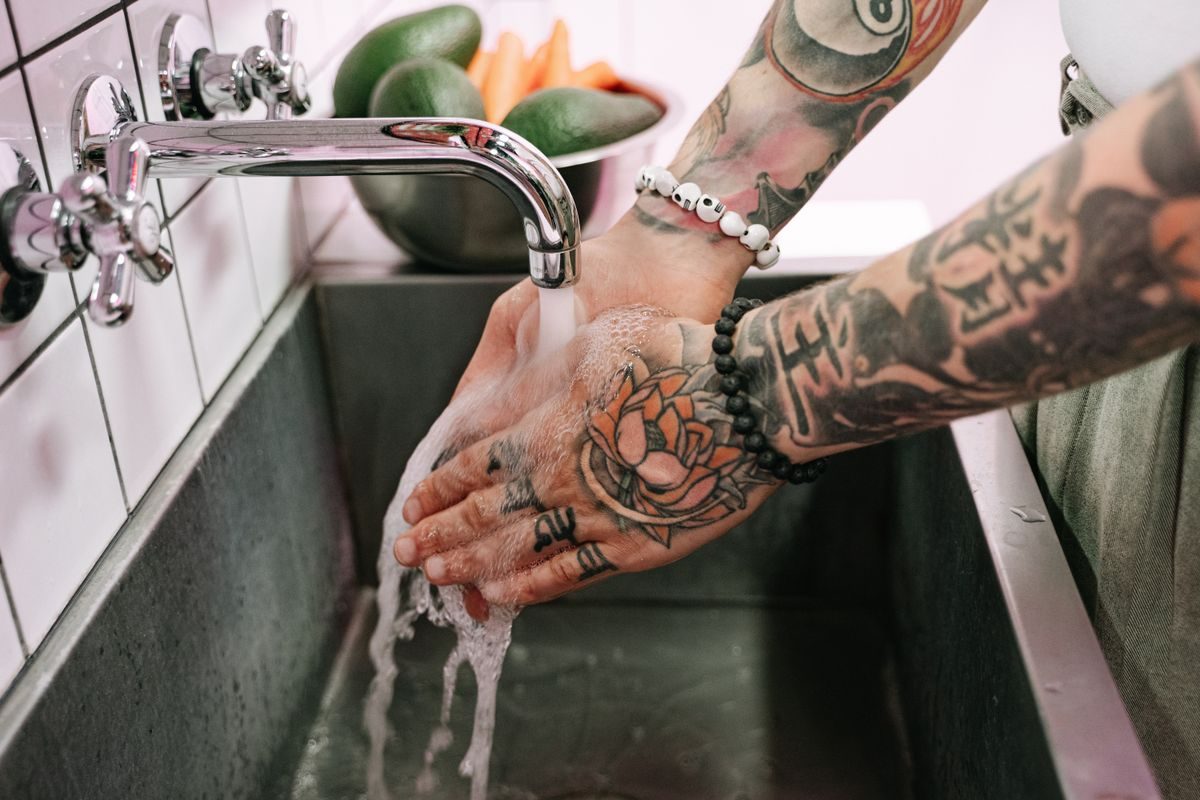
Some redness, soreness and oozing are part of normal healing, according to the AAD. Infection looks different: redness that darkens or spreads, pain that gets worse, itchy red painful bumps, pus, open sores, fever and chills.
If you see those, see a doctor or board-certified dermatologist right away. The AAD says early treatment limits damage. Reactions can start immediately or days to months later, and ink allergies can appear years later.
For healing basics, our tattoo aftercare guide covers the normal process. Aftercare helps a good tattoo heal well. It cannot fix a bad setup.
If you already have a DIY tattoo you regret, a dermatologist can talk through options. The Evanstonian's 2018 piece notes that laser removal can get expensive, and our laser tattoo removal guide covers what it involves.
The takeaway
Stick and poke is not the villain. The kitchen table is.
Hand-poke is a real craft with real artists, and licensed shops do it. What the doctors and health officials warn about is the DIY version: unknown needles, ink not meant for skin, no inspection, no recourse.
If the dotted, handmade look is what you want, put the same effort into finding the artist that you would for any permanent piece. Check the license. Ask about single-use needles and ink. Look at healed work, not just fresh posts. When you are ready, you can browse artists by style on Tatulogue.
FAQ
Is stick and poke safer than a machine tattoo?
Not inherently. Two hand-poke artists quoted by The Healthy say infection risk in a sterile setting is the same as machine work. Dermatologist Jennifer Baron notes a machine holds a consistent depth, while hand-poke depends on the artist's hand. What matters most is a sterile setup and a skilled professional.
Can a stick and poke tattoo get infected?
Yes. Any tattoo breaks the skin, and a dermatologist at Mount Sinai says infections and ink allergies can come from DIY and professional tattoos alike. The AAD lists redness that spreads, worsening pain, pus, open sores, fever and chills as warning signs. See a doctor right away if you notice them.
Is a stick and poke tattoo from a licensed artist safe?
It is much lower risk, though not zero. A Cuyahoga County health official told News 5 Cleveland that licensed stick and poke at a properly inspected facility should not be a concern. The AAD still says reactions can happen with a licensed artist, sometimes years later.
Is it okay to use pen ink or craft ink for a tattoo?
No. Mount Sinai dermatologist Cameron Rokhsar says ballpoint pen ink is not made to be injected into the body. The FDA says no color additive is approved for injection into the skin, and the CDC advises requesting inks made specifically for tattooing.
How do I know a hand-poke artist is licensed?
Ask to see their license or registration, since the FDA says tattooing is regulated locally and rules vary by place. The CDC advises using parlors registered with the local jurisdiction. In Cuyahoga County, a health official says inspectors check artists' credentials and training. Your local health department can tell you what applies where you live.